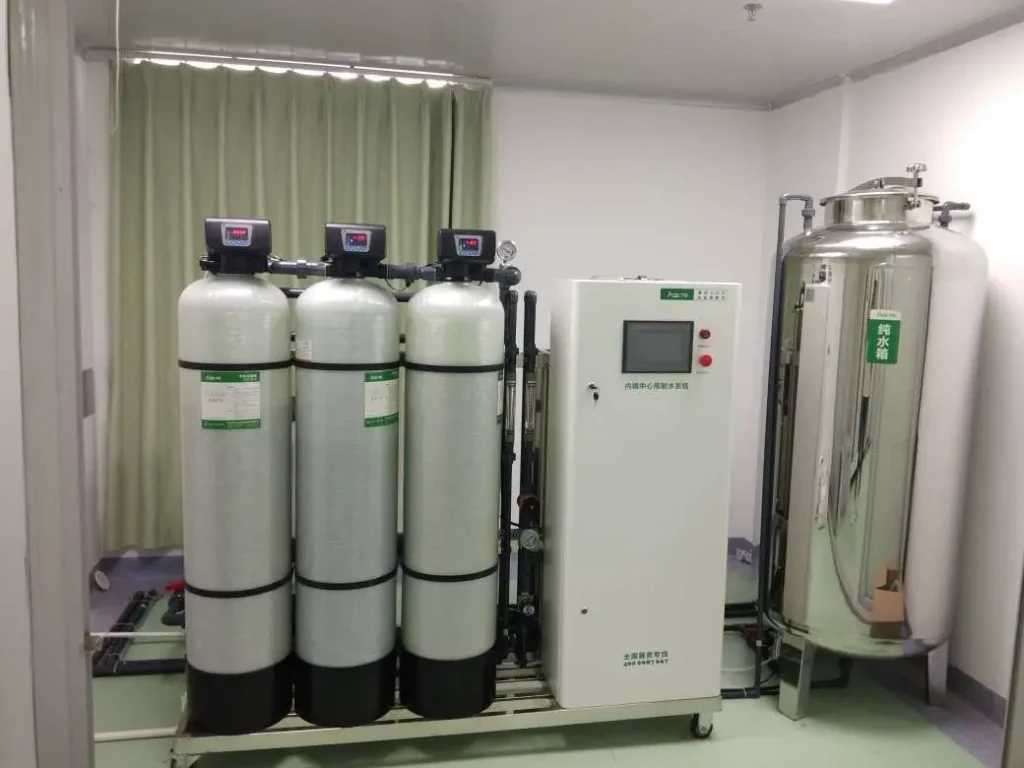
RO Plant for Agriculture
Customized RO Water Treatment Systems for Agriculture
We supply agricultural RO plants designed to remove dissolved salts, minerals and other impurities from different water sources, providing purified water for irrigation, greenhouse cultivation and other agricultural applications.
Water Quality Requirements for Agricultural Irrigation
RO Plant Applications for Agriculture
Agricultural RO Plant Treatment Process
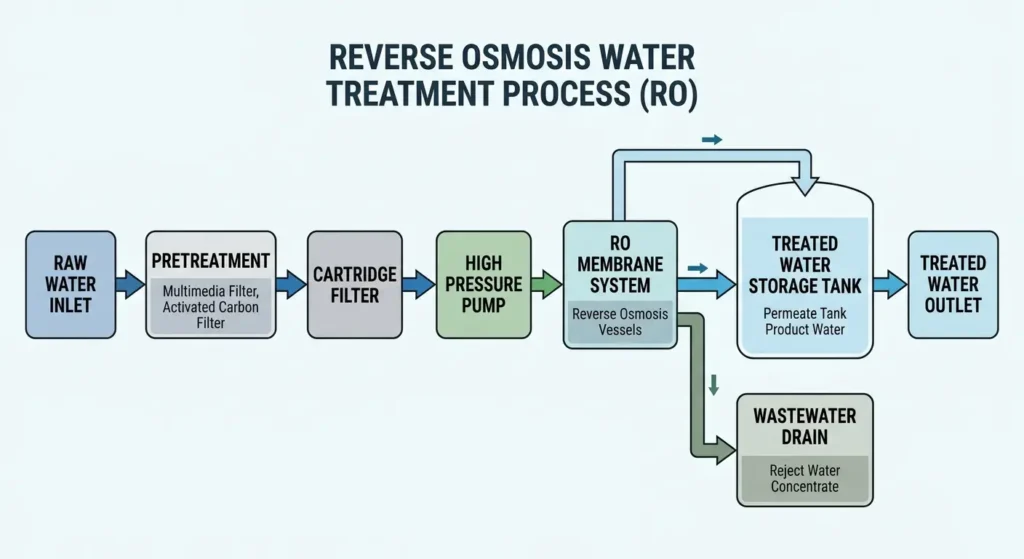
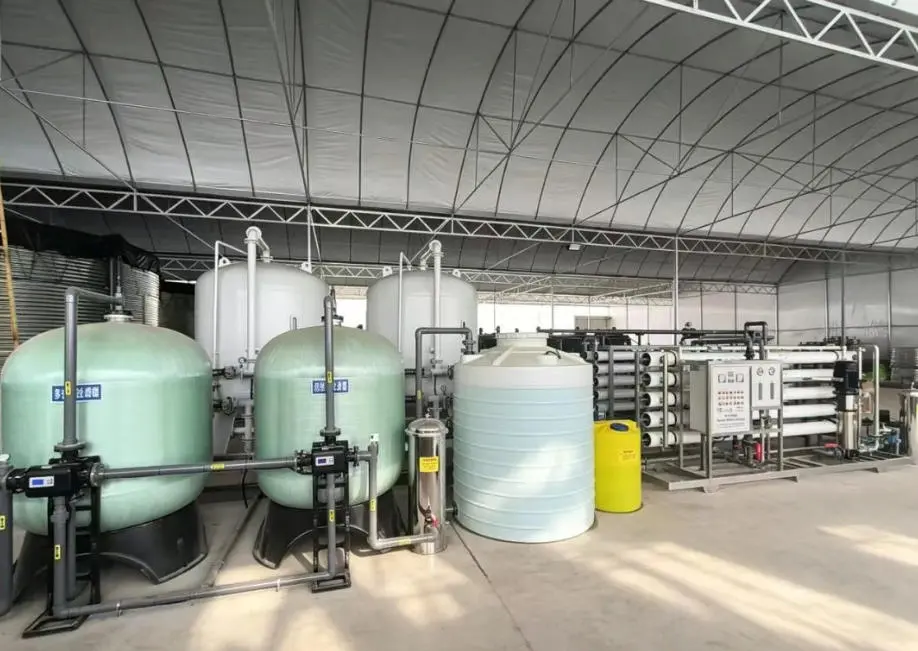
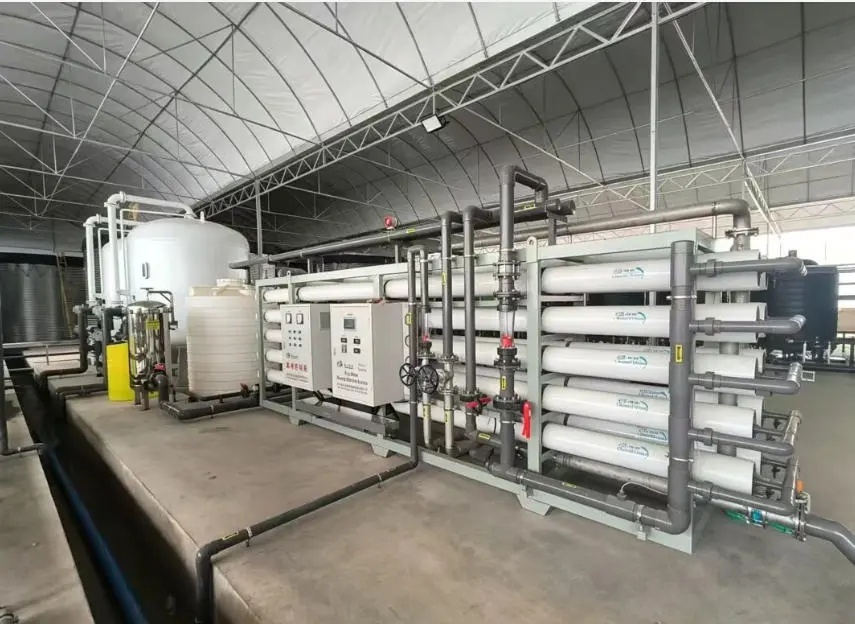
Agricultural reverse osmosis systems generally consist of pretreatment units, high‑pressure pumps, membrane modules and cleaning devices. The pretreatment stage is particularly critical. Equipment such as multi‑media filters and activated carbon adsorption units shall be configured according to raw water quality to prevent membrane fouling. System design shall take local water quality characteristics, irrigation requirements and economic conditions into account to select suitable membrane materials and water recovery rates. During operation, the influent and effluent water quality shall be monitored regularly, and chemical cleaning and maintenance shall be performed in a timely manner.
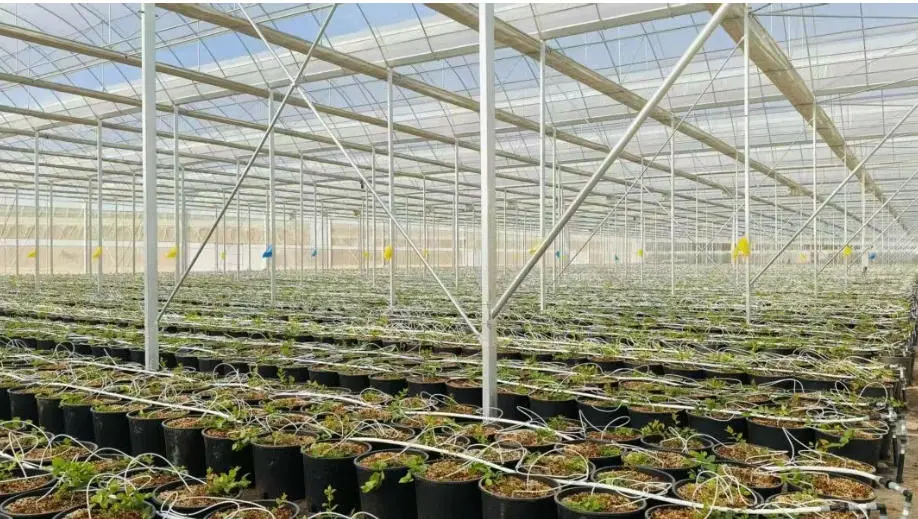
RO Plant for Agriculture-Blueberry Planting
Against the large‑scale and refined development of protected agriculture, a dedicated water supply system with pure water quality, stable water pressure and sufficient water volume serves as a core foundational guarantee for high‑quality cultivation, quality improvement and yield increase of greenhouse fruits and vegetables. For high‑value cash crops such as blueberries, which are extremely sensitive to water quality as well as water‑fertilizer conditions, water supply quality directly determines seedling growth, fruit‑setting performance and fruit appearance.
RO Plant for Agriculture Function
Improve Irrigation Water Quality
Protect Irrigation Systems
Meet Requirements of Special Crops
Utilize Non‑traditional Water Sources
FAQ of Reverse Osmosis Systems for Agriculture
What harmful substances can an RO system remove from agricultural water?
RO systems effectively remove high concentrations of total dissolved solids (TDS), sodium, chloride , heavy metals, nitrates, and hardness ions (calcium and magnesium) that can otherwise cause soil salinization or crop toxicity.
Can pure RO water with very low TDS be used directly for irrigation?
Direct irrigation with pure RO water is generally not recommended because it lacks essential minerals and can cause nutrient imbalances in soil. In hydroponics and high-tech greenhouses, growers use low-TDS RO water as a pure baseline, allowing them to remineralize it and precisely control the Electrical Conductivity (EC) with custom fertilizer blends.
What pre-treatment is required for an agricultural RO system?
Pre-treatment depends on the raw water source (groundwater vs. surface water). Common setups include media filters (sand/birion) for suspended solids, iron and manganese removal filters, ultrafiltration (UF) for organics and microorganisms, and antiscalant dosing or water softeners to prevent membrane scaling.
What is the average lifespan of RO membranes, and how often do they require maintenance?
Agricultural RO membranes typically last between 2 and 5 years, depending on water quality and pre-treatment efficacy. Maintenance includes routine Clean-In-Place (CIP) chemical washings every 3 to 12 months and regular monitoring of the Silt Density Index (SDI) and pressure drops.
How much wastewater (concentrate) does an agricultural RO system produce?
Most agricultural RO systems operate at a recovery rate of 50% to 75%, meaning 25% to 50% of the feedwater becomes brine or concentrate.
How can farms dispose of or reuse the RO concentrate?
Depending on local environmental regulations, concentrate can be reused for salt-tolerant crops, dust suppression on farm roads, or blended with lower-grade water for general farm cleaning. Alternatively, it is directed to evaporation ponds or permitted discharge points.
What are the primary operating costs (OPEX) associated with agricultural RO?
Main operating expenses include electricity consumption for high-pressure pumps, chemical costs (antiscalants, CIP chemicals), periodic membrane replacement, and routine filter cartridge changes.
How do I choose between Brackish Water RO (BWRO) and Seawater RO (SWRO)?
BWRO is designed for inland groundwater or well water with moderate salinity (TDS up to 10,000 mg/L) and operates at lower pressures and costs. SWRO is built for coastal farms or seawater intake (TDS around 35,000 mg/L), requiring much higher pressure and energy.
Related Products
Portable RO System
Dialysis RO System
Mecial Water RO Plant