
Brackish Water RO Membranes for Industrial Water Treatment Systems
Brackish water RO membranes are thin-film composite (TFC) polyamide membrane elements designed to remove dissolved salts from low- to moderate-salinity water. They are widely used in industrial reverse osmosis systems for groundwater desalination, process water treatment, and water reuse applications.
Our product range includes standard brackish water RO membranes and anti-fouling models in 4040 and 8040 sizes. Standard BW membranes are suitable for applications with appropriate feedwater pretreatment, while anti-fouling BWFR models feature wider feed spacers to help manage fouling risks in more challenging feedwater conditions.
Membrane selection should consider feedwater TDS, temperature, operating pressure, recovery rate, and pretreatment conditions. Clear Environment supports engineering companies, system integrators, and distributors with membrane model comparison, technical specifications, and sourcing from Chinese manufacturers.
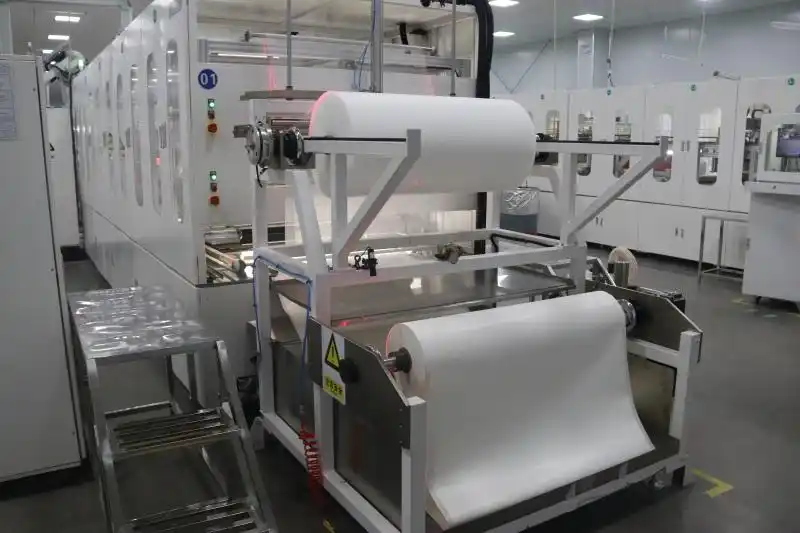
Brackish Water RO Membrane Production Process
This video shows the production process of brackish water RO membrane elements, from membrane sheet handling to element assembly.
Understanding the manufacturing process helps engineering companies and distributors evaluate membrane construction and product consistency. Clear Environment works with Chinese membrane manufacturers to support product sourcing, technical specification comparison, and order coordination for industrial water treatment projects.
Lorem ipsum dolor sit amet, consectetur adipiscing elit. Ut elit tellus, luctus nec ullamcorper mattis, pulvinar dapibus leo.
Anti-Fouling BWFR Membranes with 34 mil Feed Spacers
Our anti-fouling BWFR membrane series features a 34 mil feed spacer designed to provide wider feed channels than conventional 28 mil BW membrane elements. This configuration can help reduce the risk of feed-channel blockage and excessive pressure drop in applications where fouling is a concern.
Combined with appropriate pretreatment and regular cleaning, BWFR membranes can support more stable operation in challenging feedwater conditions. Cleaning procedures should follow the membrane manufacturer’s recommended pH, temperature, and chemical limits.
Brackish Water RO Membranes for Different Feedwater Conditions
Brackish water RO membranes are used in groundwater desalination, industrial process water treatment, and selected water reuse applications. Standard BW models are generally suitable for properly pretreated feedwater, while BWFR models provide an alternative where fouling potential requires additional consideration.
The appropriate membrane model depends on feedwater salinity, hardness, organic content, temperature, operating pressure, and the system’s target recovery rate. Membrane selection should be based on actual water analysis and operating conditions rather than TDS alone.
Reliable Salt Rejection for Industrial RO Systems
Brackish water RO membranes use thin-film composite polyamide technology to reduce dissolved salts and other ionic contaminants in feedwater. Depending on the selected membrane model and operating conditions, they can support industrial process water production, groundwater desalination, and pretreatment for higher-purity water systems.
Actual permeate quality depends on feedwater composition, membrane selection, operating pressure, recovery rate, and system design. For projects with specific water quality targets, membrane performance should be evaluated against the required operating conditions.
Brackish Water RO Membranes Model
Clear Environment supplies standard BW and anti-fouling BWFR membrane elements in 4040 and 8040 sizes. The two series differ mainly in feed spacer configuration and intended operating conditions. Compare the specifications below to identify suitable membrane options for your RO system.
Regular Brackish RO Membrane
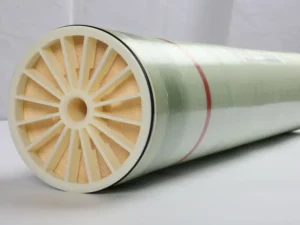
Standard BW series membranes are designed for brackish groundwater desalination and industrial water treatment applications with appropriate feedwater pretreatment.
Typical applications include industrial process water, boiler feedwater pretreatment, drinking water RO systems, and the RO stage of high-purity water production.
The BW-4040 and BW-8040 models feature 28 mil feed spacers. Membrane selection should be based on feedwater analysis, operating pressure, recovery rate, and required permeate quality.
| Model | Effective Membrane Area ft2 (m2) | Inlet Grid mil (mm) | Permeate Flow GPD (m3/d) | Stable Desalination Rate % | Minimum Desalination Rate % |
|---|---|---|---|---|---|
| BW-8040-400/28 | 400 (37.2) | 28 (0.71) | 10500 (40) | 99.5 | 99 |
| BW-4040-83/28 | 83 (7.8) | 28 (0.71) | 2126 (8.1) | 99.3 | 99 |
| Note Individual element flow may vary by ±20%. Test ConditionsTest pressure: 225 psi (1.55 MPa) Test temperature: 25°C Test solution: 2000 ppm NaCl Test solution pH: 7.5 Single element recovery rate: 15% | |||||
Anti-fouling Brackish Reverse Osmosis RO Membrane
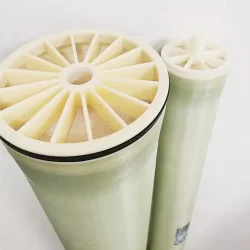
Anti-fouling BWFR membranes are intended for industrial water reuse and other RO applications where feedwater fouling potential requires additional consideration.
The BWFR-4040 and BWFR-8040 models feature 34 mil feed spacers, providing wider feed channels than the standard 28 mil BW series. This design can help reduce the risk of feed-channel blockage and excessive differential pressure under suitable operating conditions.
Typical applications include pretreated industrial wastewater reuse and selected RO stages in water recovery or zero liquid discharge (ZLD) projects. Adequate pretreatment and membrane cleaning remain essential.
| Model | Effective Membrane Area ft2 (m2) | Inlet Grid mil (mm) | Permeate Flow GPD (m3/d) | Stable Desalination Rate % | Minimum Desalination Rate % |
|---|---|---|---|---|---|
| BWFR-8040-400/34 | 400 (37.2) | 34 (0.86) | 10500 (40) | 99.5 | 99.35 |
| BWFR-4040-76/34 | 76 (7.1) | 34 (0.86) | 2126 (8.1) | 99.5 | 99.3 |
| Note Individual element flow may vary by ±20%. Test ConditionsTest pressure: 225 psi (1.55 MPa) Test temperature: 25°C Test solution: 2000 ppm NaCl Test solution pH: 7.5 Single element recovery rate: 15% | |||||
OEM & Private Label Brackish Water RO Membranes
Clear Environment supports water treatment distributors, engineering companies, and system integrators with flexible sourcing and private-label options for brackish water RO membranes.
Small Orders & Replacement Requirements
Standard BW and BWFR membrane elements can be supplied in small quantities, including single-element orders, subject to model availability. This is suitable for replacement requirements, product evaluation, and pilot projects.
OEM & Private Label Options
Depending on the membrane model and order quantity, available options may include:
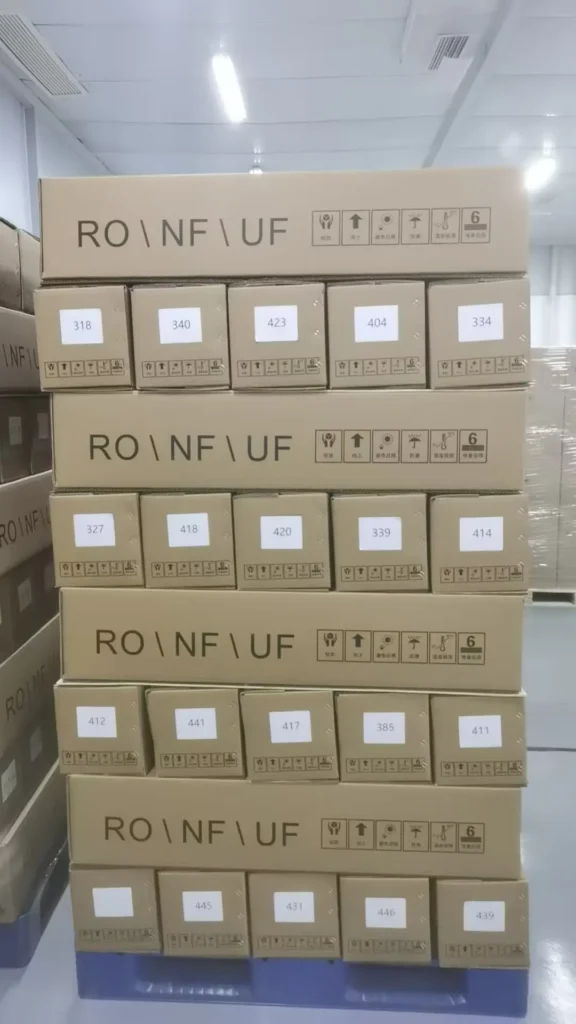
Customer-branded labels on membrane elements
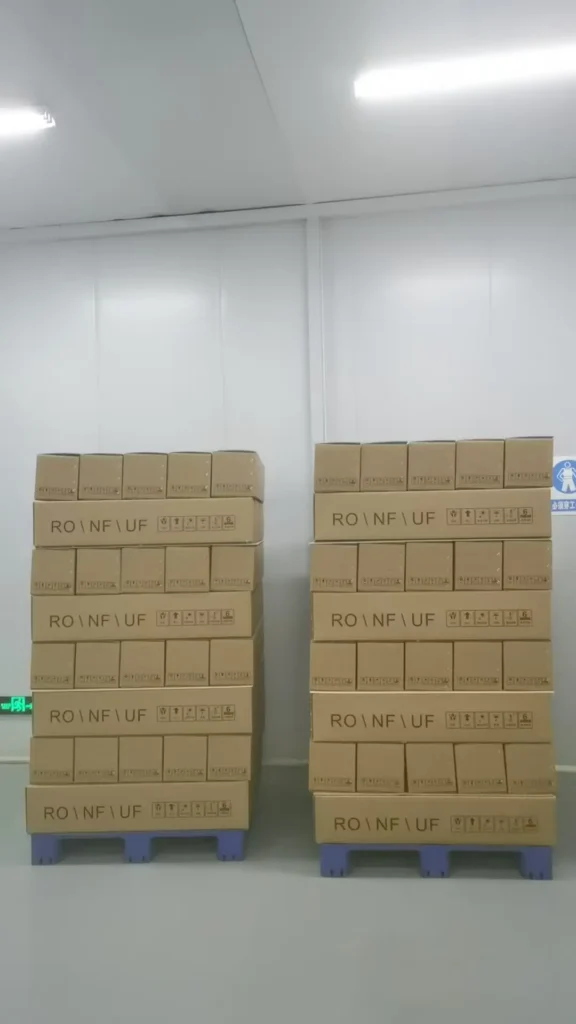
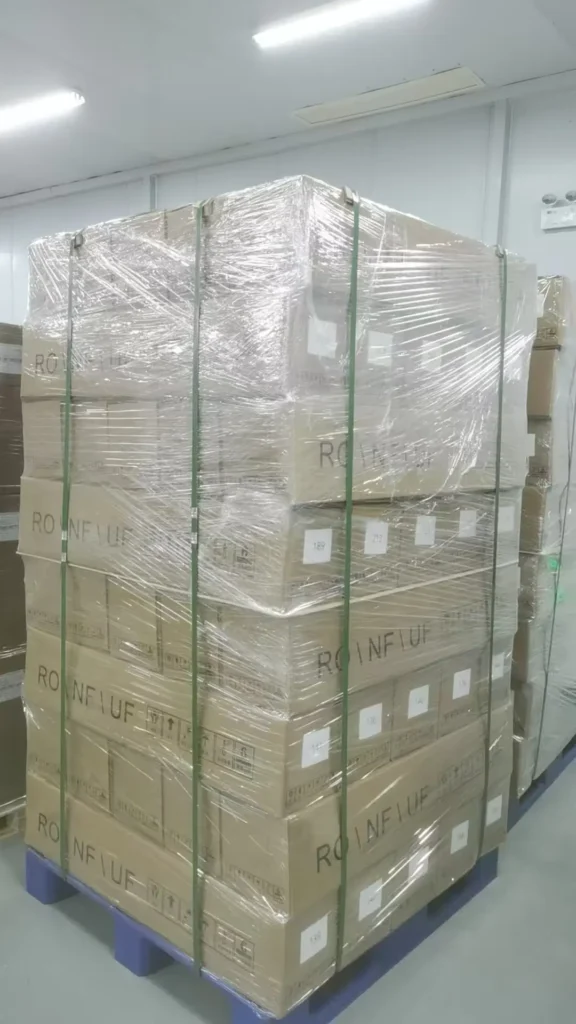
Neutral carton packaging
Customized outer cartons for larger orders
Minimum order quantities for custom labels and packaging are confirmed according to the specific requirements.
Order Consolidation & Export Packing
We can coordinate membrane sourcing, packaging requirements, and consolidated shipments for customers purchasing multiple water treatment components from China.
Brackish Water RO vs. Seawater RO Membranes: Key Differences
Brackish Water RO vs. Seawater RO Membranes: Key Differences
Brackish water RO (BWRO) and seawater RO (SWRO) membranes are both used for desalination, but they are designed for different feedwater salinity ranges and operating pressures.
| Parameter | Brackish Water RO Membranes | Seawater RO Membranes |
|---|---|---|
| Typical feedwater | Brackish groundwater, pretreated surface water, industrial process water | Seawater and other high-salinity water sources |
| Operating pressure | Generally lower, depending on feedwater salinity and recovery | Generally higher due to greater osmotic pressure |
| Membrane design | Optimized for brackish water desalination and specified operating conditions | Designed for high-salinity desalination under higher-pressure conditions |
| Salt rejection | Depends on membrane model and test conditions | Depends on membrane model and test conditions |
| Typical applications | Groundwater desalination, industrial water treatment, water reuse | Seawater desalination, coastal water supply, offshore water treatment |
How to Choose Between BWRO and SWRO Membranes
Membrane selection should not be based on feedwater TDS alone. Operating pressure, target recovery, temperature, scaling potential, and required permeate quality must also be considered.
For example, when treating high-salinity brackish water, a standard BWRO membrane may not provide sufficient operating pressure margin for the required recovery rate. In such cases, a higher-pressure membrane option may need to be evaluated.
For project-specific selection, Clear Environment can help compare BWRO and SWRO membrane specifications based on your feedwater analysis and system requirements.
Explore our RO Membrane product range for additional membrane options, or view our Seawater RO Membranes for high-salinity desalination applications.
Related Articles
- Characteristics of Reverse Osmosis Membrane Fouling and Reverse Osmosis Membrane Cleaning Methods
- RO Membrane Antiscalant Dosing: From Calculation Principles to Practical Application
- Besides reverse osmosis membrane flux, what other key design parameters are easily overlooked but can significantly impact membrane life?
- Relationship Between RO Membrane Element Pressure Limits and Recovery Rate in Water Reuse and Zero Liquid Discharge Applications
- How to Choose RO Membranes from China: 3 Key Factors to Consider