
It has been over 200 years since humans first discovered osmosis. Research on Reverse Osmosis(RO) began in the 1950s. After more than 60 years of research, development, and industrialization, Reverse Osmosis(RO) technology has matured and is widely used in seawater and brackish water desalination, pure and ultrapure water production, as well as concentration, purification, and water reuse applications. nanofiltration(NF) research began in the mid-1970s, and commercialization was achieved by the mid-1980s. Major products include aromatic polyamide composite nanofiltration(NF) membranes and cellulose acetate asymmetric nanofiltration(NF) membranes.
The pore size of nanofiltration(NF) membranes lies between that of Reverse Osmosis(RO) and ultrafiltration. Compared to other membrane processes, forward osmosis (FO) is a spontaneous, low-energy process. It utilizes the osmotic pressure difference across the membrane as the driving force, causing water molecules to spontaneously migrate from the side with higher chemical potential to the side with lower chemical potential. Forward osmosis offers advantages such as lower energy consumption, high water recovery, and low fouling propensity. It has potential for widespread application in various fields, including wastewater treatment, freshwater purification, seawater desalination, food processing, pharmaceuticals, and pressure-retarded osmosis (PRO) power generation.
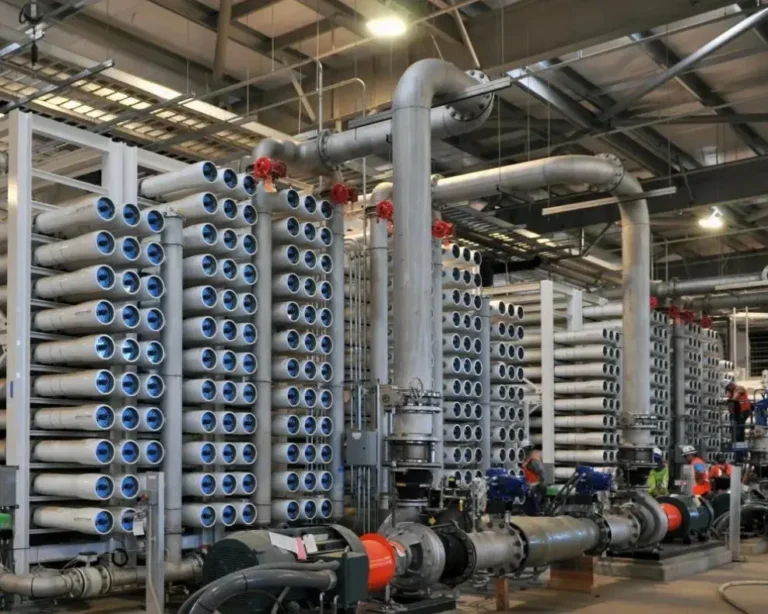
Introduction to Reverse Osmosis(RO), Forward Osmosis, and nanofiltration(NF)
A selective membrane that allows one or more components of a solution to pass through while preventing others from passing is called a semipermeable membrane. When a semipermeable membrane separates a pure solvent from a solution (or solutions of different concentrations), the pure solvent spontaneously flows through the membrane toward the solution side (or from the dilute solution to the concentrated solution). This phenomenon is called osmosis (or forward osmosis). If an external pressure is applied to the solution side (or the concentrated solution side) to oppose the solvent flow, the osmosis rate decreases. When the pressure is increased to completely stop osmosis, the osmotic tendency is balanced by the applied pressure. This equilibrium pressure is called the osmotic pressure. Osmotic pressure is a property of the solution and is independent of the membrane. If the pressure on the solution side is further increased, causing reverse solvent flow, this phenomenon is conventionally called “Reverse Osmosis(RO).”
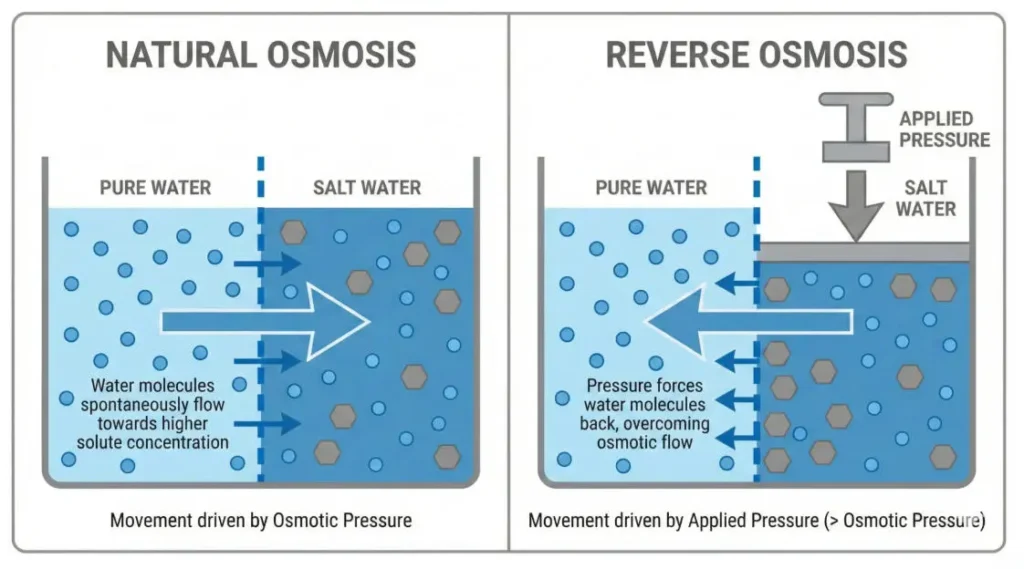
Reverse Osmosis(RO) Membranes, Forward Osmosis Membranes, nanofiltration(NF) Membranes, and Membrane Modules
Reverse Osmosis(RO) membranes are mainly divided into two categories: one is cellulose acetate membranes, such as the common cellulose acetate–cellulose triacetate blend asymmetric membrane and cellulose triacetate hollow fiber membranes; the other is aromatic polyamide membranes, such as the common aromatic polyamide composite membrane and aromatic polyamide hollow fiber membranes.
Membrane configurations include flat sheet, tubular, and hollow fiber. Flat sheet membranes can be used to produce plate-and-frame RO modules and spiral-wound RO modules. Tubular membranes can be used to produce tubular RO modules. Hollow fiber membranes can be used to produce hollow fiber RO modules. Currently, the most widely used are spiral-wound RO modules and hollow fiber RO modules. Plate-and-frame and tubular RO modules are only used in special concentration applications.
nanofiltration(NF) membranes and modules are essentially the same as those for Reverse Osmosis(RO). In addition, inorganic nanofiltration(NF) membranes and corresponding modules are also available.
Forward osmosis membranes mainly include cellulose acetate-based membranes and polyamide thin-film composite (TFC) membranes. In addition, novel forward osmosis membranes such as layer-by-layer (LbL) assembled composite membranes, dual-layer membranes, and biomimetic membranes also exist.
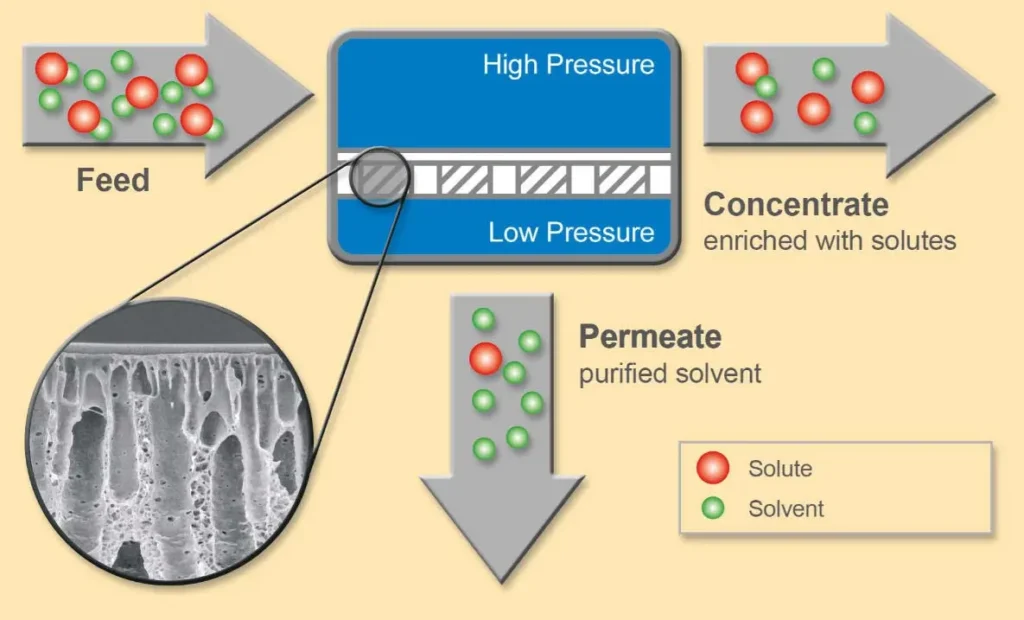
Processes and Characteristics of Reverse Osmosis(RO), Forward Osmosis, and nanofiltration(NF)
Characteristics and Applications of the Reverse Osmosis(RO) Process
Reverse Osmosis(RO) is a highly efficient and energy-saving technology. It separates water (solvent) from ions (or small molecules) in the feed solution, achieving purification and concentration. This process involves no phase change, generally does not require heating, and offers advantages such as a simple process, low energy consumption, easy operation and control, and a wide range of applications. Due to the influence of osmotic pressure, the applicable concentration range of this technology is limited. Additionally, strict control of scaling, fouling, pH, and oxidants is required. The main applications of Reverse Osmosis(RO) technology include seawater and brackish water desalination, pure and ultrapure water production, industrial water treatment, drinking water purification, treatment and concentration of process streams in pharmaceutical, chemical, and food industries, as well as wastewater treatment.
Characteristics and Applications of the Forward Osmosis Process
The forward osmosis process is driven by the osmotic pressure difference across the semipermeable membrane without the need for applied external pressure, thus offering lower energy consumption compared to traditional separation technologies. Furthermore, since there is no external pressure or only very low hydraulic pressure during operation, the fouling propensity is significantly lower than that of the Reverse Osmosis(RO) process. Concentration polarization also occurs in the forward osmosis process, which significantly reduces water flux due to the decrease in net osmotic pressure difference. Forward osmosis technology can be applied in wastewater treatment, freshwater purification, seawater desalination, food processing, pharmaceuticals, and pressure-retarded osmosis power generation.
Characteristics and Applications of the nanofiltration(NF) Process
The pore size of nanofiltration(NF) membranes is on the order of nanometers. Some of these membranes also exhibit significant differences in Donnan potential for anions of different valences. Their molecular weight cut-off (MWCO) is in the hundreds, and they show significant rejection differences for anions of different valences, allowing some or most monovalent inorganic salts to pass through. nanofiltration(NF) offers unique advantages and significant energy savings in water softening, fractionation of low-molecular-weight organics, and desalting and purification of organic compounds.
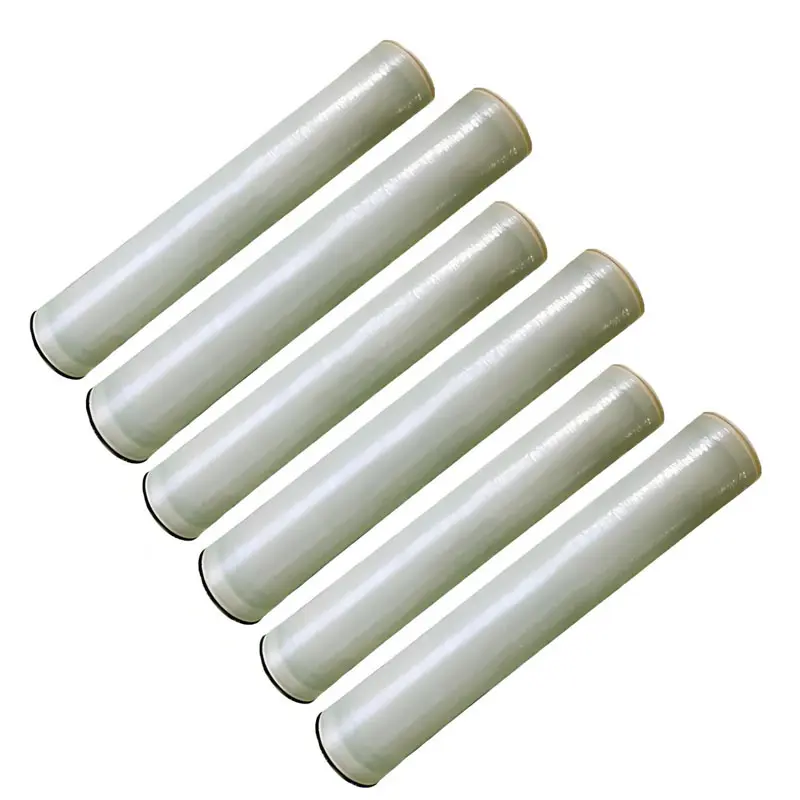
Reverse Osmosis(RO), Forward Osmosis, and nanofiltration(NF) Membrane Module Technology
Reverse Osmosis(RO) Membrane Module Technology
A Reverse Osmosis(RO) module is the smallest basic unit assembled from membranes that can be put into practical use and is the main component of a Reverse Osmosis(RO) unit. Modules can have different configurations and can vary in size to suit different scales of units and different applications.
Requirements for module design and fabrication include:
- Good sealing between the high-pressure feed water on the membrane side and the low-pressure permeate water on the other side.
- The membrane support (for flat sheet or tubular membranes) or the membrane itself (for hollow fiber membranes) must withstand high operating pressure differentials, prevent leakage between feed and permeate, and avoid excessive pressure differences between feed and permeate.
- Membrane flow channel design is a critical factor. Ranges should be determined based on hydraulic conditions and membrane performance, then optimized in combination with process parameters. Good flow conditions are required to reduce concentration polarization and prevent salt accumulation and fouling on the membrane surface.
- High packing density and ease of membrane replacement are needed to reduce equipment costs. At the same time, large-scale, high-quality manufacturing and assembly should be achievable.
Forward Osmosis Membrane Module Technology
A forward osmosis membrane module is the smallest basic unit assembled from forward osmosis membranes that can be put into practical engineering applications and is the core component of a forward osmosis unit. However, since the forward osmosis process requires two solution circulation loops (draw solution and feed solution), and the feed solution to be treated is often a highly fouling water source, forward osmosis membrane modules cannot simply copy the existing mature Reverse Osmosis(RO) module designs. They need to be redesigned or specifically modified according to the characteristics of the forward osmosis process.
Based on membrane geometry, forward osmosis membrane modules are currently mainly divided into three basic types: plate-and-frame, spiral-wound, and hollow fiber. Different types of membrane modules have their own advantages and disadvantages. Their application fields relate to the operating mode (batch or continuous operation). The following focuses on the types, structural designs, and application fields of membrane modules currently used for the forward osmosis process.
Nanofiltration(NF) Membrane Module Technology
Based on membrane geometry, commercialized nanofiltration(NF) membrane modules also mainly come in four basic configurations: plate-and-frame (PE), tubular (T), spiral-wound (SW), and hollow fiber (HF). The design and manufacturing of nanofiltration(NF) membrane modules are similar to those of Reverse Osmosis(RO) membranes, with spiral-wound modules currently being the dominant type.
Related Articles
- Characteristics of Reverse Osmosis Membrane Fouling and Reverse Osmosis Membrane Cleaning Methods
- RO Plant in Dialysis: A Detailed Guide to the Reverse Osmosis System
- RO Plant for Dialysis: A Detailed Guide to the Pretreatment System
- How to Design a Dialysis Water Distribution Loop When a 40-machine Center Opens with Only 10 Machines
- Vertical vs Horizontal RO Membranes: Does Installation Orientation Matter?
- Optimizing Circulating Cooling Water Systems Using Reverse Osmosis Membrane Filtration Permeate
- Control and Prevention of Silica Fouling on RO Membranes
- RO Membrane Antiscalant Dosing: From Calculation Principles to Practical Application
- RO System Design: Series Staging or Concentrate Recirculation for Small RO Systems?
- Winter Maintenance Tips for Water Vending Machines
- Small Reverse Osmosis Plant Process Details (0.5m3/Hour)
- Besides reverse osmosis membrane flux, what other key design parameters are easily overlooked but can significantly impact membrane life?
- How to Calculate Recovery Rate RO System?
- Relationship Between RO Membrane Element Pressure Limits and Recovery Rate in Water Reuse and Zero Liquid Discharge Applications
- How to Choose RO Membranes from China: 3 Key Factors to Consider