
In the water treatment industry, you’ll notice a common installation pattern: ultrafiltration (UF) membranes are usually installed vertically, while RO membranes and pressure vessels are typically arranged horizontally.
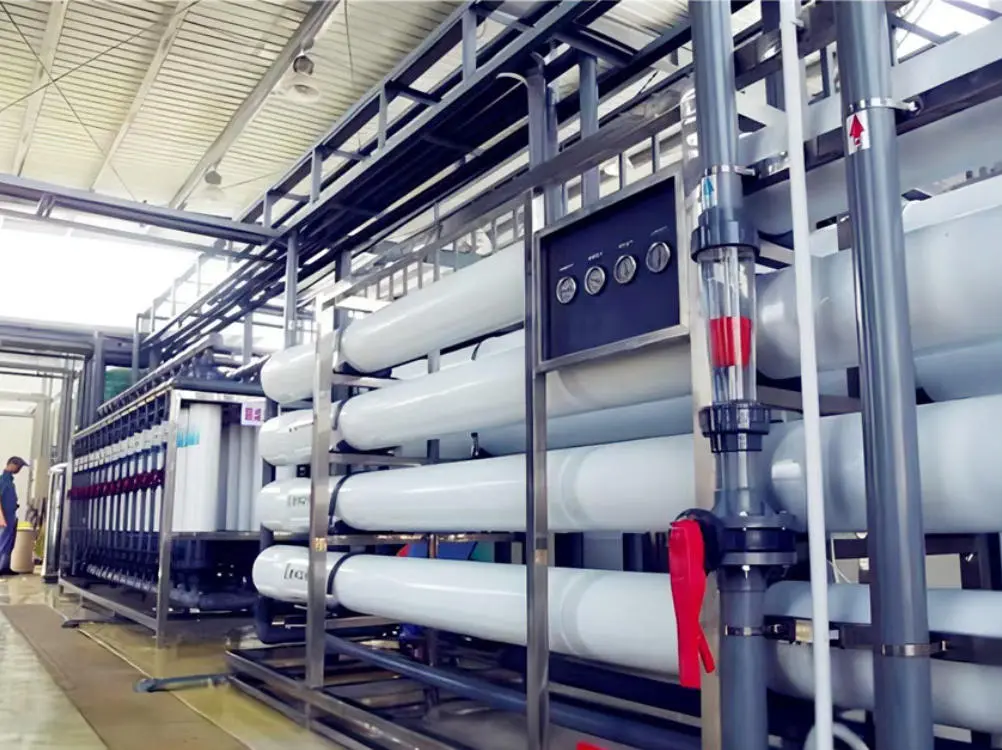
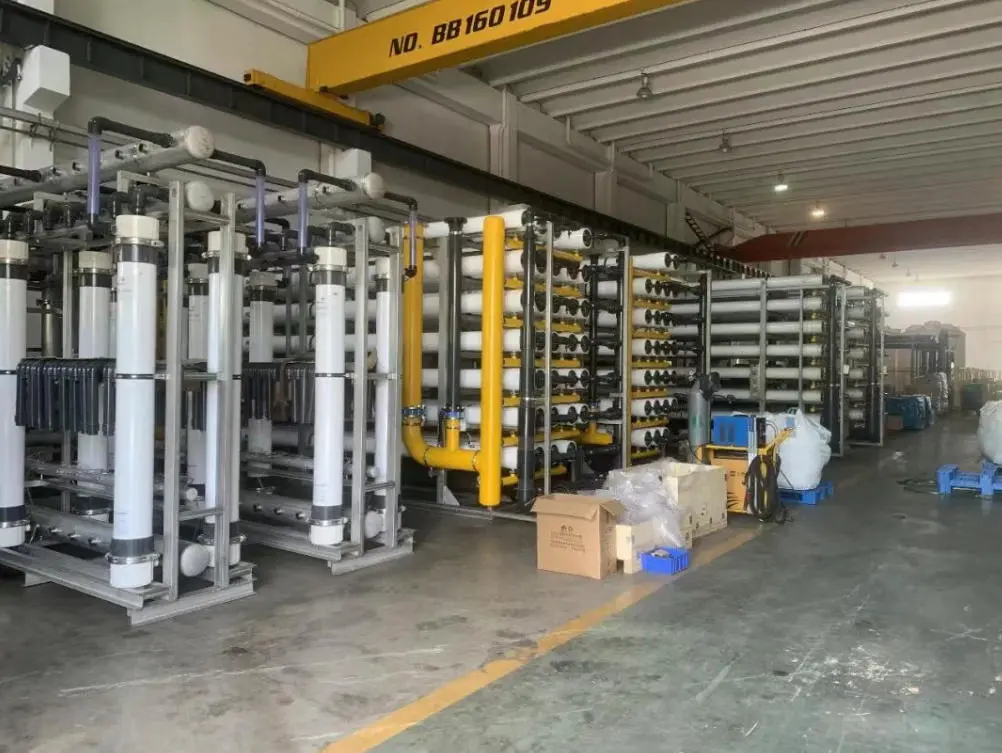
That said, in some compact reverse osmosis systems, especially small commercial or residential units, you may also see RO membranes installed vertically.
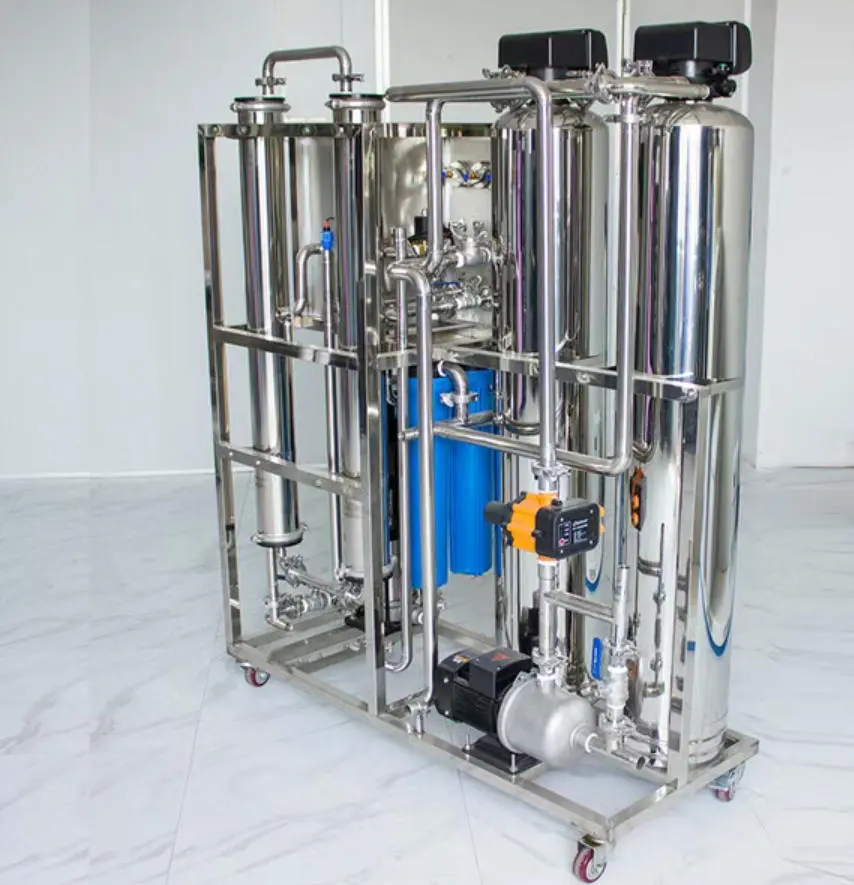
This often leads to a common question:
Will installing RO membranes vertically cause any problems?
The short answer is: In most applications, not really.
Space Utilization Is the Main Reason
To understand why UF modules are generally installed vertically while RO membranes are more commonly mounted horizontally, it’s important to remember one of the biggest advantages of membrane technology: it dramatically reduces the system footprint.
In industrial facilities, floor space is expensive. While pretreatment is essential to protect membranes, designing an oversized system simply to accommodate membrane orientation defeats the purpose of compact membrane technology. Efficient equipment layout is therefore a key consideration.
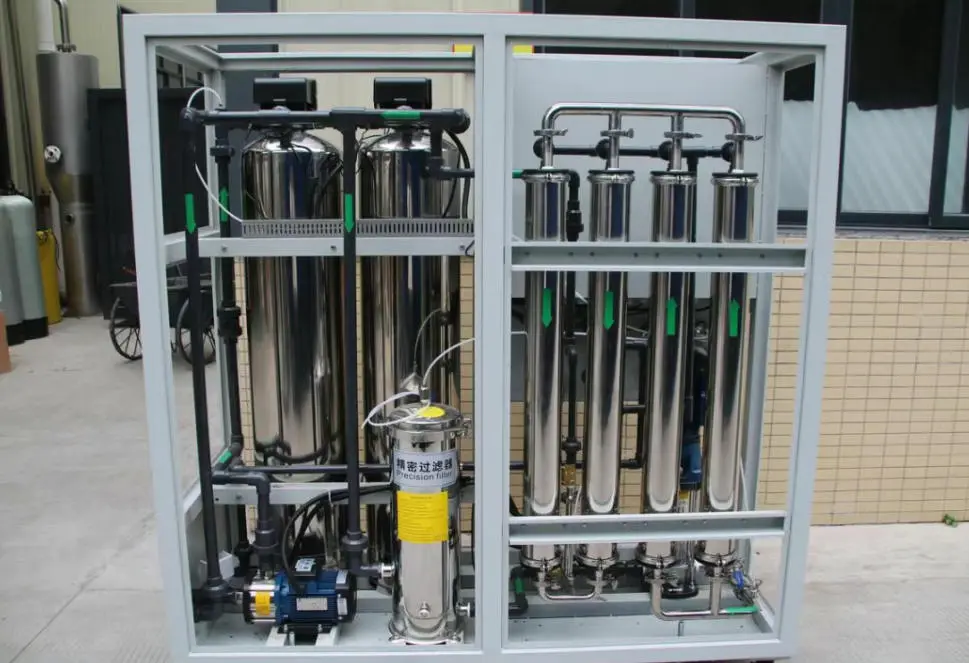
Unlike reverse osmosis systems, ultrafiltration systems rarely connect multiple membrane elements in series, so individual modules are relatively short. For example, an SFP-2880 UF module has a housing length of approximately 92.9 inches (2.36 m). At this size, horizontal installation offers little advantage over vertical installation in terms of space utilization.
Note: In high-flow applications with very high turbidity, longer UF modules may be used, where horizontal installation can become more practical.
Large and medium-sized RO systems are quite different. Pressure vessels commonly hold 6, 7, or even 8 membrane elements, resulting in an overall length of approximately 6.5 to 8.5 meters.
Installing vessels vertically at this length would require greater building height, stronger support structures, and more complex installation and maintenance procedures. By comparison, horizontal arrangements can be stacked in multiple layers—often up to ten levels—making much better use of available space while remaining easier to service.
The Influence of Gravity
Although vertical UF modules and horizontal RO membranes are generally considered the most practical arrangement, there are certain applications where vertical installation of RO vessels can provide real benefits.
One example is large-scale seawater desalination plants.
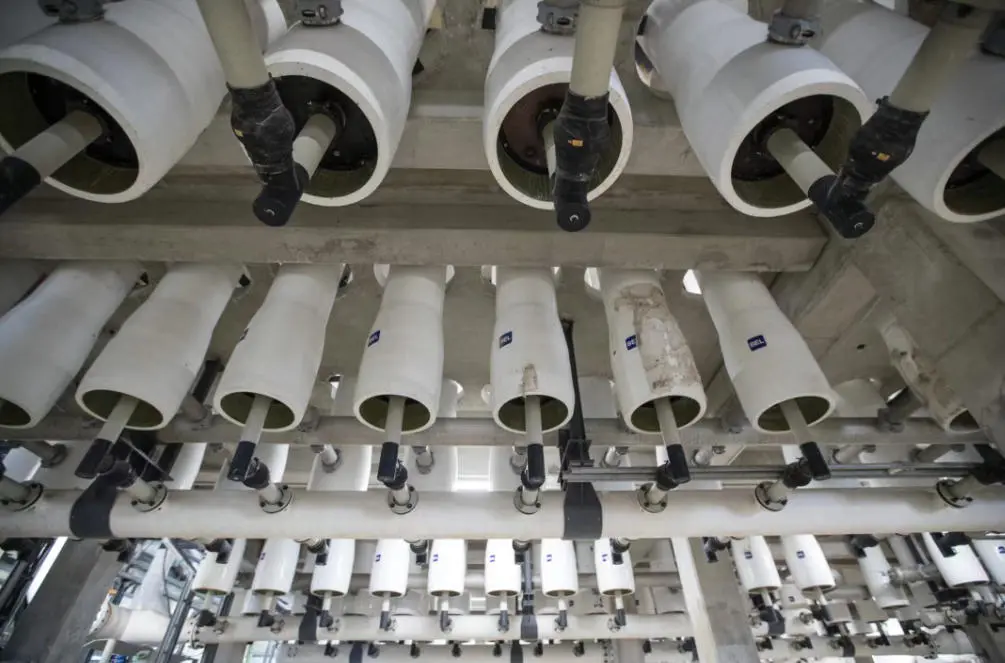
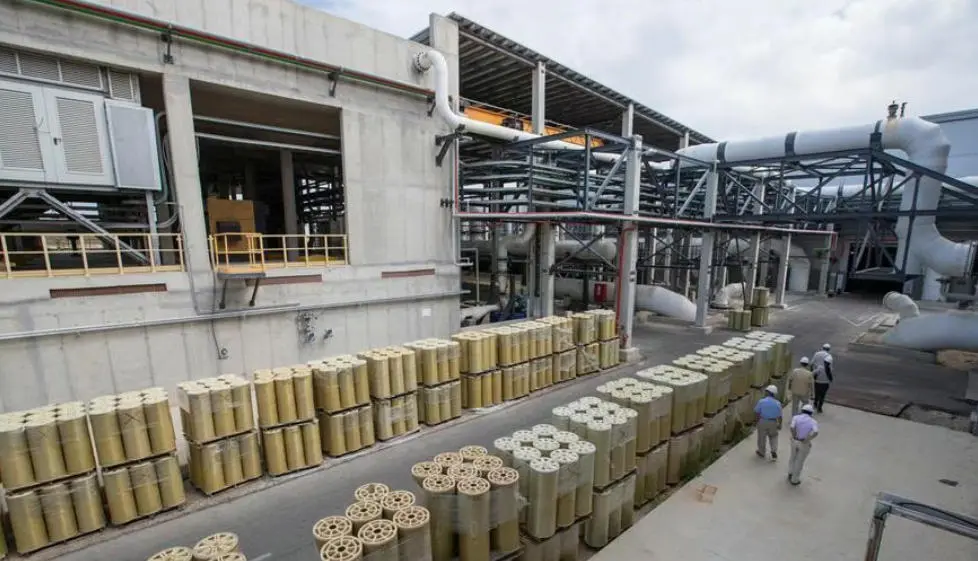
RO Membrane Arrays of Israel Sorek Desalination Project
During membrane filtration, gravity naturally affects how suspended particles behave inside the pressure vessel. When membrane elements are installed vertically and feed water flows from the bottom upward, suspended solids are generally less likely to settle and accumulate on the membrane surface.
In contrast, with horizontally installed membrane elements, gravity can encourage particles to settle along the lower side of the membrane, creating areas where fouling is more concentrated.
This effect becomes increasingly noticeable when treating feed water with relatively high levels of suspended solids or contaminants. That is one reason why vertically installed RO pressure vessels are more commonly considered in seawater desalination projects than in conventional systems treating municipal water or surface water.
In simple terms, when feed water has higher turbidity or contaminant concentrations, vertically installed membrane vessels may help reduce fouling, extend membrane service life, and decrease the frequency and cost of chemical cleaning. However, these advantages usually come with higher structural requirements and increased initial investment.
What About Small RO Systems?
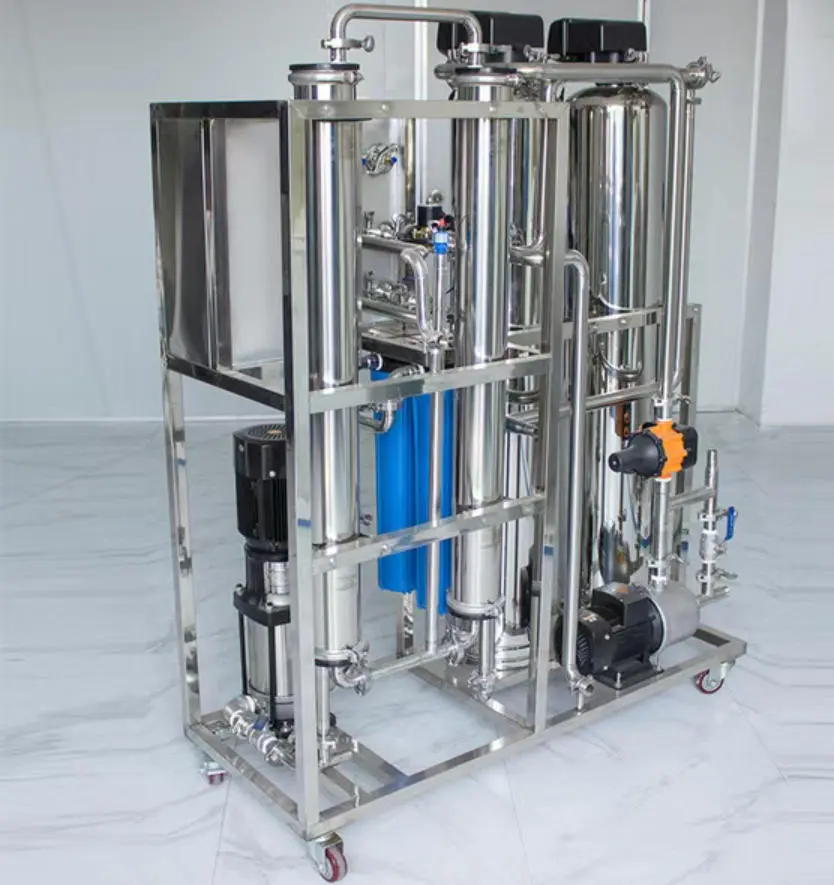
Let’s return to the small 0.5 m³/h and 1.0 m³/h RO systems often seen in commercial applications.
A 0.5 m³/h unit typically uses a 1-1/1 membrane arrangement, while a 1.0 m³/h system commonly adopts layouts such as 2-1-1/1 or 2-2/1.
In either case, the piping layout is usually not designed to ensure that every membrane element operates with bottom-to-top feed flow. As a result, these systems cannot fully take advantage of gravity to reduce membrane fouling. In some situations, attempting to do so could even introduce unnecessary hydraulic instability.
Fortunately, this is rarely a concern in practice. These compact RO systems typically treat municipal tap water with relatively low turbidity, and their flow rates are small. Under these operating conditions, the influence of membrane orientation on overall system performance is minimal.
Conclusion
For most commercial and industrial applications, whether RO membranes are installed horizontally or vertically has little impact on filtration performance.
Horizontal installation remains the preferred choice because it simplifies equipment installation, reduces structural requirements, and makes maintenance easier—particularly for long multi-element pressure vessels.
However, in applications with high suspended solids, such as seawater desalination or other challenging feed water conditions, vertically installed RO membranes may offer advantages by reducing particle deposition and slowing membrane fouling.
Ultimately, the optimal installation method should be selected based on the feed water quality, available installation space, equipment size, and long-term maintenance strategy rather than orientation alone.
Related Articles
- Characteristics of Reverse Osmosis Membrane Fouling and Reverse Osmosis Membrane Cleaning Methods
- RO Plant in Dialysis: A Detailed Guide to the Reverse Osmosis System
- RO Plant for Dialysis: A Detailed Guide to the Pretreatment System
- How to Design a Dialysis Water Distribution Loop When a 40-machine Center Opens with Only 10 Machines
- Optimizing Circulating Cooling Water Systems Using Reverse Osmosis Membrane Filtration Permeate
- Control and Prevention of Silica Fouling on RO Membranes
- RO Membrane Antiscalant Dosing: From Calculation Principles to Practical Application
- RO System Design: Series Staging or Concentrate Recirculation for Small RO Systems?
- Winter Maintenance Tips for Water Vending Machines
- Small Reverse Osmosis Plant Process Details (0.5m3/Hour)
- Besides reverse osmosis membrane flux, what other key design parameters are easily overlooked but can significantly impact membrane life?
- NF Membrane VS RO Membrane VS Forward Osmosis Membrane
- How to Calculate Recovery Rate RO System?
- Relationship Between RO Membrane Element Pressure Limits and Recovery Rate in Water Reuse and Zero Liquid Discharge Applications
- How to Choose RO Membranes from China: 3 Key Factors to Consider