
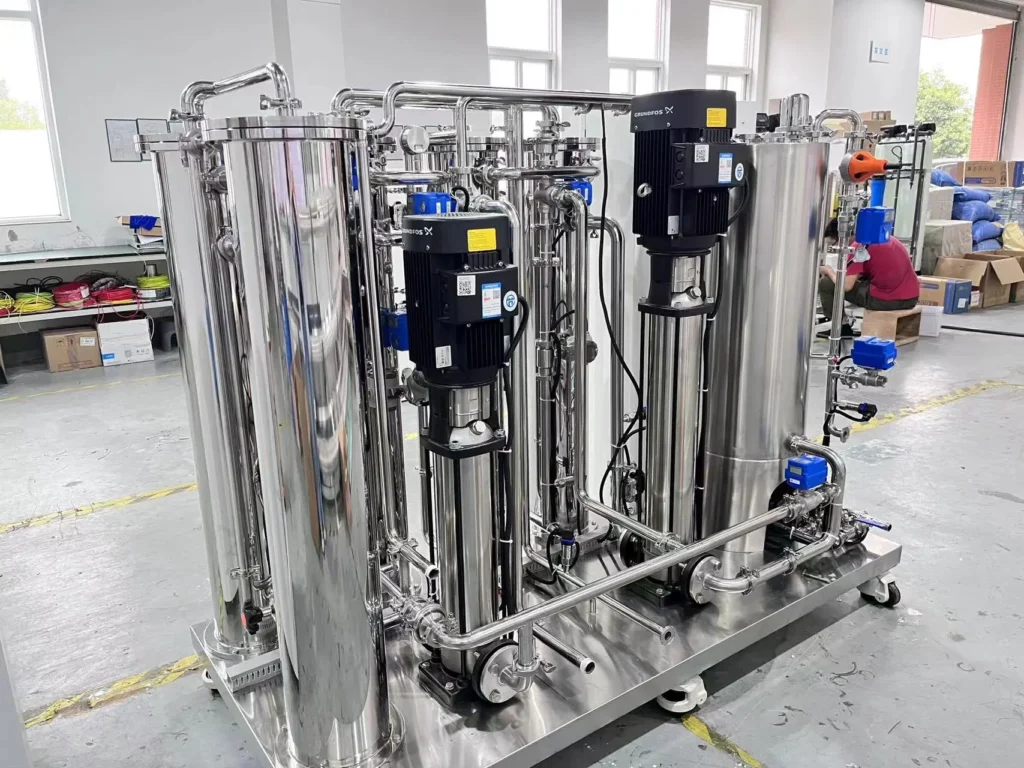
In the previous article, we took a closer look at the pretreatment section of a hemodialysis water treatment system, including the multimedia filter, water softener, and activated carbon filter.
After passing through these pretreatment stages, the water finally reaches the core component of the water treatment system — the reverse osmosis (RO) unit.
For anyone involved in dialysis water treatment, understanding how the RO unit works is essential. In this article, we will take a detailed look at the RO section of an RO plant in dialysis, including its basic principles, main components, membrane technology, alarms, and disinfection methods.
Some Basic Concepts You Need to Know
Before discussing the RO system itself, it is useful to understand three basic concepts: osmosis, osmotic pressure, and reverse osmosis.
What Is Osmosis?
Osmosis is the natural movement of a solvent, such as water, through a semipermeable membrane from a dilute solution toward a more concentrated solution.
A semipermeable membrane allows water molecules to pass through while restricting the passage of dissolved substances such as salts.
What Is Osmotic Pressure?
During osmosis, water moves toward the more concentrated solution and gradually dilutes it.
As water continues to move across the membrane, pressure develops on the concentrated side. When this pressure is sufficient to prevent further net movement of water, the system reaches an equilibrium state.
This pressure is called osmotic pressure.
Osmotic pressure is a property of a solution and generally increases as the concentration of dissolved substances increases.
What Is Reverse Osmosis?
RO stands for Reverse Osmosis.
In a reverse osmosis process, external pressure is applied to the concentrated solution. When the applied pressure exceeds the natural osmotic pressure, the direction of water movement is reversed.
Water is forced through the semipermeable membrane from the concentrated side toward the less concentrated side, while most dissolved salts and other contaminants are retained.
This is the fundamental principle behind an RO plant in dialysis.
In a hemodialysis water treatment system, RO is primarily used to remove dissolved salts and many organic contaminants from the feed water.
Reverse osmosis can also provide significant reduction of microorganisms, particles, and endotoxins, depending on membrane condition and system design.
RO membranes can achieve very high salt rejection, commonly above 95%, making reverse osmosis one of the most widely used desalination technologies for producing purified water for medical applications.
Typical RO operating pressure depends on the membrane type, feed water quality, temperature, and system design. For many conventional RO systems, operating pressures can range approximately from 14 to 60 bar (1.4–6.0 MPa).
Main Components of a Dialysis RO System
When selecting the capacity of an RO system for a dialysis center, the required permeate production should be determined according to factors such as:
Number of dialysis machines
Water consumption of dialysis equipment
Water required for equipment cleaning and disinfection
Future expansion of the dialysis center
The pretreatment configuration should also be designed according to the local feed water analysis.
The membrane type and number of membrane elements should be selected based on the required treated water quality and system capacity.
A typical dialysis RO system consists of:
RO membrane elements
Pressure vessels
Skid or equipment frame
High-pressure piping
Control and regulating valves
High-pressure pump
Electrical control system
Monitoring instruments
Alarm system
Disinfection system
High-Pressure Pump
The high-pressure pump is one of the key components of an RO system.
It supplies a stable and continuous flow of feed water to the RO membrane at the required operating pressure.
The required pressure depends on the membrane type and feed water conditions. For example, conventional thin-film composite membranes may operate around 1.6 MPa, while some low-pressure RO membranes may operate at approximately 1.05 MPa.
The actual operating pressure should always be determined according to the membrane manufacturer’s specifications and the system design.
Piping and Valves
The piping and valve materials used in a dialysis water treatment system must be selected carefully.
Important considerations include:
Pressure resistance
Corrosion resistance
Material compatibility
Hygienic design
Low risk of contaminating the purified water
Copper components should generally be avoided on the purified water side of a dialysis water treatment system.
Sanitary-grade piping and fittings should be selected for the product water distribution system.
The system should also include appropriate disinfection and safety provisions.
Monitoring and Instrumentation
A properly designed dialysis RO system should continuously monitor key operating parameters.
Depending on the system configuration, these may include:
Feed water conductivity
RO permeate conductivity
Feed water flow rate
Permeate flow rate
Reject/concentrate flow rate
Residual chlorine
Feed water pressure
High-pressure pump inlet and outlet pressure
RO permeate pressure
Feed water temperature
pH
These parameters help operators monitor RO performance and identify potential problems at an early stage.
A Closer Look at the RO Membrane
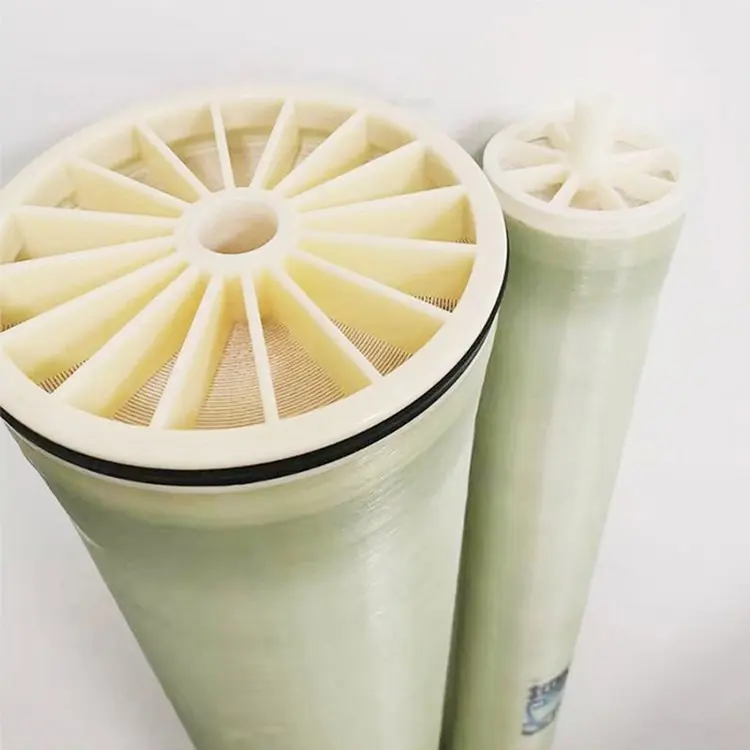
Function of the RO Membrane
The RO membrane is the core separation component of an RO plant in dialysis.
It provides a high level of dissolved salt rejection and functions as a highly selective filtration barrier.
The membrane separation layer is extremely dense, allowing water molecules to pass through while rejecting most dissolved ions and many other contaminants.
A properly operated RO system can therefore significantly reduce dissolved solids, microorganisms, and endotoxins in the feed water.
Types of RO Membranes
Similar to dialysis membranes, RO membranes are available in different materials and configurations.
Most commercial RO membranes are manufactured from organic polymeric materials, while some specialized membranes use inorganic materials.
Common membrane materials include:
Cellulose acetate (CA)
Polyamide (PA)
Thin-film composite (TFC)
The performance characteristics of these membranes vary depending on their material, structure, and intended application.
RO Membrane Configurations
An RO membrane must be manufactured into a suitable configuration before it can be used in a water treatment system.
Common membrane configurations include:
Plate-and-frame
Tubular
Spiral-wound
Hollow-fiber
For hospital dialysis water treatment, spiral-wound thin-film composite membranes are widely used.
Depending on the application, dialysis RO systems may use:
Low-pressure RO membranes
Ultra-low-pressure RO membranes
Sanitary RO membranes
RO membranes designed for hot-water disinfection
The appropriate membrane should be selected according to the system design, feed water conditions, required water quality, and disinfection method.
How Does an RO Membrane Work?
Removal of Organic Compounds
The RO membrane consists of a very thin, dense separation layer supported by a more porous structure.
The separation process is largely determined by the interaction between the membrane and the water solution.
The molecular size and structure of organic compounds are important factors in determining whether they can pass through the membrane.
Larger molecules are generally rejected more effectively, although actual rejection depends on molecular characteristics and membrane properties.
Salt Rejection
The high salt rejection of an RO membrane results from its highly selective separation layer.
Water molecules can pass through the membrane under the applied pressure, while most dissolved ions and salts are rejected and remain on the feed/concentrate side.
The permeate therefore contains significantly fewer dissolved salts than the original feed water.
RO Membrane Service Life
When feed water quality and operating conditions remain within the membrane manufacturer’s recommended limits, a high-quality thin-film composite membrane can maintain stable performance for several years.
Membrane service life, however, is strongly affected by:
Feed water quality
Pretreatment performance
Operating pressure
Recovery rate
Cleaning and disinfection practices
Frequency of operation
Membrane fouling and scaling
Rather than determining membrane replacement only by time, the membrane should be evaluated according to permeate flow and salt rejection.
As long as the RO system can maintain the required permeate production and treated water quality, the membrane may continue to operate.
With proper pretreatment and maintenance, an RO system can operate for many years without frequent membrane replacement.
However, dialysis RO systems can experience premature membrane failure when pretreatment is not properly maintained.
For example, inadequate regeneration of the sodium-form cation exchange resin can allow excessive hardness to reach the RO membrane. This may result in severe scaling or fouling and, in some cases, a significant reduction in permeate flow within a relatively short period.
This is why pretreatment performance is just as important as the RO membrane itself.
RO System Alarms
An RO system should generate an alarm when operating parameters exceed predetermined limits.
Alarms are an important part of protecting the safety and reliability of dialysis water production.
Some alarm conditions may automatically stop the RO system to prevent equipment damage or the production of unsuitable water.
Common RO alarms include:
Low Feed Pressure Alarm
Insufficient feed water supply, inadequate pretreatment performance, or a problem with the water supply system may cause low inlet pressure at the high-pressure pump.
When the pressure falls below the preset limit, the RO system may automatically stop.
High Permeate Conductivity Alarm
A high permeate conductivity alarm may indicate reduced membrane rejection, membrane damage, seal failure, or deterioration of feed water conditions.
The conductivity limit should be established according to the applicable dialysis water quality requirements and system design.
Other Alarms
Depending on the system configuration, additional alarms may include:
High or low temperature
Abnormal pH
High residual chlorine
High or low operating pressure
Insufficient feed water flow
High permeate conductivity
These monitoring functions help operators identify abnormal conditions before they affect the dialysis water supply.
Disinfection Methods for Dialysis RO Systems
Although various measures are taken to minimize microbial contamination, microorganisms can still colonize water treatment and distribution systems.
Therefore, a complete medical RO system should incorporate an appropriate disinfection strategy.
Chemical disinfection has traditionally been widely used, while thermal disinfection is increasingly adopted in modern medical water treatment systems.
Sodium Hypochlorite
Advantages
Low cost
Strong disinfecting capability
Effective against microorganisms
Can help break down certain organic deposits and biofilm-related contamination
Disadvantages
Many conventional RO membranes have limited resistance to oxidizing agents such as free chlorine.
Therefore, sodium hypochlorite should not be used directly on an RO membrane unless the membrane manufacturer specifically confirms compatibility.
In most RO systems, chlorine is removed during pretreatment before the water reaches the RO membrane.
Formaldehyde
Advantages
Compatible with many types of RO membranes
Can penetrate parts of the RO system and distribution pathway
Disadvantages
Formaldehyde is toxic and requires strict handling and rinsing procedures.
It is also not an effective method for physically removing established biofilm deposits. In heavily contaminated systems, biofilm may therefore remain after disinfection.
For these reasons, its use requires careful consideration and appropriate safety procedures.
Peracetic Acid
Advantages
Strong antimicrobial performance
Compatible with many RO membranes when used within specified limits
Can help control biofilm
Can penetrate some parts of the RO system
Disadvantages
The concentration and temperature of peracetic acid must be carefully controlled.
Excessive concentration, temperature, or exposure time can cause irreversible damage to the RO membrane.
The exact chemical concentration, temperature, exposure time, and membrane compatibility should always be confirmed with the RO membrane manufacturer.
Important Note
When the RO membrane is confirmed to be compatible with peracetic acid, periodic chemical disinfection can provide both microbial control and biofilm management.
However, the disinfection procedure must be designed correctly.
The system should generally be operated under low-pressure, high-flow conditions during chemical circulation where required by the membrane manufacturer’s instructions.
Otherwise, the selective nature of the RO membrane may cause the disinfectant concentration on the feed side to increase beyond the intended level, potentially damaging the membrane.
After chemical disinfection, the system must be thoroughly flushed and the disinfectant residual verified before the water is returned to dialysis service.
For example, where peracetic acid is used, the residual concentration should meet the applicable medical water treatment requirements before the water is used for dialysis.
Thermal Disinfection
In addition to chemical disinfection, thermal disinfection has become increasingly important in medical water treatment.
One of its biggest advantages is that it does not leave chemical disinfectant residues.
After thermal disinfection, the system can be cooled and flushed before being returned to service.
This makes thermal disinfection an attractive option for modern dialysis water treatment systems.
Advantages
Because there is no chemical disinfectant residue, thermal disinfection can potentially be performed frequently, even daily, depending on the system design.
Regular thermal disinfection can help control microbial growth within the piping system and reduce the development of biofilm.
Some specialized systems can also operate at higher temperatures for thermal sterilization, providing a higher level of microbial control than conventional low-temperature thermal disinfection.
Disadvantages
Conventional thermal disinfection at around 85°C may provide different microbial control performance compared with chemical disinfection and does not physically remove established biofilm.
Another major consideration is material compatibility.
High temperatures can accelerate the degradation of many polymeric materials and potentially affect water quality.
For this reason, high-quality stainless steel piping is widely regarded as a reliable choice for hot-water disinfection systems.
Some systems use PEX or other polymeric piping materials, but their suitability depends on the specific material grade, temperature, operating conditions, and manufacturer’s recommendations.
Materials such as CPVC and PPR should only be used for thermal disinfection applications when their temperature resistance and long-term suitability have been specifically verified for the intended medical water treatment system.
Conclusion
The RO unit is the core purification stage of an RO plant in dialysis.
The pretreatment system protects the RO membrane from suspended solids, hardness, chlorine, and other contaminants, while the RO membrane provides the primary removal of dissolved salts and many other impurities.
For a dialysis water treatment system, reliable performance depends not only on the RO membrane itself, but also on correct system sizing, pretreatment, monitoring, maintenance, and disinfection.
A well-designed RO plant in dialysis should therefore be considered as a complete water treatment system rather than simply an RO membrane and high-pressure pump.
Properly designed pretreatment, suitable membrane selection, continuous monitoring, and an appropriate disinfection strategy are all essential for maintaining stable performance and reliable water quality for hemodialysis.
Related Articles
- Characteristics of Reverse Osmosis Membrane Fouling and Reverse Osmosis Membrane Cleaning Methods
- RO Plant for Dialysis: A Detailed Guide to the Pretreatment System
- How to Design a Dialysis Water Distribution Loop When a 40-machine Center Opens with Only 10 Machines
- Vertical vs Horizontal RO Membranes: Does Installation Orientation Matter?
- Optimizing Circulating Cooling Water Systems Using Reverse Osmosis Membrane Filtration Permeate
- Control and Prevention of Silica Fouling on RO Membranes
- RO Membrane Antiscalant Dosing: From Calculation Principles to Practical Application
- RO System Design: Series Staging or Concentrate Recirculation for Small RO Systems?
- Winter Maintenance Tips for Water Vending Machines
- Small Reverse Osmosis Plant Process Details (0.5m3/Hour)
- Besides reverse osmosis membrane flux, what other key design parameters are easily overlooked but can significantly impact membrane life?
- NF Membrane VS RO Membrane VS Forward Osmosis Membrane
- How to Calculate Recovery Rate RO System?
- Relationship Between RO Membrane Element Pressure Limits and Recovery Rate in Water Reuse and Zero Liquid Discharge Applications
- How to Choose RO Membranes from China: 3 Key Factors to Consider