1. Reverse Osmosis Membrane Fouling Phenomena
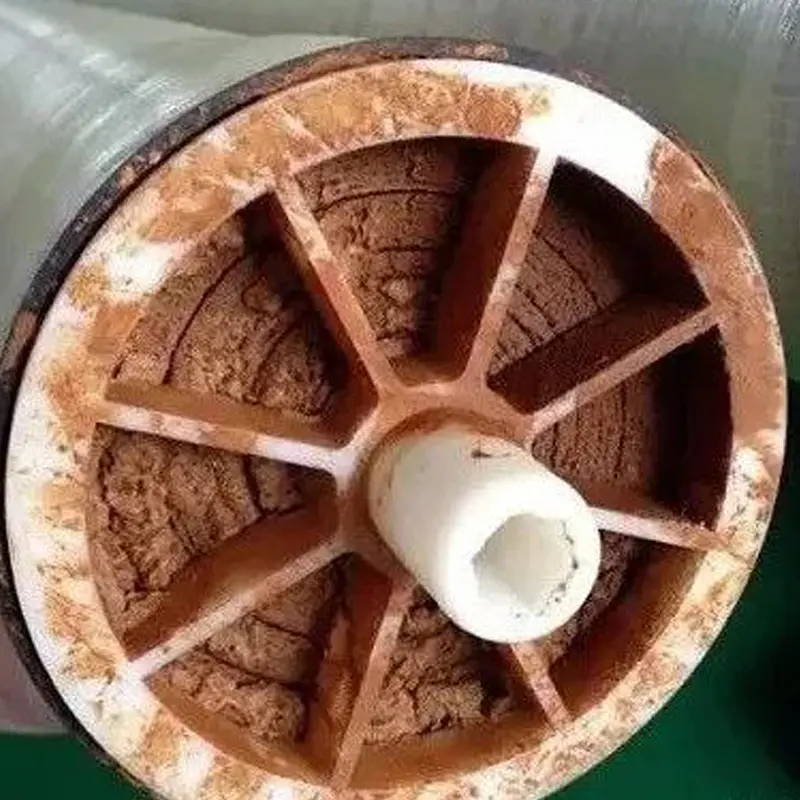
During reverse osmosis (RO) operation, due to the selective permeability of the membrane, certain solutes accumulate near the membrane surface, resulting in membrane fouling. Understanding reverse osmosis membrane cleaning is crucial because regular maintenance ensures stable performance and prolonged membrane life. Common fouling symptoms include the following types:
a) Biological Fouling (gradual onset):
Organic deposits mainly consist of living or dead microorganisms, hydrocarbon derivatives, natural organic polymers, and all carbon-containing substances. Initial symptoms include increased salt rejection, higher pressure drop, and reduced permeate production. Effective reverse osmosis membrane cleaning can prevent these deposits from permanently damaging the membranes.
b) Colloidal Fouling (gradual onset):
During membrane separation, the concentration of metal ions and changes in solution pH may lead to the deposition of metal hydroxides (primarily Fe(OH)₃), causing fouling. Early signs are a slight decrease in salt rejection, gradually increasing over time, followed by higher pressure drop and reduced permeate production. Timely reverse osmosis membrane cleaning helps restore the system to optimal flow rates.
c) Particulate Fouling:
If pre-filters in the RO system fail during operation, particles can enter the system, causing particulate fouling on the membranes. Initial signs include increased concentrate flow rate, little change in salt rejection at first, gradually decreasing permeate output, and rapidly increasing system pressure drop. Regular reverse osmosis membrane cleaning is essential to remove such deposits before they worsen.
d) Chemical Scaling (rapid onset):
When feed water contains high levels of Ca²⁺, Mg²⁺, HCO₃⁻, CO₃²⁻, SO₄²⁻, and other ions, scales such as CaCO₃, CaSO₄, and MgCO₃ may precipitate on the membrane surface. This is characterized by a decrease in salt rejection, especially noticeable after shutdown, and a reduction in permeate production. Preventative reverse osmosis membrane cleaning can reduce the formation of such scales.
Membrane fouling is the primary cause of reduced permeate flow in RO membranes. It includes increased membrane filtration resistance caused by pore blockage and large-molecule solute accumulation, adsorption of solutes on pore walls, and the formation of a gel layer on the membrane surface that increases mass transfer resistance. Deposition of components within the membrane pores reduces or even blocks the pores, effectively decreasing the membrane’s active area. The additional resistance caused by a fouling layer on the membrane surface can be much greater than the membrane’s intrinsic resistance, making the permeate flow largely independent of the membrane’s inherent permeability.
This effect is irreversible. The degree of fouling depends on the membrane material, the solvent and macromolecular solute concentration in the feed, solute properties, solution pH, ionic strength, charge composition, temperature, and operating pressure. Severe fouling can reduce membrane flux by more than 80%.
In system operation, membrane fouling is a very challenging issue. Its occurrence leads to a significant drop in RO system removal efficiency, water production, and membrane flux, while increasing operating pressures across stages. This, in turn, raises operational costs, severely affects membrane lifespan, and highlights the importance of reverse osmosis membrane cleaning for maintaining system performance.
2. Characteristics of Membrane Fouling
| No. | Contaminant | Characteristics | Cleaning Agent |
|---|---|---|---|
| 1 | Bacterial Fouling | Possible decrease in salt rejection, significant increase in system pressure drop, and noticeable reduction in permeate production | pH 10, 2% sodium tripolyphosphate solution, 0.8% tetrasodium EDTA (replace with 0.25% Na-DDBS if severe), temperature 40°C; 0.1% NaOH and 0.3% SDS, pH = 11.5 |
| 2 | Calcium Carbonate (CaCO₃) Fouling | Significant decrease in salt rejection, slight to moderate increase in system pressure drop, slight reduction in permeate production | pH 10, 2% sodium tripolyphosphate solution, 0.8% tetrasodium EDTA (replace with 0.25% Na-DDBS if severe), temperature 40°C; sometimes can use NaOH aqueous solution with pH < 10 |
| 3 | Organic Precipitation | Possible decrease in salt rejection, gradual increase in system pressure drop, gradual reduction in permeate production | pH 10, 2% sodium tripolyphosphate solution, 0.8% tetrasodium EDTA (replace with 0.25% Na-DDBS if severe), temperature 40°C |
| 4 | Oxide/Hydroxide (Fe, Ni, Cu) Fouling | Significant decrease in salt rejection, obvious increase in system pressure drop, noticeable reduction in permeate production | Ammonia-adjusted pH 4, 2% citric acid solution, temperature 40°C; sometimes can use 0.5% HCl aqueous solution, pH 2–3 |
| 5 | Inorganic Salt Precipitation | Significant decrease in salt rejection, increased system pressure drop, slight reduction in permeate production | 2% citric acid solution, ammonia-adjusted pH 4, temperature 40°C; alternatively, 0.5% HCl aqueous solution, pH 2–3 |
3. Solutions
Improve Pretreatment
For each membrane system, the goal is to maximize performance, achieve high salt rejection, high permeate flow, and as long a service life as possible. To achieve these goals, feed water quality is crucial. Therefore, the feed water entering the membrane system must undergo proper pretreatment. Reasonable pretreatment is essential for the long-term and safe operation of RO systems.
With pretreatment meeting the RO feed water quality requirements, the following can be ensured: stable permeate flow, sustained salt rejection over time, consistent product water recovery, lower operating costs, and extended membrane lifespan.
RO pretreatment specifically aims to:
Prevent membrane surface fouling – Avoid the deposition of suspended solids, microorganisms, colloidal substances, and other contaminants on the membrane surface or in the membrane flow channels.
Prevent membrane scaling – During RO operation, water concentration can lead to deposition of sparingly soluble salts on the membrane surface. Pretreatment prevents the formation of these scales.
Protect the membrane from mechanical and chemical damage – Ensuring the membrane maintains good performance and a sufficiently long service life.
Reverse Osmosis Membrane Cleaning
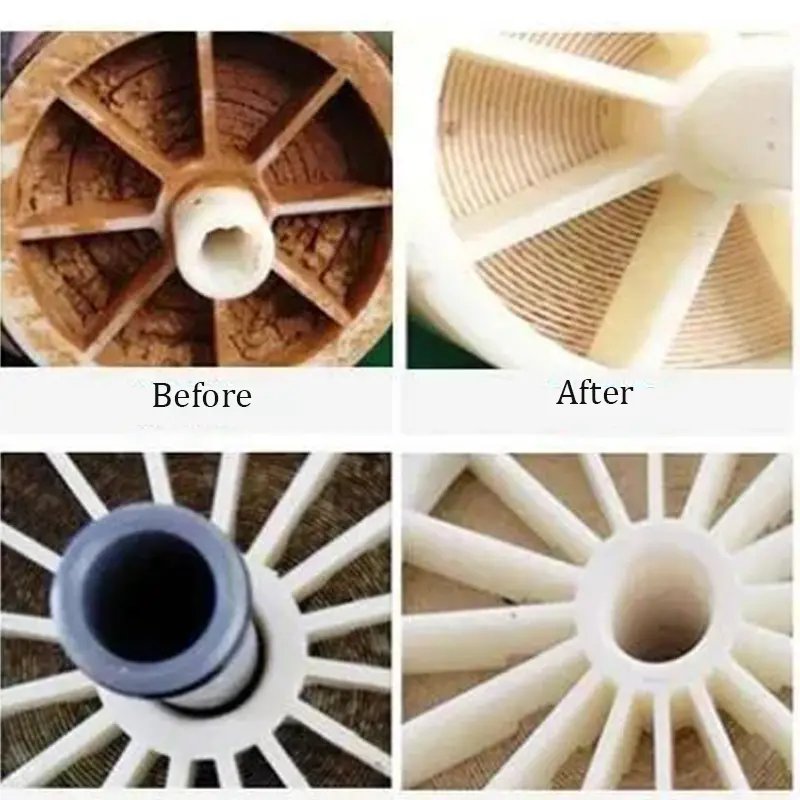
Even with proper pretreatment, long-term operation can still lead to fouling, deposits, and scale on the membrane surface, reducing permeate flow. Therefore, reverse osmosis membrane cleaning is necessary on a regular schedule. Cleaning should not wait until fouling becomes severe, as this increases difficulty, cleaning steps, and time. Proper timing ensures fouling is removed promptly.
Cleaning indicators/conditions:
a. Permeate flow decreases by 5%–10% compared to normal.
b. Feed water pressure after temperature correction increases by 10%–15% to maintain product water flow.
c. Permeate conductivity (salt content) increases by 5%–10%.
d. In multi-stage RO systems, pressure drop across stages increases significantly.
4. Common Cleaning Solution Formulations
| No. | Cleaning Solution | Components | Amount for 100 gallons (379 L) Solution | pH Adjustment |
|---|---|---|---|---|
| 1 | Citric Acid | RO permeate water (free of chlorine) | 17.0 lbs (7.7 kg) | Adjust pH to 3.0 with ammonia |
| 2 | Sodium Tripolyphosphate | RO permeate water (free of chlorine) + 7 lbs (3.18 kg) tetrasodium EDTA | 17.0 lbs (7.7 kg) | Adjust pH to 10.0 with sulfuric acid |
| 3 | Sodium Tripolyphosphate | RO permeate water (free of chlorine) | 17.0 lbs (7.7 kg) | Adjust pH to 10.0 with sulfuric acid |
5. Other Common Cleaning Formulas
- Formula 1: 1%–2% citric acid or 0.4% HCl for iron and carbonate fouling.
- Formula 2: 0.2% NaClO + 0.1% NaOH for organic and biological fouling on ultrafiltration modules.
- Formula 3: 0.3% H₂O₂ + 0.3% NaOH for glutamic acid fermentation fouling.
- Formula 4: 1% formaldehyde for bacterial fouling.
- Formula 5: 0.5% HNO₃ for lead phosphate fouling during electrophoretic coating.
- Formula 6: 20% Na₂CO₃, 7% Na₃PO₄, 3% NaOH, 0.5% EDTA for colloidal fouling.
- Formula 7: 9% sodium dodecylbenzenesulfonate, 9% surfactant, 0.4% NaOH, 0.15% anhydrous sodium carbonate, 11% sodium phosphate, 10% sodium silicate for oily wastewater fouling (pH-sensitive).
- Formula 8: 3% H₃PO₄, 0.5% tetrasodium EDTA, 0.5% LBOW cleaning agent for protein and fat fouling.
- Formula 9: 20% H₂SO₄ for silica scaling in ultrafiltration systems.
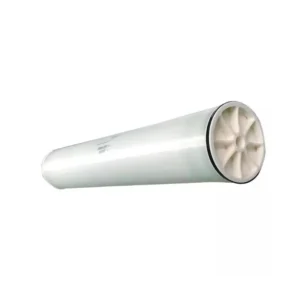
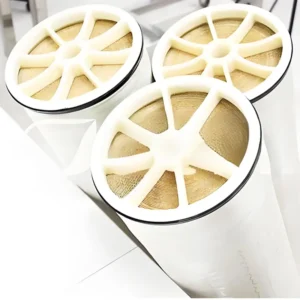
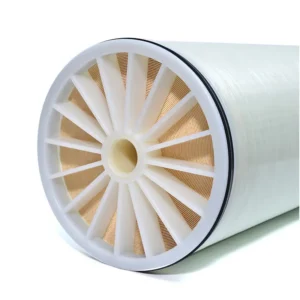
RO membrane elements are the most critical components of any reverse osmosis system. Proper daily maintenance, including reverse osmosis membrane cleaning, directly affects permeate water quality and system performance. This document provides a comprehensive overview of reverse osmosis membrane cleaning methods, common fouling types, and corresponding cleaning approaches.
Related Articles
- RO Plant in Dialysis: A Detailed Guide to the Reverse Osmosis System
- RO Plant for Dialysis: A Detailed Guide to the Pretreatment System
- How to Design a Dialysis Water Distribution Loop When a 40-machine Center Opens with Only 10 Machines
- Vertical vs Horizontal RO Membranes: Does Installation Orientation Matter?
- Optimizing Circulating Cooling Water Systems Using Reverse Osmosis Membrane Filtration Permeate
- Control and Prevention of Silica Fouling on RO Membranes
- RO Membrane Antiscalant Dosing: From Calculation Principles to Practical Application
- RO System Design: Series Staging or Concentrate Recirculation for Small RO Systems?
- Winter Maintenance Tips for Water Vending Machines
- Small Reverse Osmosis Plant Process Details (0.5m3/Hour)
- Besides reverse osmosis membrane flux, what other key design parameters are easily overlooked but can significantly impact membrane life?
- NF Membrane VS RO Membrane VS Forward Osmosis Membrane
- How to Calculate Recovery Rate RO System?
- Relationship Between RO Membrane Element Pressure Limits and Recovery Rate in Water Reuse and Zero Liquid Discharge Applications
- How to Choose RO Membranes from China: 3 Key Factors to Consider