
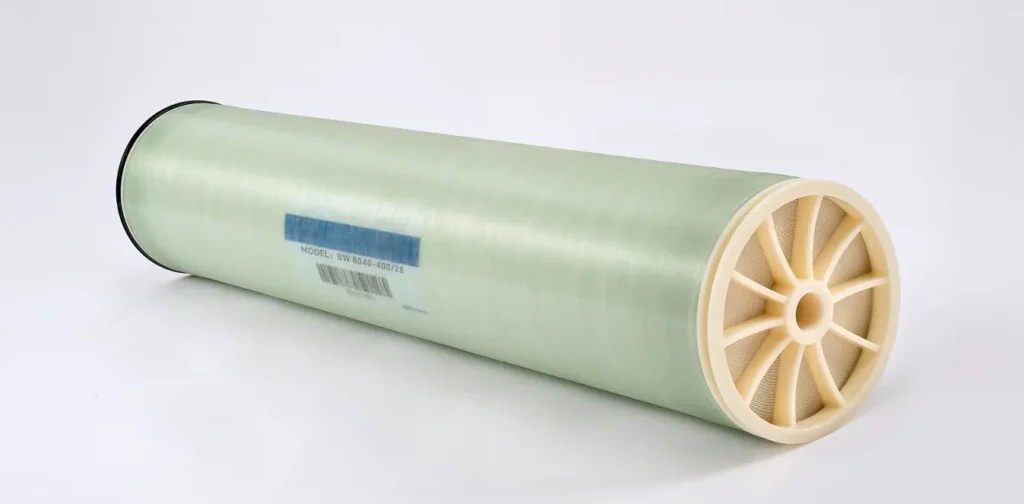
When sourcing reverse osmosis membranes from China, price is only one factor to consider. Chinese-brand RO membranes can be a practical alternative to those from well-known international brands for many industrial water treatment applications. However, product quality, technical support, and supplier reliability can vary.
Choosing the wrong supplier may lead to declining permeate flow, increasingly frequent cleaning, and unstable salt rejection. In the end, it is you—not the membrane supplier—who has to answer to the end customer.
So, how do you choose the right Chinese-brand RO membranes for your project? Here are three key factors to consider when evaluating RO membrane suppliers in China.
Check Whether the Supplier Can Match the Membrane to Your Feed Water Quality
Many engineering companies select RO membranes by comparing standard datasheets and choosing a model based on permeate flow and salt rejection.
However, feed water quality varies significantly from one application to another. Some groundwater sources have high hardness and a high scaling risk. Some surface water contains high levels of organic matter and colloids, increasing the risk of membrane fouling. In industrial water reuse applications, fluctuations in microbial content and COD can also contribute to severe fouling.
A standard solution may perform well under laboratory conditions but struggle to maintain stable performance at an actual installation site.
When choosing a Chinese-brand RO membrane, the first thing to consider should not be price, but whether the supplier can recommend a suitable membrane for your specific feed water conditions.
For example, can they recommend an appropriate antiscalant program for high-hardness water? Can they suggest an antifouling membrane series for water with high organic content? For complex water reuse applications, can they provide coordinated recommendations covering membrane selection, chemical treatment, and pretreatment?
The difference between addressing the symptoms and solving the underlying problem often comes down to this capability.
Determine Whether the Supplier Simply Sells Membranes or Can Help Diagnose RO System Problems
This is an important factor that many small and medium-sized businesses tend to overlook.
Some suppliers focus solely on shipping membrane elements. When a problem occurs after installation, their response may simply be, “Your feed water quality is out of specification.”
But fluctuations in feed water quality are common in real-world operation. What matters is whether the supplier can help identify the actual cause of the problem.
Has the pretreatment system become less effective? Is the antiscalant dosage incorrect? Or has improper cleaning caused membrane performance to deteriorate?
A reliable RO membrane supplier should have the technical ability to help diagnose system performance issues. Rather than immediately recommending membrane replacement, the supplier should first review operating data, including permeate flow, differential pressure, and conductivity trends. These should be assessed alongside feed water quality to determine whether the problem originates from the membranes or the system itself.
Consider an example.
A food processing company experienced declining permeate flow in its RO system and initially planned to replace all the membrane elements. After a technical assessment, the root cause was found to be deteriorating pretreatment performance, which had increased organic fouling. The membranes themselves had not yet reached the end of their service life.
After pretreatment was improved, a suitable cleaning chemical was selected, and operating records were properly maintained, the system returned to stable operation.
The savings went beyond the cost of new membranes. They also included reduced downtime and labor costs.
Check Whether the Supplier Can Provide the Products and Support Your Project Needs
Engineering companies know that an RO project involves more than membrane elements. Chemicals, auxiliary equipment, and maintenance support may also be required.
If a supplier can only provide membranes, you may need to source chemicals from one company and cleaning or maintenance services from another. This increases coordination costs and can lead to disputes when problems arise.
That is why the third factor is the supplier’s ability to provide complementary products and support.
For engineering companies, sourcing membranes, water treatment chemicals, auxiliary equipment, and technical support through a coordinated supply arrangement can simplify supplier management and reduce the burden of coordinating multiple vendors. It can also provide a clearer point of contact when operational issues occur at the end user’s site.
Of course, you do not necessarily need to source everything from a single supplier. However, when evaluating Chinese-brand RO membrane suppliers, it is worth asking a few practical questions in advance:
- Can they supply compatible chemicals and auxiliary equipment?
- Can they provide a reliable long-term supply of replacement membranes and other consumables?
- Can they offer follow-up support to help monitor system performance?
These capabilities can make a real difference over the life of a project.
Choosing RO Membranes from China Means Choosing a Long-Term Supplier
RO membrane elements are consumables, but your supplier relationship should be about more than a single purchase.
After a project is commissioned, there may still be cleaning and maintenance requirements, consumable replacements, and opportunities to optimize system performance.
A supplier who is willing to assess water quality, help diagnose operational problems, and recommend a coordinated solution may deliver a lower overall cost over time than one who simply offers the lowest price.
There is no single answer to choosing the right Chinese-brand RO membrane. However, comparing suppliers across three key areas—feed water compatibility, system diagnostic capability, and complementary product support—can help you eliminate unsuitable options and make a more informed choice.
When sourcing RO membranes from China, look beyond the price per element. Consider product performance, technical support, supply reliability, and the supplier’s ability to support your application throughout the project lifecycle.
Frequently Asked Questions
Q1: Is There a Significant Difference Between Chinese-Brand RO Membranes and Those from Well-Known International Brands?
For many conventional industrial water purification applications, Chinese-brand RO membranes can meet the required permeate flow and salt rejection specifications.
The key is not simply whether a membrane is Chinese-brand or from a Well-known international brand. What matters is whether the membrane is properly selected for the actual feed water quality and operating conditions. Even a membrane from a Well-known international brand can experience problems if it is incorrectly selected or operated.
Q2: How Can You Tell Whether an RO Membrane Supplier in China Has Strong Technical Support Capabilities?
Check whether the supplier asks for your feed water analysis, operating data, and system specifications before making a recommendation.
If a supplier provides a quotation without asking about the application or operating conditions, its role may be limited to product sales. A supplier that takes the time to assess the situation before recommending a solution is generally better positioned to provide meaningful technical support.
Q3: How Often Should RO Membrane Elements Be Replaced?
There is no fixed replacement interval that applies to every RO system.
Membrane service life depends on feed water quality, pretreatment effectiveness, cleaning and maintenance practices, and actual operating conditions.
It is advisable to maintain operating records for permeate flow, differential pressure, and conductivity. Use these trends to assess membrane performance and determine when replacement is necessary, rather than replacing membrane elements based on time alone.
Related Articles
- Characteristics of Reverse Osmosis Membrane Fouling and Reverse Osmosis Membrane Cleaning Methods
- RO Plant in Dialysis: A Detailed Guide to the Reverse Osmosis System
- RO Plant for Dialysis: A Detailed Guide to the Pretreatment System
- How to Design a Dialysis Water Distribution Loop When a 40-machine Center Opens with Only 10 Machines
- Vertical vs Horizontal RO Membranes: Does Installation Orientation Matter?
- Optimizing Circulating Cooling Water Systems Using Reverse Osmosis Membrane Filtration Permeate
- Control and Prevention of Silica Fouling on RO Membranes
- RO Membrane Antiscalant Dosing: From Calculation Principles to Practical Application
- RO System Design: Series Staging or Concentrate Recirculation for Small RO Systems?
- Winter Maintenance Tips for Water Vending Machines
- Small Reverse Osmosis Plant Process Details (0.5m3/Hour)
- Besides reverse osmosis membrane flux, what other key design parameters are easily overlooked but can significantly impact membrane life?
- NF Membrane VS RO Membrane VS Forward Osmosis Membrane
- How to Calculate Recovery Rate RO System?
- Relationship Between RO Membrane Element Pressure Limits and Recovery Rate in Water Reuse and Zero Liquid Discharge Application