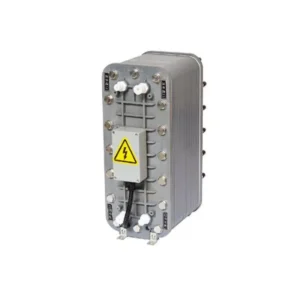
The industrial electrodeionization module (EDI stack) is designed for continuous production of high-purity water downstream of reverse osmosis (RO) systems. It combines ion exchange resins, ion-selective membranes, and a DC electric field to remove dissolved ions without routine chemical regeneration.
Available capacities range from 500 to 5,000 LPH, making these EDI modules suitable for industrial water purification applications, including power generation, electronics manufacturing, pharmaceutical production, and other processes requiring low-conductivity water.
Under suitable feedwater and operating conditions, product water resistivity can reach 15 MΩ·cm or higher at 25°C. Actual performance depends on the selected EDI module model, RO permeate quality, and operating parameters.
For new installations or EDI stack replacement projects, Clear Environment can assist with module selection based on required flow capacity, feedwater quality, electrical specifications, and installation requirements.
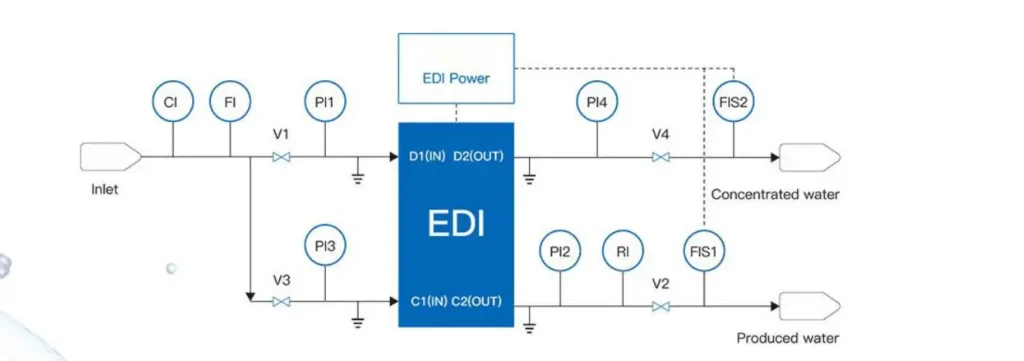
Electrodeionization Module Installation Diagram
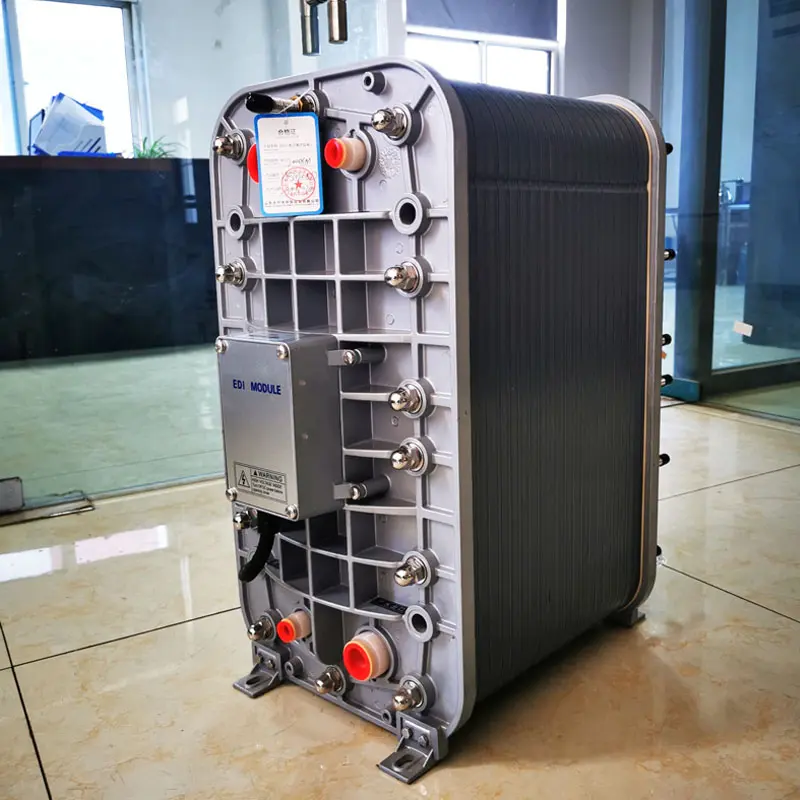
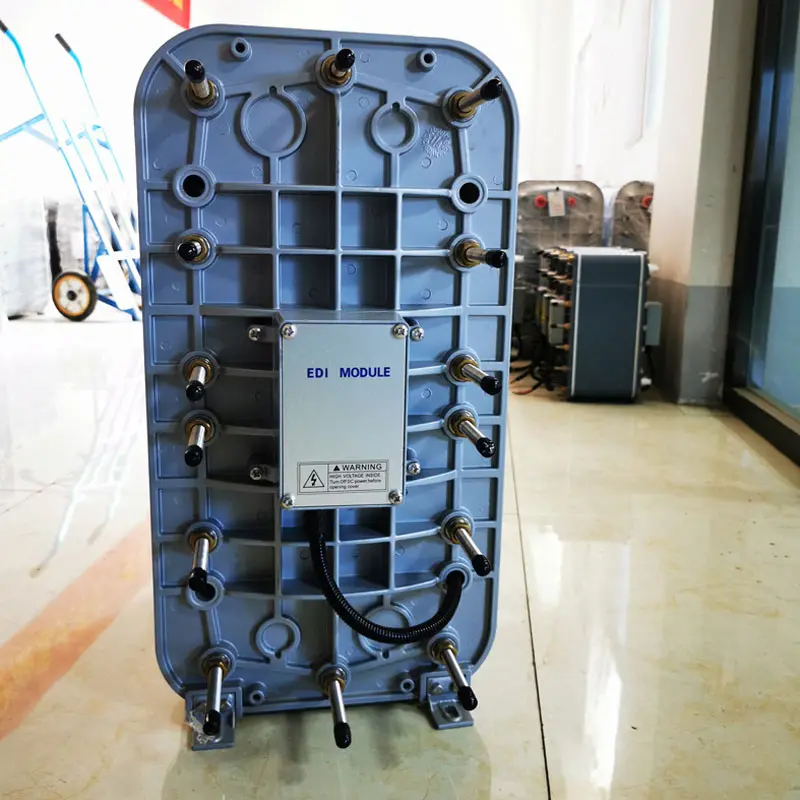
Industrial EDI Module – Product Details
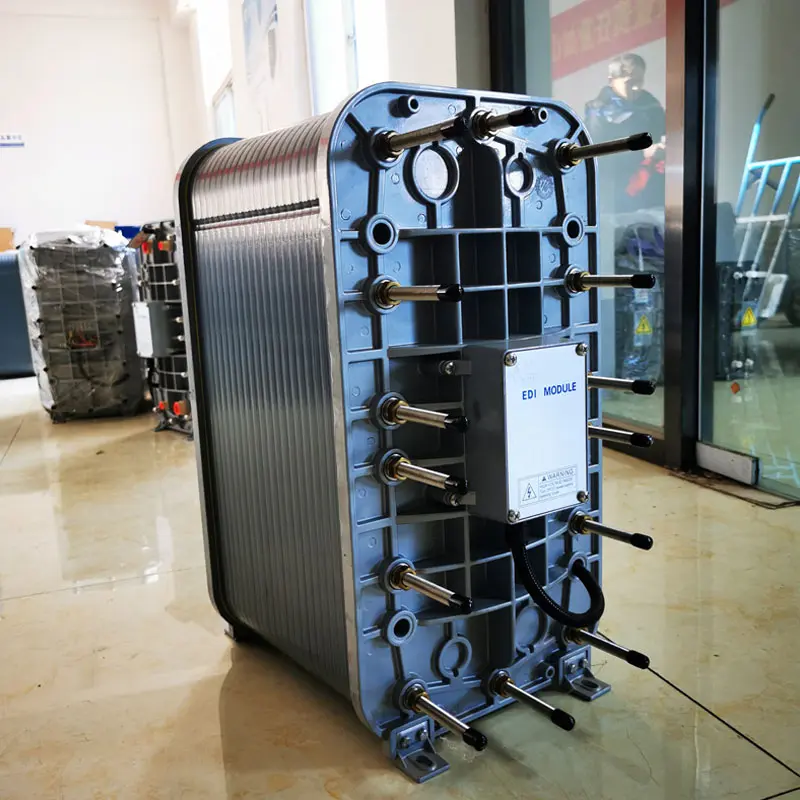
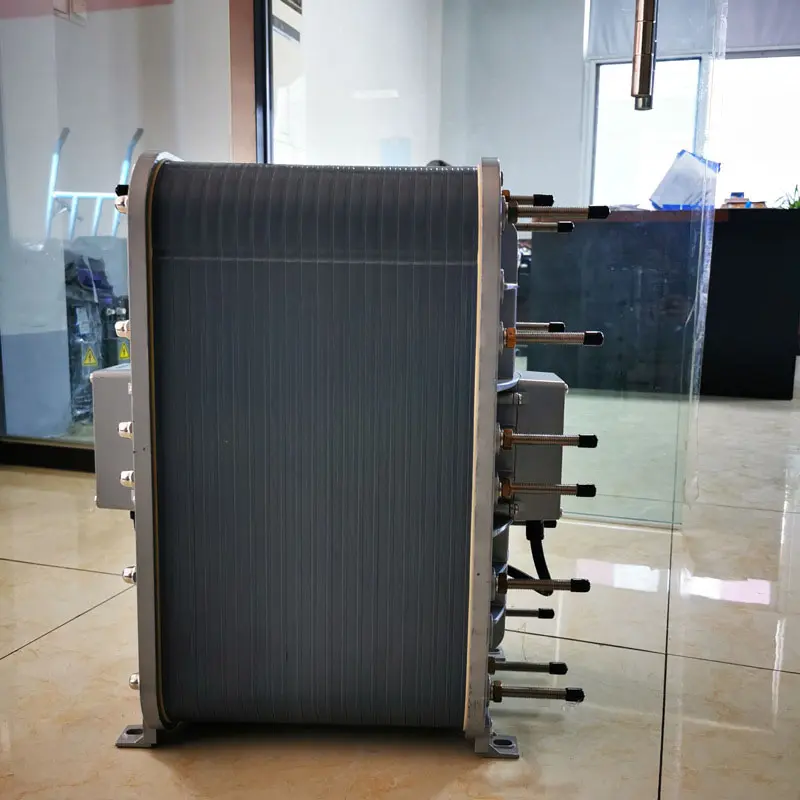
Industrial EDI Module Models & Technical Specifications
| Model | Dimension | Fixed hole length Center pillar | Fixed hole width Center pillar | Base hole diameter | Operation Pressure (Bar) | Standard Produced water flow L/H | Lowest(Highest) Produced water flow L/H | Recovery rate % | Reject Flow (L/H) | Produced water resistivity (MΩ·cm) | Power Parameters | |||||||
|---|---|---|---|---|---|---|---|---|---|---|---|---|---|---|---|---|---|---|
| L(mm) | W(mm) | H(mm) | (mm) | (mm) | (mm) | Freshwater input | Freshwater output | Reject input | Reject output | Current range(A) | Suggested value | Voltage range | ||||||
| E-500 | 280 | 318 | 605 | 160 | 215 | 10 | 2.0 (1.5-3.0) | 1.0(1.0-1.5) | 0.6(0.5-1.0) | 0(0-0.5) | 500 | 300-750 | 75-85 | 120(100-150) | ≥15 | 1.0-6.0 | 1.2 | 0-55V |
| E-1000 | 370 | 318 | 605 | 235 | 215 | 10 | 2.0 (1.5-3.0) | 1.0(1.0-1.5) | 0.6(0.5-1.0) | 0(0-0.5) | 1000 | 800-1500 | 85-95 | 150(100-200) | ≥15 | 1.0-6.0 | 1.5 | 0-135V |
| E-2000 | 535 | 318 | 605 | 385 | 215 | 10 | 2.2 (1.5-3.0) | 1.0(1.0-1.5) | 0.6(0.5-1.0) | 0(0-0.5) | 2000 | 1500-2500 | 85-95 | 220(200-400) | ≥15 | 1.5-6.0 | 1.8 | 0-240V |
| E-3000 | 695 | 318 | 605 | 535 | 215 | 10 | 2.3 (2.0-3.5) | 1.0(1.0-1.5) | 0.6(0.5-1.0) | 0(0-0.5) | 3000 | 2500-3500 | 85-95 | 330(300-500) | ≥15 | 1.5-6.0 | 2.0 | 0-320V |
| E-4000 | 860 | 318 | 605 | 685 | 215 | 10 | 2.5 (2.0-3.5) | 1.0(1.0-1.5) | 0.6(0.5-1.0) | 0(0-0.5) | 4000 | 3500-4500 | 90-95 | 450(400-600) | ≥15 | 2.0-6.0 | 2.5 | 0-400V |
| E-5000 | 925 | 318 | 605 | 755 | 215 | 10 | 2.5 (2.0-4.0) | 1.0(1.0-1.5) | 0.6(0.5-1.0) | 0(0-0.5) | 5000 | 4500-5500 | 90-95 | 550(500-800) | ≥15 | 2.0-6.0 | 2.5 | 0-600V |
Technical Notes
Operating pressure and electrical requirements may vary depending on feedwater quality, temperature, module model, and operating conditions. Dimensions are provided for reference; confirm the final drawings before ordering.
Important Operating Precautions
Establish the required water flow before switching on the DC power supply.
Do not operate the EDI module without adequate feedwater and concentrate flow.
Provide suitable pressure and flow protection for the concentrate circuit.
Follow the manufacturer’s operating limits and startup procedures.
Pressure Setting Principle
For the module configuration shown in the table, the specified operating pressure relationship is:
Dilute Feed Inlet > Product Water Outlet > Concentrate Inlet > Concentrate Outlet
Actual pressure settings must follow the selected module’s technical datasheet and operating instructions.
Industrial Electrodeionization Module Applications
Industrial electrodeionization modules are commonly installed downstream of reverse osmosis (RO) systems to provide continuous deionization without routine chemical regeneration of ion exchange resins.
These EDI stacks are suitable for high-purity water production in power generation, pharmaceutical manufacturing, electronics, semiconductor processing, and other industrial applications requiring low-conductivity water.
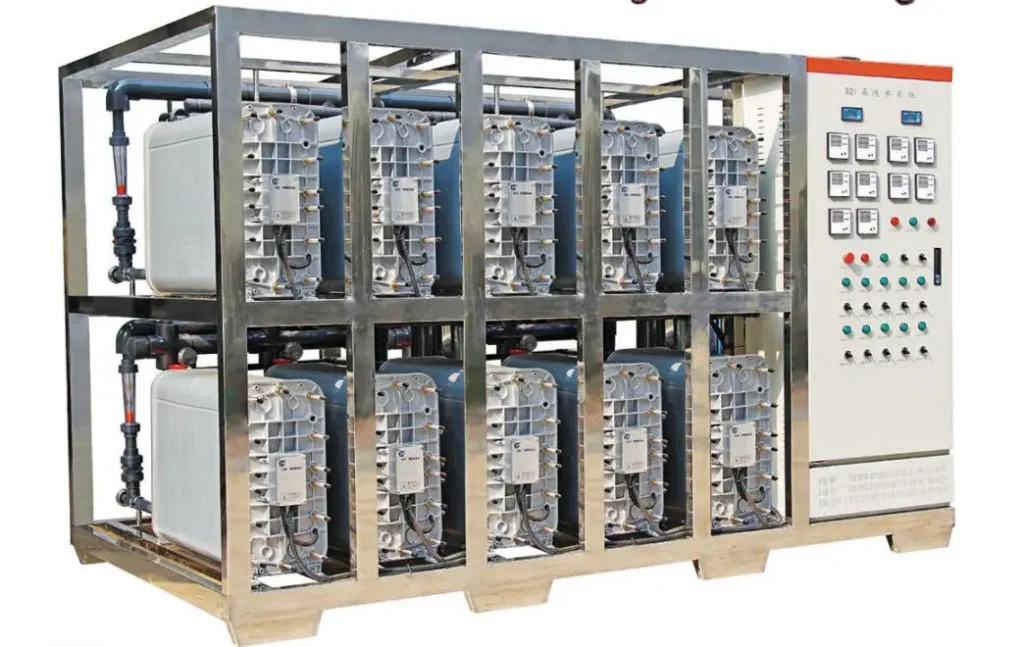
For larger water treatment systems, multiple EDI modules can be arranged in parallel to meet the required production capacity. Module selection should consider RO permeate quality, operating flow, electrical requirements, and system configuration.
Industrial EDI Module – Frequently Asked Questions
1. What capacities are available for industrial EDI modules?
Clear Environment supplies industrial EDI modules with rated product water capacities of 500, 1,000, 2,000, 3,000, 4,000, and 5,000 L/h.
Available models include E-500, E-1000, E-2000, E-3000, E-4000, and E-5000. For larger systems, multiple modules can be installed in parallel, depending on the system design and required production capacity.
2. What feedwater conditions are required for an industrial EDI stack?
Industrial EDI stacks are normally fed with RO permeate. Feedwater conductivity, hardness, silica, CO₂, chlorine, and other contaminants must remain within the selected module’s operating limits.
Actual feedwater requirements vary by model. Please provide your RO permeate water analysis and required product water flow so we can help check suitable EDI module options.
3. Can your industrial EDI stack replace an existing module from another manufacturer?
Replacement may be possible, but compatibility must be verified before ordering.
Please provide the existing EDI module model or nameplate, rated flow, operating voltage and current, installation dimensions, and connection details.
Clear Environment can help evaluate suitable Chinese-brand EDI module alternatives. Modifications to piping, mounting, or electrical connections may be required depending on the original equipment.