
Brackish Water Treatment Systems
Clear Environment supplies brackish water treatment systems for groundwater desalination and industrial process water. We help engineering companies, system integrators and distributors define the RO system, pretreatment, monitoring and product water delivery equipment for each project.
Send us your feed water analysis, required permeate flow and product water quality target to request a system proposal.
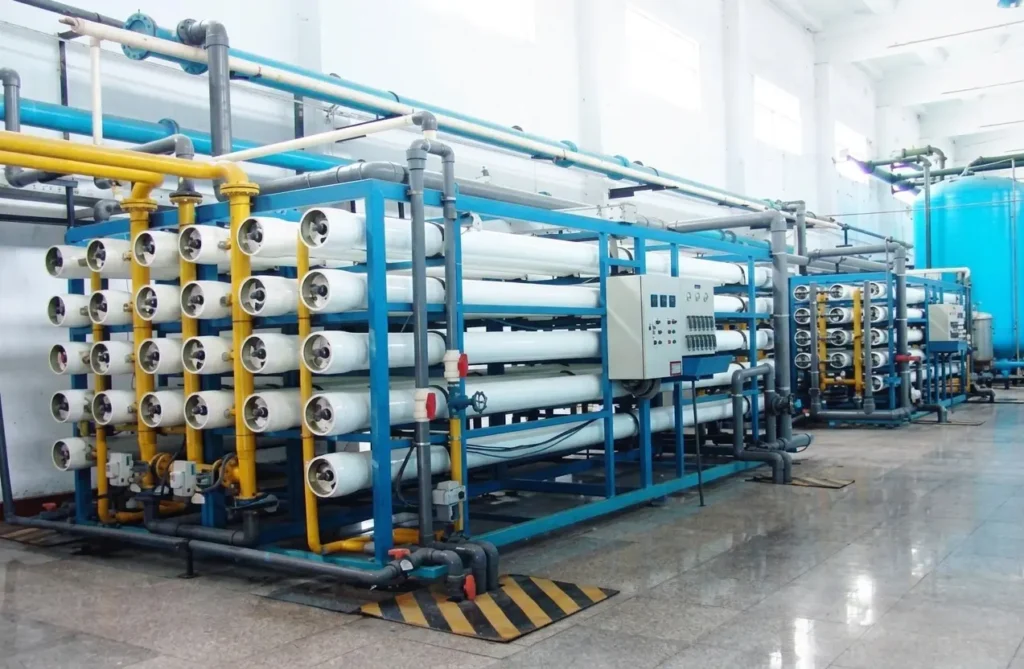
What Is a Brackish Water RO System?
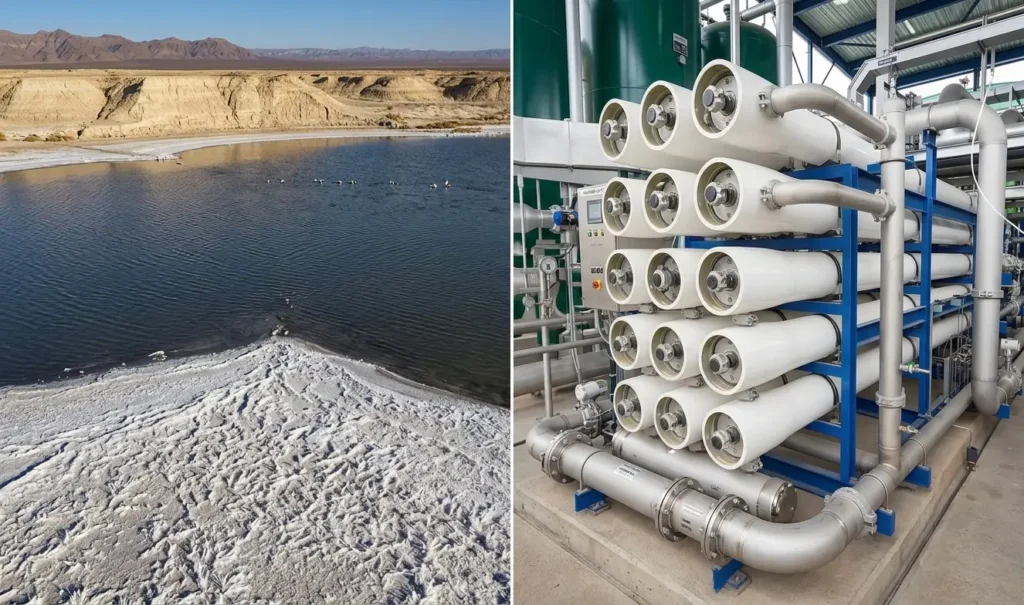
A brackish water RO system uses pressure to drive water through reverse osmosis membranes. The system produces permeate, a stream with a lower concentration of dissolved salts, and concentrate, a stream in which the rejected salts accumulate. A complete treatment system may also include pretreatment, instrumentation, post-treatment, storage and a delivery pump.
Feed water salinity helps determine membrane selection and operating pressure. The full water analysis helps determine which pretreatment steps are needed and how much of the feed can be recovered as permeate.
How a Brackish Water Reverse Osmosis System Works
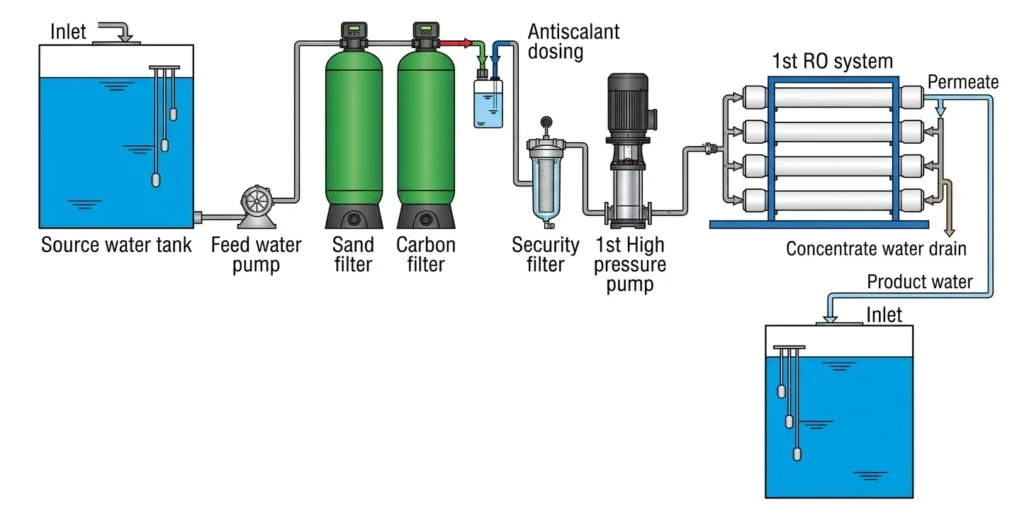
Feed water → Pretreatment → Cartridge filtration → High-pressure pump → RO membranes
Permeate goes to post-treatment, storage or the point of use, depending on the project.
Concentrate goes to the designated collection, treatment or discharge point.
Pretreatment reduces the risk of membrane fouling and scaling. The high-pressure pump provides the pressure required for membrane separation. Conductivity, pressure and flow measurements help operators track water quality and system performance. The concentrate handling route should be identified during system design.
See our guide to cartridge filter selection for RO systems.
Raw Water Analysis and Pretreatment
For brackish groundwater treatment, a TDS reading is a useful starting point. A water analysis also needs to show the constituents that can foul the membranes, precipitate in the concentrate or affect materials selection.
| What to check | How it affects the design |
|---|---|
| TDS, conductivity and temperature | Used in the membrane projection to estimate the pressure and permeate quality at the design flow. |
| Calcium, magnesium, alkalinity, sulfate and silica | Used to assess scaling at the proposed recovery and evaluate softening, antiscalant dosing or a lower recovery. |
| Turbidity and silt density index (SDI), where available | Help assess particulate fouling risk and determine the filtration required upstream of the membranes. |
| Iron and manganese | Help determine whether dedicated removal is required before RO. |
| Free chlorine, where applicable | Helps determine whether dechlorination is required to meet the selected membrane’s feed limits. |
Brackish Water RO System Specifications
The system proposal should state the feed water conditions used for design and the permeate flow and quality expected under those conditions.
| Specification | What the proposal defines |
|---|---|
| Design feed water | Source, salinity, temperature and water analysis used for the design. |
| Permeate flow and quality | Required flow in L/h or m³/h and the applicable permeate conductivity, TDS or constituent limits. |
| Operating pressure and recovery | Design pressure and the percentage of feed water recovered as permeate under the stated conditions. |
| Membrane configuration | Element model, quantity and arrangement, taking into account permeate quality, flow and membrane operating limits. |
| Pump and pressure vessels | Pump duty point, vessel pressure rating and wetted materials for the proposed operating conditions. |
| Pretreatment and post-treatment | Filtration, scale control and any treatment required downstream of RO for the intended use. |
| Monitoring and controls | Measurement points, alarms and shutdown functions required for the project. |
| Concentrate handling | Expected concentrate flow and the site’s proposed handling route. |
2,000 LPH Low-TDS RO Configuration Example
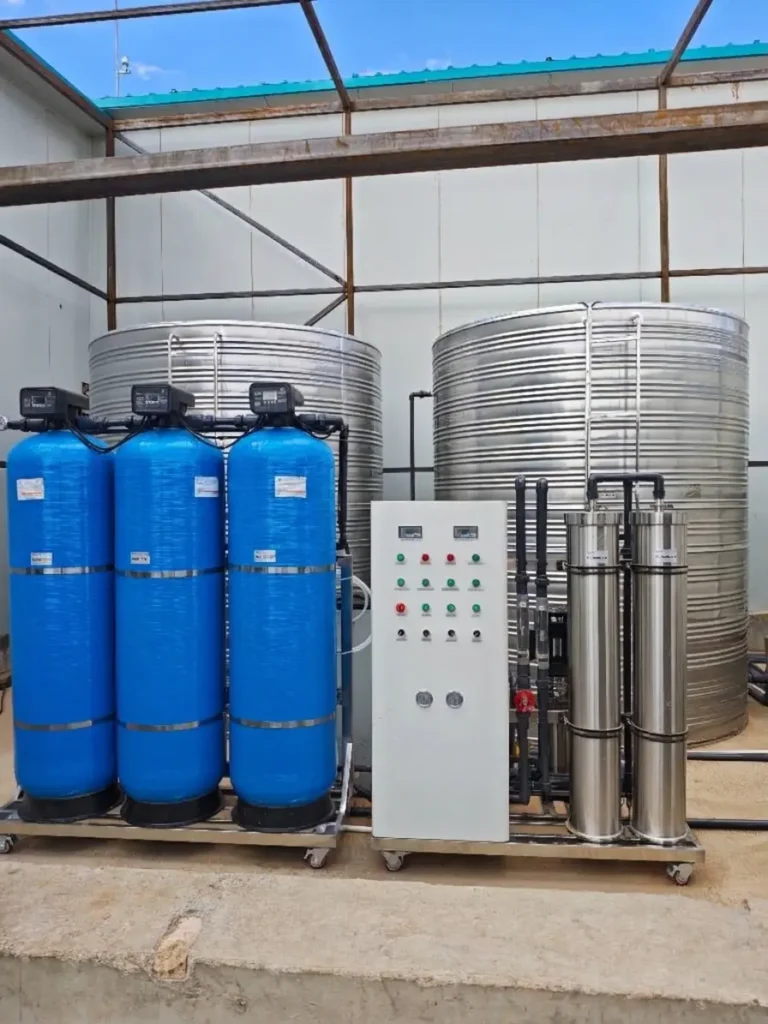
The 2000LPH shows how brackish water treatment equipment can be specified as part of a complete RO package. This configuration was selected for a low-TDS feed. For higher-salinity projects, permeate capacity, recovery and operating pressure are determined from the project water analysis and membrane projection.
| Component | Equipment listed for this configuration |
|---|---|
| Pretreatment | Media filtration, coconut-shell activated carbon filtration and sodium-cycle softening, each with an 84 L FRP vessel. |
| Cartridge filtration | Three 20-inch, 5 µm melt-blown polypropylene cartridges in a 304 stainless steel housing. |
| RO elements | Two 8040 elements. |
| Membrane pressure vessels | Two 304 stainless steel vessels, rated at 300 psi. |
| Instrumentation | Feed and permeate conductivity meters, RO feed and concentrate pressure gauges, permeate and concentrate flow meters, and high- and low-pressure switches. |
| Product water delivery | A UV unit listed at 2 m³/h, two 304 stainless steel permeate tanks and a delivery pump with a variable-frequency drive. |
Explore our brackish water RO membranes for new installations and replacement projects.
Applications
A brackish water desalination system can supply lower-salinity water from a well or other brackish source. The end use determines how the system is specified.
Groundwater desalination — Reduce dissolved salts for a site’s utility or process water supply.
Industrial process water — Set the permeate quality around the needs of washing, rinsing or production equipment.
Boiler makeup pretreatment — Reduce the dissolved salt load upstream of any polishing required by the boiler water specification.
Frequently Asked Questions
What feed water TDS can a brackish water RO system handle?
The acceptable feed water TDS depends on the selected membranes, operating pressure, temperature, recovery and target permeate quality. Send the feed water analysis so the design can be evaluated at the expected site conditions.
What determines the recovery rate of a BWRO system?
System recovery is the permeate flow divided by the feed flow at the same operating condition. Recovery is selected by checking scaling risk in the concentrate and the flow and recovery limits of the membrane elements.
Does every brackish groundwater project need a softener?
Softening is selected when the water analysis and scaling assessment support it. Depending on the feed chemistry and target recovery, the design may use softening, antiscalant dosing, a lower recovery or a combination of these measures.
Can a higher-TDS project be designed for 2,000 LPH?
You can specify 2,000 LPH as the required permeate flow. The membrane projection determines the element arrangement, operating pressure and recovery for the project’s feed water and product water quality target.
What information is needed for a BWRO quotation?
Provide the water source, a recent water analysis, required permeate flow and intended use. If known, include the required permeate quality, operating hours, site power supply and concentrate handling route.