
A cartridge filter (also known as a precision filter or security filter) is the final protective barrier in membrane treatment systems such as RO, UF, and MF. The core function of a cartridge filter is to remove fine suspended solids, colloids, and particles (≥1 μm) from the feed water, thereby preventing scratching and blockage of membrane elements. This helps extend membrane service life, reduce cleaning frequency, and lower overall operating costs.
The selection of a cartridge filter directly determines the stability and economic performance of a membrane system. Improper selection may lead to membrane fouling, physical damage, reduced permeate flow, and overall system instability.
From a practical engineering perspective, this article systematically explains the core selection logic, key parameters, application-based solutions, operational considerations, and common mistakes related to cartridge filter selection. It is designed to balance technical depth with practical applicability across municipal, industrial, aquaculture, and power plant membrane treatment scenarios.
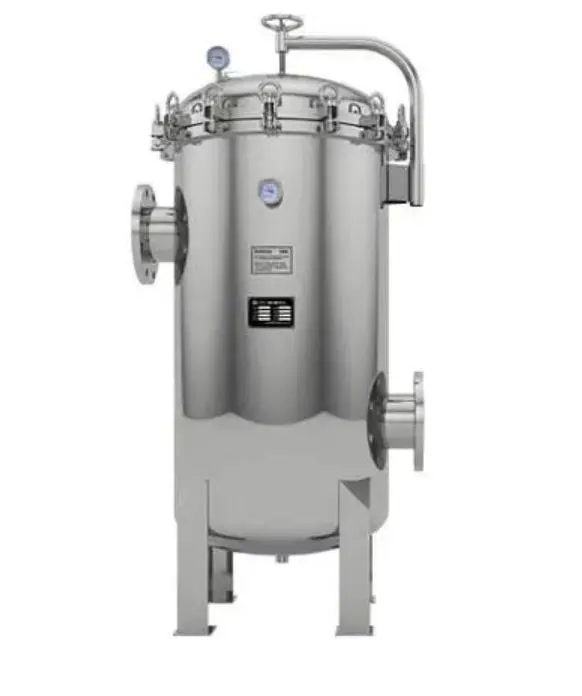
Role of Cartridge Filter in RO Systems
Core Positioning
A cartridge filter is installed upstream of the high-pressure pump (or booster pump) in membrane systems (RO/UF/MF), serving as the final stage of pretreatment. It receives treated water from upstream processes such as sand filtration, activated carbon filtration, and coagulation-sedimentation.
The primary functions of the cartridge filter include:
Intercepting suspended solids, colloids, rust, and microbial flocs with particle size ≥1 μm, preventing them from entering membrane elements and causing surface damage or pore blockage;
Buffering fluctuations in feed water quality, reducing shock loads on the membrane system, lowering fouling risk, and extending membrane cleaning cycles (typically by more than 30% under normal conditions);
Protecting the impeller of the high-pressure pump from abrasion caused by particulate matter, thereby reducing equipment failure rates.
Important Note:
The cartridge filter cannot replace upstream pretreatment (such as sand or activated carbon filtration). It only serves as a “final safeguard.” If upstream pretreatment is insufficient, the cartridge filter will clog frequently, increasing maintenance costs and potentially affecting normal membrane system operation.
Selection Prerequisites
Before selecting a cartridge filter, three key parameters must be clearly defined. These form the basis of selection and directly determine the filter specifications, housing material, and cartridge type:
Feed Water Quality Parameters
Suspended solids (SS ≤10 mg/L, recommended ≤5 mg/L before membranes)
Turbidity (≤1 NTU)
Particle size distribution (focus on particles ≥1 μm)
Corrosiveness (pH range, chloride ion concentration)
Membrane System Parameters
Membrane type (RO, UF, MF)
Membrane element specifications
Design permeate capacity
Operating pressure
Feed flow fluctuation range (typically calculated as 1.2× design flow)
Operating Conditions
Continuous or intermittent operation
Operating temperature (ambient or high temperature)
Installation space constraints
Maintenance capability (frequency of cartridge replacement)
Environmental requirements (corrosion resistance, leakage prevention)
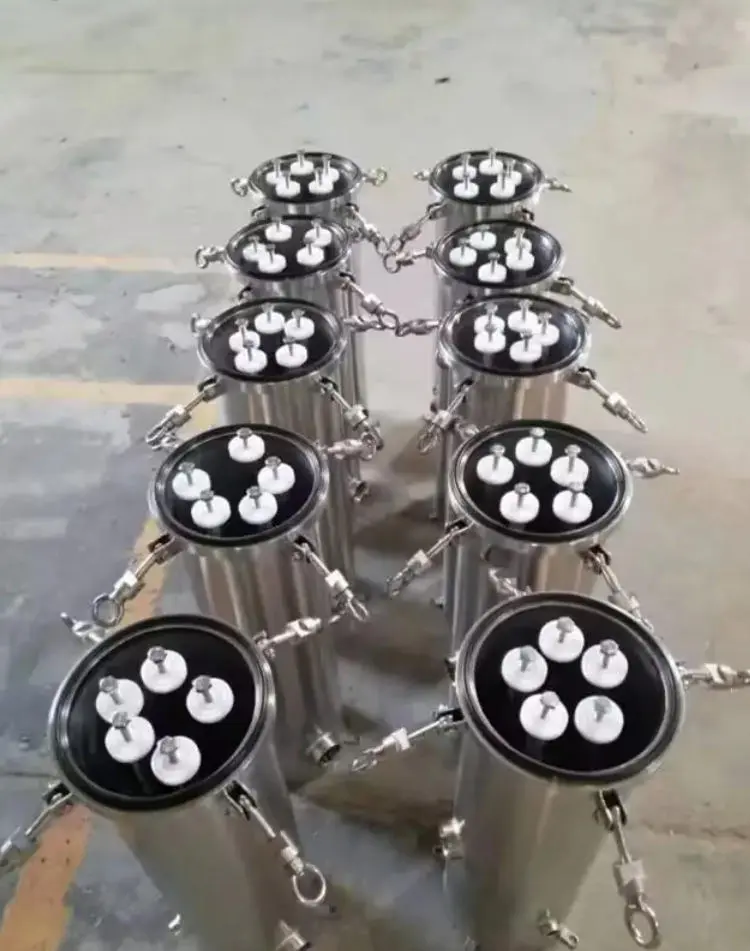
Key Selection Factors for Cartridge Filter
The selection of a cartridge filter focuses on three main modules: cartridge, housing, and system specifications. Each must be matched with feed water quality, membrane parameters, and operating conditions.
Cartridge Selection
The cartridge is the core component of a cartridge filter. Selection must consider filtration rating, material, and structure, which must be coordinated rather than focusing solely on high precision.
Filtration Rating Selection
The filtration rating must match the membrane pore size, following this principle: Filtration rating ≤ 1/5 to 1/10 of membrane pore size
| RO (Reverse Osmosis) | 0.0001–0.001 μm (NF: 0.001–0.01 μm) | 1–5 μm (3 μm recommended) | RO membranes have extremely small pore sizes and are highly sensitive to fine particles. A cartridge filter with too fine a rating may clog quickly, while too coarse a rating cannot provide sufficient protection. A 3 μm cartridge filter offers the optimal balance. |
|---|---|---|---|
| UF (Ultrafiltration) | 0.01–0.1 μm | 5–10 μm | UF membranes have larger pore sizes, allowing a slightly coarser cartridge filter to balance filtration efficiency and service life. |
| MF (Microfiltration) | 0.1–10 μm | 10–20 μm | MF membranes have strong particle rejection capability, so a coarser cartridge filter can be used to reduce maintenance frequency and operating costs. |
| MF | 0.1–10 μm | 10–20 μm |
If the feed water has relatively high suspended solids (SS = 5–10 mg/L) or contains a large amount of particles, it is recommended to install a 10 μm pre-stage cartridge filter upstream of the main cartridge filter (dual-stage filtration) to extend the service life of the primary filter.
If the feed water quality is relatively good (SS ≤ 1 mg/L), a 5 μm cartridge filter can be used before the RO membrane to reduce the replacement frequency and maintenance cost.
Cartridge Material Selection
Cartridge material must match water chemistry (pH, chloride content, temperature), with key requirements being corrosion resistance, no leaching, and stable filtration performance.
PP Melt Blown Cartridge Filter (General Purpose)
Material: Polypropylene (PP)
Features: Excellent chemical stability, resistant to acids (pH 1–14) and alkalis, no odor or leaching
Applications: Municipal reuse, aquaculture wastewater, power plant desulfurization wastewater, drinking water pretreatment
Advantages: Low cost, easy replacement, uniform filtration
Limitation: Not suitable for high temperature (>60°C) or organic solvents
Pleated Cartridge Filter (High Precision Applications)
Materials: PP, PTFE, Nylon
Filtration rating: 0.1–5 μm
Applications: RO pretreatment, drinking water, ultrapure water
Advantages: High efficiency, large dirt-holding capacity, 30–50% longer service life
Limitation: Higher cost (especially PTFE), nylon not suitable for strong acids
Stainless Steel Cartridge Filter (Backwashable Applications)
Materials: 304 / 316L stainless steel
Features: High temperature resistance (≤120°C), corrosion resistance (Cl⁻ ≤5000 mg/L), reusable
Applications: High turbidity industrial wastewater, high-temperature systems
Limitation: Maximum precision ~1 μm, requires combination with other cartridge filter types for RO
Cartridge Structure and Size
The structure and specifications of filter cartridges must match the filter housing, with key considerations on length, diameter, and connection type. Common industry specifications are as follows:
Length: Common lengths are 10″, 20″, 30″, and 40″. Prefer 20″ cartridges as they fit most small- to medium-sized membrane systems. For high-flow applications (production > 50 m³/h), 40″ cartridges are recommended to reduce the number of cartridges. For low-flow applications (production < 10 m³/h), 10″ cartridges save installation space.
Diameter: Standard diameter is φ65 mm, suitable for conventional security (pre-)filter housings without customization, reducing cost.
Connection Type: Common types are flat-end (standard) and inserted. Flat-end cartridges fit most applications and allow easy installation and removal. Inserted cartridges provide better sealing, suitable for high-pressure conditions (operating pressure > 1.0 MPa).
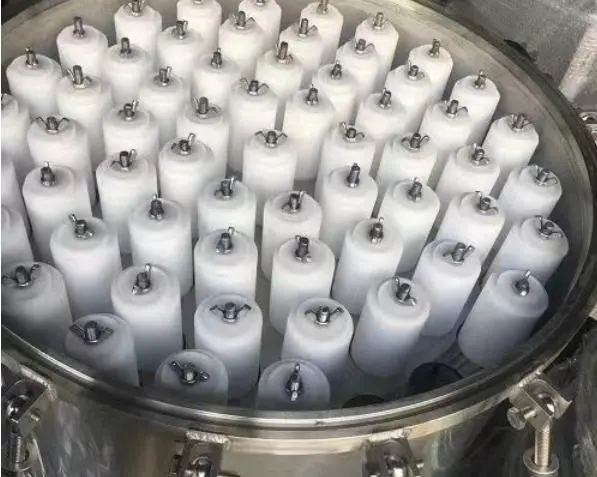
Filter Housing Selection (Matching Operating Conditions to Ensure Stable and Safe Operation)
The material, pressure rating, and structural design of the housing directly affect the service life and operational safety of cartridge filters. Selection should consider feed water corrosiveness, operating pressure, and available installation space.
Housing Material Selection (Key: Corrosion Resistance to Prevent Leaks)
FRP (Fiberglass Reinforced Plastic) Housing – Recommended for General Use:
Features: Corrosion-resistant, lightweight, moderate cost; resistant to acids and alkalis; suitable for most water qualities (chloride ≤ 5000 mg/L).
Applications: Municipal water, aquaculture, power plant desulfurization wastewater, and other standard membrane systems; operating pressure ≤ 1.6 MPa.
Notes: Avoid direct sunlight; provide UV protection to prevent aging.
Stainless Steel Housing – Corrosion-Resistant, High-Pressure Applications:
Materials: 304 stainless steel (normal corrosion), 316L stainless steel (highly corrosive conditions, chloride > 5000 mg/L).
Applications: High-salinity or high-chloride wastewater (e.g., RO concentrate reuse), high-pressure operations (pressure > 1.6 MPa), drinking water membrane systems requiring no heavy metal leaching.
Advantages: High strength, excellent sealing, long service life (up to 10+ years).
Notes: Regular anti-corrosion maintenance required to prevent rust.
Rubber-Lined Carbon Steel Housing – High Flow, Low-Pressure Applications:
Features: Low cost, high strength; rubber lining provides corrosion protection; suitable for large-flow scenarios.
Applications: Industrial wastewater large-flow membrane systems (production > 100 m³/h); operating pressure ≤ 1.0 MPa.
Notes: Lining may wear or peel over time; regular inspection required to prevent housing corrosion and leaks.
Pressure Rating Selection (Matching Membrane System Operating Pressure to Prevent Overpressure Damage)
The pressure rating of a cartridge filter housing should be at least 1.25 times the operating pressure of the membrane system, also accounting for feed water pressure fluctuations. Common industry pressure ratings and their typical applications are as follows:
- 0.6 MPa: Suitable for low-pressure membrane systems (e.g., UF ultrafiltration membranes, operating pressure 0.1–0.3 MPa); commonly used in small- to medium-sized aquaculture wastewater and municipal wastewater reuse.
- 1.0 MPa: Suitable for standard RO membrane systems (operating pressure 0.4–0.8 MPa); widely used in most industrial and municipal membrane treatment applications.
- 1.6 MPa: Suitable for high-pressure RO membrane systems (operating pressure 0.8–1.2 MPa); often applied to high-salinity wastewater, seawater desalination, and power plant boiler feedwater.
- 2.5 MPa: Suitable for ultra-high-pressure RO membrane systems (operating pressure 1.2–2.0 MPa); typically used for seawater desalination and high-concentration concentrate reuse.
Structural Design Selection (Matching Installation and Maintenance to Improve Efficiency)
- Installation Orientation:
- Vertical (Preferred): Saves installation space and facilitates cartridge filter replacement and sludge discharge.
- Horizontal: Suitable for limited installation space or high-flow applications (production > 100 m³/h).
- Inlet and Outlet Direction:
- Standard: Bottom-in, top-out, ensuring uniform flow through the cartridge filter and preventing short-circuiting (unfiltered water entering the membrane system).
- Special Cases: Top-in, bottom-out, which helps to fully evacuate air from the filter.
- Auxiliary Components:
- Differential Pressure Gauge: Monitors cartridge filter clogging (range 0–0.2 MPa).
- Drain Port: For periodic sludge discharge to prevent sediment accumulation.
- Air Vent: Releases trapped air to prevent air locks.
- Cartridge Retaining Device: Prevents filter cartridge loosening and ensures proper sealing.
Specification Selection (Matching Flow to Ensure Filtration Performance and Operational Efficiency)
The key specification parameters are cartridge quantity and filter housing diameter. These should be calculated based on the membrane system’s designed production capacity to avoid insufficient flow or overloading of the cartridge filters.
Cartridge Filter Quantity Calculation (Core Formula for Practical Engineering Use)
Number of Cartridge Filters = Design Flow (m³/h) ÷ Rated Flow per Cartridge (m³/h) × 1.2
(Safety factor to account for flow fluctuations)
Reference Rated Flow per Cartridge (Industry Standard, Based on Cartridge Length):
- 10″ cartridge: 0.5–1.0 m³/h
- 20″ cartridge: 1.0–2.0 m³/h
- 30″ cartridge: 1.5–3.0 m³/h
- 40″ cartridge: 2.0–4.0 m³/h
Example:
For an RO membrane system with a design flow of 20 m³/h, using 20″ PP melt-blown cartridge filters (rated flow 1.5 m³/h per cartridge):
Number of cartridges=201.5×1.2≈16\text{Number of cartridges} = \frac{20}{1.5} \times 1.2 \approx 16Number of cartridges=1.520×1.2≈16
In practice, 16 cartridges are selected (or 18 if spare cartridges are reserved).
Filter Housing Diameter Selection (Matching Cartridge Quantity to Ensure Uniform Flow)
The filter housing diameter should be calculated based on the number of cartridge filters and their diameters, ensuring sufficient water flow channels between cartridges (spacing ≥ 10 mm) to prevent uneven flow and overloading of individual cartridges.
- 1–5 cartridges: φ200 mm housing
- 6–12 cartridges: φ300 mm housing
- 13–20 cartridges: φ400 mm housing
- 21–30 cartridges: φ500 mm housing
Note: For high-flow applications (production > 50 m³/h), multiple cartridge filters can be installed in parallel to avoid excessively large single housings, which may complicate operation, maintenance, and installation.
Scenario-Based Selection Plan (Engineering Reference for Direct Application)
Based on the water quality characteristics of different membrane treatment scenarios, targeted selection plans for cartridge filters are provided. These align with practical industry cases to avoid blind or inappropriate selection.
Aquaculture Wastewater Deep Treatment (e.g., RO Reuse of Pig Farm Wastewater)
- Feed Water Quality: SS = 5–10 mg/L, Turbidity = 1–3 NTU, pH = 6.5–8.0, Chloride = 1000–3000 mg/L
- Membrane System: RO membranes (production 10–50 m³/h)
- Selection Plan:
- Cartridge Filters: 20″ PP melt-blown cartridges, filtration accuracy 3 μm, rated flow per cartridge 1.5–2.0 m³/h; number of cartridges calculated based on flow.
- Housing: FRP (fiberglass) housing, pressure rating 1.0 MPa, vertical installation, bottom-in/top-out, equipped with differential pressure gauge, drain port, and air vent.
- Additional Note: If feed water SS is high, add a 10 μm pre-filter (two-stage filtration) to extend the life of the main cartridge filters.
Power Plant Desulfurization Wastewater Concentrate Treatment (RO Concentrate)
- Feed Water Quality: SS = 3–8 mg/L, Turbidity = 1–2 NTU, pH = 7.5–9.0, Chloride = 3000–8000 mg/L, strongly corrosive
- Membrane System: High-pressure RO membranes (operating pressure 0.8–1.2 MPa)
- Selection Plan:
- Cartridge Filters: 20″ PP pleated cartridges, filtration accuracy 3 μm, high corrosion resistance, high dirt-holding capacity
- Housing: 316L stainless steel housing, pressure rating 1.6 MPa, vertical installation, equipped with cartridge retaining device to prevent loosening under high pressure
- Additional Note: Ensure housing anti-corrosion treatment; regularly check cartridge differential pressure and replace in time
Municipal Wastewater Reuse Membrane Treatment (UF + RO Dual-Membrane System)
- Feed Water Quality: SS = 1–5 mg/L, Turbidity ≤ 1 NTU, pH = 6.5–8.5, relatively stable water quality
- Membrane System: UF ultrafiltration (pre-treatment) + RO membranes (post-treatment), production 50–100 m³/h
- Selection Plan:
- Before UF Membranes: 20″ PP melt-blown cartridge filters, filtration accuracy 10 μm, FRP housing, pressure rating 0.6 MPa
- Before RO Membranes: 20″ PP pleated cartridge filters, filtration accuracy 3 μm, FRP housing, pressure rating 1.0 MPa, multiple units in parallel
- Additional Note: Equipped with automatic drain devices to reduce operation and maintenance workload
Drinking Water Membrane Treatment (RO Pure Water Production)
- Feed Water Quality: SS ≤ 1 mg/L, Turbidity ≤ 0.5 NTU, pH = 6.5–7.5, free of heavy metals and odors
- Membrane System: RO membranes, production 5–20 m³/h
- Selection Plan:
- Cartridge Filters: 20″ PTFE pleated cartridges, filtration accuracy 1 μm, no leaching, odor-free, compliant with drinking water standards
- Housing: 304 stainless steel housing, pressure rating 1.0 MPa, vertical installation, excellent sealing to prevent secondary contamination
- Additional Note: Replace cartridges regularly; flush the filter after replacement to ensure water quality compliance
Practical Engineering Considerations and Common Pitfalls (Key Industry Precautions)
Practical Considerations (Ensuring Selection Implementation and Preventing Operational Failures)
- Cartridge Replacement Cycle: Replace cartridges based on differential pressure. When ΔP reaches 0.1–0.15 MPa, the cartridge must be replaced. Do not operate beyond this differential pressure, as it may cause cartridge damage and allow impurities into the membrane system.
- Under normal water quality, PP melt-blown cartridges should be replaced every 7–15 days, and pleated cartridges every 15–30 days.
- Installation Requirements:
- Cartridge filters must be installed before high-pressure pumps, with a distance ≥1 m to prevent high-pressure water from damaging the cartridges.
- Ensure proper sealing during installation to prevent water or air leaks.
- Air vents should be regularly released to avoid air locks that can cause uneven filtration.
- Pretreatment Coordination:
- The filtration performance of cartridge filters depends on upstream pretreatment. Ensure that water after quartz sand filtration and coagulation/settling has SS ≤ 5 mg/L; otherwise, frequent cartridge clogging may occur, increasing O&M costs.
- Maintenance Management:
- Regularly clean the filter housing to remove deposits from the inner walls.
- Spare cartridges should be stored in sealed conditions to prevent moisture and contamination.
- Do not mix cartridges of different materials to avoid material incompatibility and potential leaching.
Common Pitfalls (Frequent Industry Mistakes and How to Avoid Selection Risks)
- Pitfall 1: Blindly Pursuing High-Precision Cartridges
- Consequence: Cartridges clog easily, replacement frequency increases, and O&M costs rise.
- Correct Approach: Select based on membrane system pore size; follow the principle “fit for purpose, do not chase unnecessarily high precision.”
- Pitfall 2: Cartridge Material Mismatched with Water Quality
- Consequence: Cartridge corrosion or damage, impurities entering the membrane system, causing membrane scratches or fouling.
- Correct Approach: Choose corrosion-resistant cartridge materials according to feed water pH and chloride content (e.g., use 316L stainless steel cartridges for high-chloride water).
- Pitfall 3: Not Including a Safety Factor in Cartridge Quantity Calculation
- Consequence: During flow fluctuations, cartridges are overloaded, and filtration performance declines.
- Correct Approach: Calculate cartridge quantity as 1.2 times the design flow, and reserve spare cartridges.
- Pitfall 4: Housing Pressure Rating Lower than Membrane System Operating Pressure
- Consequence: Housing may leak under overpressure, posing safety risks.
- Correct Approach: Ensure housing pressure rating is ≥ 1.25 times the membrane system operating pressure.
- Pitfall 5: Ignoring Cartridge Filter Drainage and Air Venting
- Consequence: Impurity deposition and air locks cause uneven filtration and overload some cartridges.
- Correct Approach: Regularly drain and vent the filter to ensure normal operation.
Engineering Case References (Practical and Ready-to-Apply)
Case 1: Large-Scale Pig Farm Wastewater RO Reuse System (Production 30 m³/h)
- Feed Water Quality: SS = 8 mg/L, Turbidity = 2 NTU, pH = 7.0–7.5, Chloride = 2000 mg/L
- Selection Plan:
- Cartridge filter housing: FRP, φ400 mm, pressure rating 1.0 MPa, vertical installation, bottom-in/top-out
- Cartridges: 20″ PP melt-blown cartridges, filtration accuracy 3 μm, rated flow 1.5 m³/h per cartridge
- Cartridge quantity calculation: 30 ÷ 1.5 × 1.2 = 24 cartridges → 24 cartridges selected
- Equipped with differential pressure gauge, drain port, and air vent
- Operational Performance:
- Cartridge replacement cycle: 10–12 days, differential pressure stable at 0.05–0.08 MPa
- RO membranes operate stably, cleaning cycle extended to 3 months
- No membrane scratches or fouling; water meets reuse standards
Case 2: Power Plant Desulfurization Wastewater RO Concentrate System (Production 40 m³/h)
- Feed Water Quality: SS = 6 mg/L, Turbidity = 1.5 NTU, pH = 8.0–8.5, Chloride = 6000 mg/L
- Selection Plan:
- Cartridge filter housing: 316L stainless steel, φ500 mm, pressure rating 1.6 MPa, vertical installation
- Cartridges: 20″ PP pleated cartridges, filtration accuracy 3 μm, rated flow 2.0 m³/h per cartridge
- Cartridge quantity calculation: 40 ÷ 2.0 × 1.2 = 24 cartridges → 24 cartridges selected
- Equipped with cartridge retaining device and automatic drain device
Operational Performance:
- Cartridge replacement cycle: 15–20 days, differential pressure stable at 0.06–0.09 MPa
- RO membranes operate at stable pressure, concentrate quality meets standards, with no membrane corrosion or scratches detected
Conclusion
The core logic for cartridge filter selection in membrane treatment is: “match the membrane system, match the feed water quality, and match the operating conditions.” There is no need to pursue high-end configurations; the focus should be on precise matching, stability, reliability, and ease of operation and maintenance.
Three core steps should be followed during selection:
- Clearly define the feed water quality, membrane system parameters, and operating conditions.
- Sequentially determine:
- Cartridges: filtration accuracy, material, and specifications
- Housing: material, pressure rating, and structure
- Specifications: cartridge quantity and filter housing diameter
- Optimize selection according to specific scenarios and avoid common pitfalls.
Proper selection not only effectively protects membrane elements and extends their lifespan but also reduces O&M costs and ensures stable operation of the membrane system. It is a critical step for successful implementation of membrane treatment projects. Selection should be adapted to actual engineering conditions rather than blindly applying standard solutions.