
Introduction of PTFE & PVDF UF Membrane
Membrane separation technology is a core process in water treatment, as the properties of the membrane material directly affect system stability, lifespan, and cost-effectiveness. Polytetrafluoroethylene (PTFE) and polyvinylidene fluoride (PVDF) are currently the mainstream materials for hollow fiber membranes. PVDF UF membranes are widely applied in industrial wastewater treatment, municipal drinking water, and other water purification processes. Despite their broad use, the performance boundaries and optimal application scenarios of PTFE and PVDF membranes are often confused.
Recent advances in membrane fabrication and engineering practice data allow for a more precise reassessment of these two materials. Understanding the differences in chemical resistance, fouling tendencies, and mechanical strength between PTFE and PVDF UF membranes is essential for selecting the most suitable membrane for a given water treatment process. This article aims to provide engineers and decision-makers with a clear comparison of PTFE and PVDF hollow fiber membranes, guiding practical selection and system design.
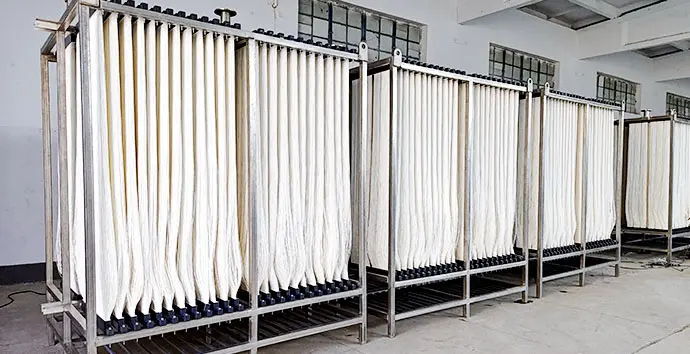
PTFE UF Hollow Fiber Membranes: The "Top Performer" in Mechanical Strength and Flux
High-performance heterogeneous composite PTFE hollow fiber membranes exhibit remarkable advantages:
- Mechanical Strength: Single-fiber tensile strength can reach up to 1000 N, and module root delamination strength up to 600 N, far exceeding conventional PVDF membranes (e.g., ZeeWeed® 500D fiber tensile strength > 600 N). This makes PTFE UF membranes much less prone to fiber breakage or delamination under high turbulence and heavy fouling conditions.
- Flux Advantage: The self-lubricating property of PTFE and its unique pore structure allow pure water flux to reach 2–5 times that of PVDF membranes. Under the same treatment capacity, this can significantly reduce the required membrane area and energy consumption.
- Limitations: Hydrophilic-modified PTFE is not a purely native material. The hydrophilic functional groups are usually not oxidation-resistant. In cleaning scenarios involving strong oxidants (e.g., high-concentration NaClO), the hydrophilicity may degrade, impacting long-term operational performance.
PVDF UF Membranes: Widely Used but Performance Boundaries Require Caution
Modified PVDF membranes, thanks to their excellent film-forming ability and hydrophilicity, are widely applied in industrial wastewater pretreatment. However, their performance limits under actual operating conditions need careful attention:
1. Scenario-Based Advantages of Modified PVDF
In industries such as textile dyeing, electroplating, food processing, and power plant desulfurization wastewater, modified PVDF UF membranes serve as efficient pretreatment units:
- Textile Dyeing Wastewater: Retains dye particles and fiber impurities, tolerates citric acid and NaOH cleaning, prevents membrane module swelling or damage, and reduces the load on subsequent advanced treatment processes.
- Electroplating Wastewater: Effectively captures heavy metal hydroxide precipitates and plating residues, preventing heavy metal ions from entering downstream processes and ensuring effluent compliance.
- Food Processing Wastewater: Excellent anti-fouling performance addresses high protein and high fat content, enabling wastewater reuse or compliant discharge.
- Desulfurization Wastewater: Tolerates mildly acidic conditions and periodic chemical cleaning, retains suspended solids and gypsum particles, improving wastewater reuse efficiency.
High-performance heterogeneous composite PTFE hollow fiber membranes exhibit remarkable advantages:
- Mechanical Strength: Single-fiber tensile strength can reach up to 1000 N, and module root delamination strength up to 600 N, far exceeding conventional PVDF membranes (e.g., ZeeWeed® 500D fiber tensile strength > 600 N). This makes PTFE UF membranes much less prone to fiber breakage or delamination under high turbulence and heavy fouling conditions.
- Flux Advantage: The self-lubricating property of PTFE and its unique pore structure allow pure water flux to reach 2–5 times that of PVDF membranes. Under the same treatment capacity, this can significantly reduce the required membrane area and energy consumption.
- Limitations: Hydrophilic-modified PTFE is not a purely native material. The hydrophilic functional groups are usually not oxidation-resistant. In cleaning scenarios involving strong oxidants (e.g., high-concentration NaClO), the hydrophilicity may degrade, impacting long-term operational performance.
Alkali Resistance vs. Lifespan
Although modified PVDF demonstrates alkali resistance in specific scenarios, performance degradation during long-term operation cannot be ignored:
- Technical Limitations: The technical specifications of Veolia (formerly GE) ZeeWeed® 500D membranes explicitly limit cleaning to pH < 10.5. Similarly, Sumitomo’s PVDF membrane datasheet notes that cleaning with NaClO under alkaline conditions (pH > 9) or using NaClO under acidic conditions can damage the hydrophilicity of the membrane. For example, a 3000 mg/L NaClO solution can significantly reduce hydrophilicity in just about 200 hours.
- Operational Risks: In practice, exceeding the recommended pH range during cleaning is common in the industry. While this may temporarily improve cleaning efficiency, it is fatal to the long-term lifespan of PVDF UF membranes. In textile dyeing, chemical, steel, and pharmaceutical industries, when the feedwater is impacted by high-molecular-weight oils, PVDF membrane flux often fails to recover, representing a major pain point for operators.

Decision Framework for Material Selection
When choosing between PTFE and PVDF, the decision should be based on feed water characteristics, operating conditions, and lifespan requirements:
- Mechanical Strength: PTFE hollow fiber membranes offer extremely high mechanical strength (single-fiber tensile strength up to 1000 N), making PTFE UF membranes suitable for high-turbulence conditions. PVDF hollow fiber membranes provide moderate strength (e.g., ZeeWeed® 500D > 600 N).
- Flux Performance: The pure water flux of PTFE is 2–5 times higher than that of PVDF, giving PTFE UF membranes a significant energy-saving advantage. PVDF UF membranes have moderate flux and rely on hydrophilic modification for improvement.
- Chemical Resistance: PTFE is highly resistant to strong oxidants, acids, and alkalis, although its hydrophilic modification layer is not oxidation-resistant. PVDF can tolerate acids and alkalis in the short term, but long-term operation beyond recommended conditions may lead to degradation.
- Oil Fouling Resistance: PTFE has strong self-lubricating properties, offering better resistance to oil fouling and superior flux recovery. In contrast, PVDF UF membranes often struggle to recover flux after exposure to high-molecular-weight oils.
- Application Scenarios: PTFE UF membranes are more suitable for core processes requiring resistance to heavy oil contamination, strong oxidation, and long service life. PVDF UF membranes are better suited for specific pretreatment applications, such as textile dyeing and flue gas desulfurization wastewater.
Conclusion and Outlook of PTFE & PVDF UF Membrane
PTFE and PVDF are not mutually exclusive alternatives, but rather complementary technology choices:
- For demanding operating conditions—such as strong oxidative environments, high-molecular-weight oil contamination, and long service life requirements—PTFE hollow fiber membranes, with their superior mechanical strength and flux performance, show strong potential as core process materials. In such cases, PTFE UF membranes offer clear long-term advantages.
- In pretreatment applications, modified PVDF membranes can still deliver efficient particle removal. However, operating conditions must be strictly controlled (e.g., cleaning pH and NaClO concentration) to prevent hydrophilicity loss and shortened lifespan. Under proper operation, PVDF UF membranes remain a reliable and cost-effective choice.
Looking ahead, the development of membrane materials will focus on achieving a balance of performance—such as creating composite membranes that retain the intrinsic properties of PTFE while offering stable hydrophilicity, or improving PVDF modification processes to enhance chemical resistance and anti-fouling capabilities. In engineering practice, only by precisely matching material performance with operating conditions can water treatment systems achieve high efficiency, stability, and economic viability.
Related Articles
- Pre-ultra Filtration(UF)System Selection Based on Raw Water Quality Indicators (Turbidity/SDI/DOC)
- Introduction to UF Membrane Cleaning Procedure
- The Role of Terminal UF Membrane in Ultrapure Water Systems and Key Design Parameters
- Sharing a Design Calculation Example for an Ultrafiltration System
- Effect of Water Temperature on Permeate Flow of Ultrafiltration Water Treatment Systems and Operational Optimization