
Why must a cartridge water filter be installed before an ion exchange resin? Is this investment really necessary? Can this step be omitted?
These questions become particularly prominent when project budgets are tight. However, we must honestly tell you: a cartridge water filter is by no means an optional “luxury” – it is an absolute “necessity” to ensure the long-term, stable operation of your ion exchange system.
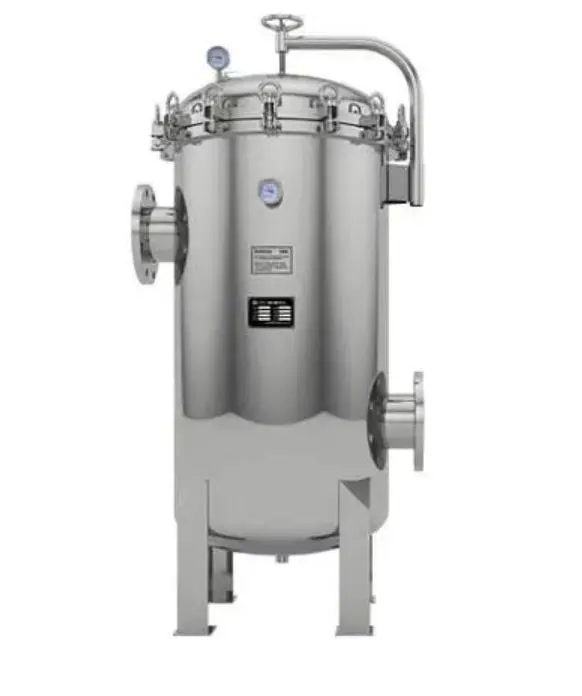
The Critical Harm Caused by Suspended Solids (SS) to Ion Exchange Resins
Suspended solids refer to various solid particles suspended in water, including silt, rust, colloidal particles, microorganisms, and their metabolic byproducts. Although these substances have low solubility in water, their harm to ion exchange resins cannot be ignored.
Physical Blockage Increases Resin Bed Resistance
When the incoming water contains a large amount of suspended solids, these particles gradually deposit on the surface of the resin bed and in the gaps between resin beads, forming a dense “filter cake.” This cake significantly increases water flow resistance, leading to a higher pressure drop across the resin bed and reduced water output.
According to our laboratory test data, when the influent SS content exceeds 5 ppm, the resin’s exchange capacity can drop by 20-30% within three months. The pressure drop across the resin bed will noticeably increase after 3-6 months of operation, potentially impacting normal water production in severe cases.
Blocked Resin Micropores Reduce Exchange Capacity
The exchange function of ion exchange resins relies heavily on their internal micropore structure. When colloidal particles and fine suspended solids in the influent enter the resin beads, they block these micropores, preventing the ion exchange groups from effectively contacting the target ions in the water.
Once this type of blockage occurs, conventional backwashing is often ineffective at removing it, leading to a permanent decline in resin exchange capacity. Furthermore, suspended solids trapped in the resin bed can become a breeding ground for microorganisms, further worsening the blockage and deteriorating effluent water quality.
Irreversible Damage from Oil and Grease Contamination
In industrial water treatment systems, oil and grease contamination primarily originates from the raw water source, process leaks, or accidental introduction of lubricating oil. Compared to suspended solids, oil and grease cause more severe and often irreversible damage to ion exchange resins.
Oil Film Coverage Blocks Ion Exchange
The hydrophobic nature of oil and grease makes them easily adhere to the surface of resin beads, forming a hydrophobic oil film. This oil film acts like a “raincoat” on the resin, effectively isolating the hydrophilic resin surface from the water phase.
Since the ion exchange process is essentially an ion migration reaction in the water phase, when the resin surface is covered by an oil film, ions in the water cannot effectively approach the exchange groups on the resin surface, causing the exchange reaction rate to drop sharply. In practical cases, we have found that even with only 20-30% coverage of the resin surface by oil film, the working exchange capacity may drop by over 40%.
Resin "Poisoning" Leads to Permanent Performance Loss
Another serious consequence of oil contamination is resin “poisoning.” Oily substances can penetrate the gel structure of the resin, swelling and distorting its network structure, leading to irreversible swelling deformation of the resin.
Contaminated resin not only suffers a significant drop in exchange capacity but also exhibits reduced mechanical strength and increased bead breakage. According to our test data, when the influent oil and grease content exceeds 5 ppm, the resin’s exchange capacity can drop by 40-60% within 1-2 months and is very difficult to restore through conventional regeneration methods.
| Contamination Type | Main Harmful Effects | Recoverability |
|---|---|---|
| Suspended Solids | Pore blockage, surface coating, bed compaction | Partially recoverable by backwashing |
| Oil & Grease | Oil film coverage, active site deactivation, bead agglomeration | Difficult to recover; often requires resin replacement |
Why 5 ppm cartridge water filter is Chosen as the Control Standard
In industry standards, controlling influent SS and oil/grease content below 5 ppm is a technical requirement validated by long-term practice. This standard is based on the following considerations:
Resin Characteristics
Considering resin properties, ion exchange resins have a certain tolerance range for influent water quality. When influent SS and oil/grease levels are below 5 ppm, the cumulative degree of contamination within the resin’s normal operating cycle is manageable. Routine backwashing and regeneration can effectively restore the resin’s exchange capacity.
Once this critical value is exceeded, the accumulation rate of contaminants noticeably accelerates, and resin performance degradation shows a rapid downward trend. According to GB/T 5476-2013 “Methods of Pretreatment for Ion Exchange Resins,” controlling SS content below 5 ppm is based on the following scientific rationale:
Resin particle size match: Typical ion exchange resin particle sizes are 0.4-1.2 mm; a 5 ppm suspended solids level helps prevent the formation of a continuous contamination layer on the resin surface.
Flow rate requirements: At normal operating flow rates (10-20 m/h), a 5 ppm SS level does not cause a rapid increase in bed pressure drop.
Regeneration effectiveness: Controlling SS below 5 ppm ensures that the regenerant can adequately contact the resin’s active sites.
Service life: Our tracking data shows that resins with strictly controlled SS levels have a service life 3-5 times longer than those without such control.
Economic Perspective
From an economic standpoint, the investment cost of a cartridge water filter is quite favorable compared to the cost of resin replacement. For an ion exchange system with a treatment capacity of 100 m³/h, the investment in a cartridge water filter is typically in the tens of thousands of currency units, while the cost to replace the entire resin charge often reaches hundreds of thousands.
More importantly, frequent replacements due to contamination not only increase direct costs but also cause production loss due to downtime and increased maintenance workload. According to our statistics, systems with strict influent water quality control can reduce operating costs by over 60%.
Technical Feasibility
From a technical feasibility perspective, currently available mainstream cartridge filtration technology is fully capable of achieving the goal of controlling SS and oil/grease below 5 ppm. Common cartridge water filters have filtration ratings of 5-20 microns. Combined with upstream pre-treatment systems (such as coagulation/sedimentation, multimedia filtration, activated carbon adsorption, etc.), they can effectively safeguard the influent water quality for the ion exchange system.
Based on our technical exchanges with renowned domestic and international resin manufacturers, controlling oil and grease content below 5 ppm is a universally recognized industry requirement:
DuPont™ Dow Resins Requirement: Oil and grease content in influent must be ≤0.1 mg/L (0.1 ppm), can be relaxed to 5 ppm under special conditions.
Purolite Resins Requirement: Influent oil and grease content must be controlled below 5 ppm; otherwise, the warranty is void.
Chinese Domestic Resins Requirement: Influent oil and grease content should be controlled below 5 ppm to ensure normal resin service life.
Industrial Application Standard: GB/T 13659-2008 “001×7 Strong Acidic Styrene-based Cation Exchange Resins” explicitly requires influent oil and grease content ≤5 ppm.
The Critical Role of the cartridge water filter
As the final physical barrier in the pre-treatment system, the cartridge water filter plays an irreplaceable role in ensuring the influent water quality for the ion exchange system.
Key Technical Parameters
Filtration rating: Typically 5 µm cartridges are used, effectively removing most suspended solids and oil/grease particles.
Material requirement: 304 or 316 stainless steel construction for good corrosion resistance.
Design pressure: Typically 0.6-1.0 MPa, meeting industrial water treatment requirements.
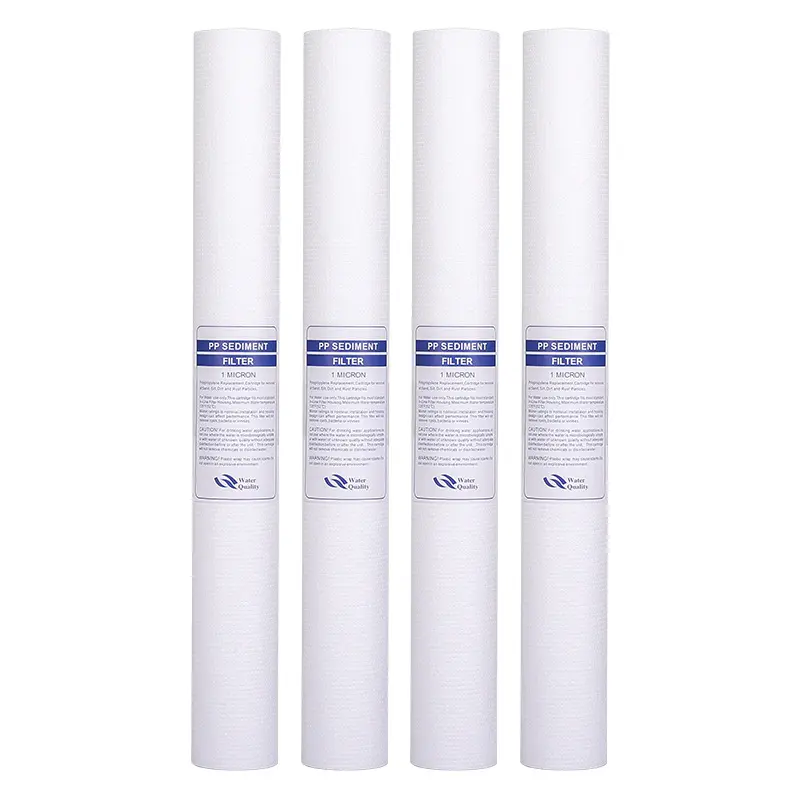
Cartridge configuration: PP melt-blown or pleated cartridges, providing good filtration efficiency.
Working Principle
Sieving action: The microporous structure of the cartridge retains particles larger than the pore size.
Adsorption: The cartridge surface has some adsorptive capacity for oil/grease and organic matter.
Depth filtration: The three-dimensional network structure inside the cartridge allows for depth filtration.

Key Design Points for the Pre-treatment System
Pre-treatment System Configuration
Based on our experience, a complete pre-treatment system should include:
Pre-treatment Process Flow:
Raw water collection (Raw water tank or pump) → Coagulation/Sedimentation (removes large suspended solids) → Multimedia Filtration (removes fine suspended solids) → Activated Carbon Filtration (removes organics and some oil/grease) → Cartridge Filtration (5µm filter, final barrier) → (Optional) Security Filtration (1µm filter, protects downstream equipment)
Operation and Maintenance Highlights
Cartridge water filter maintenance:
Regular cartridge replacement: Typically every 3-6 months, depending on water quality.
Regular backwashing: Perform weekly backwashing to remove contaminants from the cartridge surface.
Pressure monitoring: Replace cartridges promptly when the differential pressure exceeds 0.1 MPa.
Water quality monitoring: Regularly test influent SS and oil/grease content to ensure compliance.
Resin system maintenance:
Regular backwashing: Perform a backwash every 10-15 operating cycles.
Regeneration: Regenerate promptly when effluent water quality fails to meet standards.
Performance testing: Test resin exchange capacity quarterly.
Summary and Recommendations
We deeply understand the decisive impact of the pre-treatment system on resin performance. Installing a cartridge water filter and controlling SS and oil/grease content below 5 ppm not only extends resin service life and reduces operating costs but also ensures stable effluent quality and avoids environmental risks.
We recommend that all enterprises using ion exchange resins pay close attention to the design and operation of their pre-treatment system, strictly control influent water quality, and ensure the normal operation of the resin system. Specific recommendations include:
Select the appropriate pre-treatment process combination based on raw water quality characteristics to ensure the water entering the cartridge water filter meets subsequent requirements.
Sizing of the cartridge water filter should be determined by system scale and operational demands. For continuous operation, a parallel configuration with multiple cartridges is recommended.
Establish a robust monitoring and maintenance system, regularly test the water quality before and after the cartridge water filter, and replace cartridges promptly based on actual differential pressure changes.
We firmly believe that only by striving for excellence in every step can we truly leverage the technical advantages of ion exchange resins and create greater value for users. The cartridge water filter may seem like a simple device, but its inclusion embodies the engineering wisdom of “preventing problems before they occur.” Investing in prevention is far more economical and wiser than remediating after the fact.