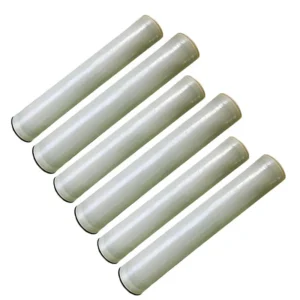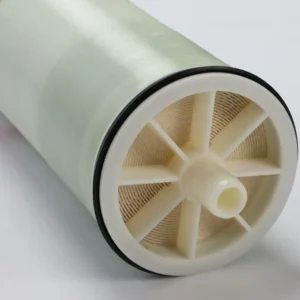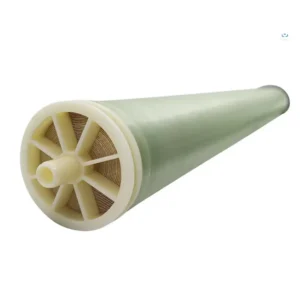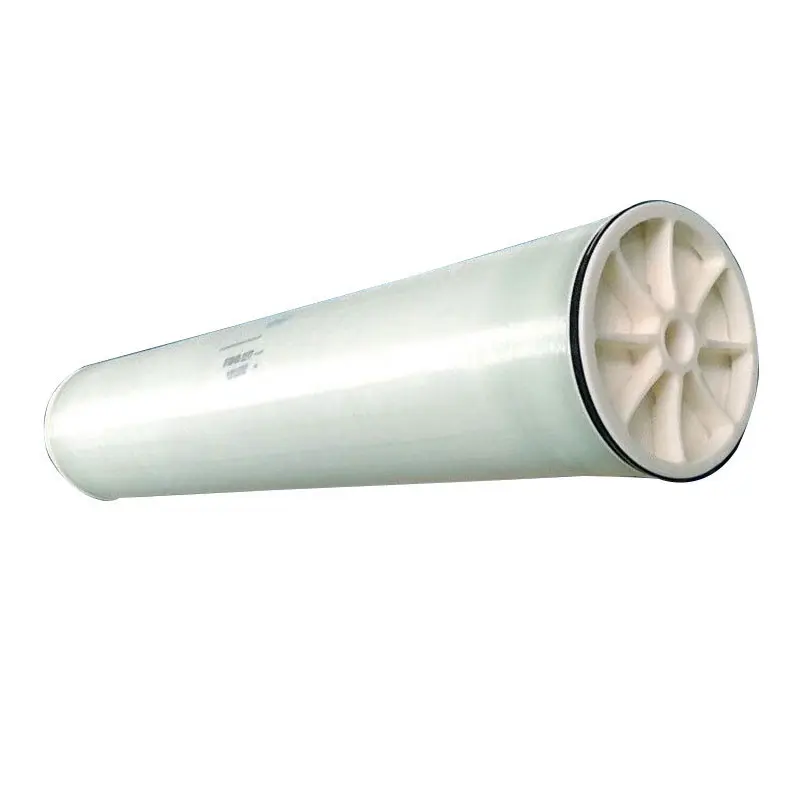
NF90 Low-Pressure Nanofiltration Membrane
The NF90 low-pressure nanofiltration membrane is designed for water treatment applications requiring selective salt separation, organic matter reduction, and high water permeability.
According to the supplier’s product description, the NF90 series combines multivalent ion rejection with selective passage of monovalent salts. Its separation characteristics make it a potential option for water treatment processes where partial desalination and organic matter reduction are required.
Organic Matter and Micropollutant Removal
The NF90 series is intended for reducing certain dissolved organic compounds, including natural organic matter (NOM), total organic carbon (TOC), and trihalomethane (THM) precursors.
The supplier also identifies certain pesticides and herbicides as potential removal targets. However, rejection performance varies with the chemical structure, molecular size, charge, and concentration of each compound.
Removal of individual contaminants should be verified using relevant membrane performance data or application-specific testing.
Selective Salt Separation and Hardness Reduction
The NF90 membrane is designed to provide selective separation of dissolved ions, including the rejection of certain divalent and multivalent salts.
Depending on the feed water composition and membrane rejection characteristics, the NF90 series may support partial hardness reduction and selective salt separation.
Actual salt rejection and hardness removal should be confirmed under the intended operating conditions.
Water Permeability and Operating Pressure
The NF90 series is positioned for applications requiring relatively low operating pressure and high water permeability.
Potential energy savings depend on feed water salinity, required permeate flow, recovery rate, temperature, and overall system design.
The maximum allowable operating pressure is a membrane safety limit and should not be interpreted as its recommended operating pressure.
NF90 Operating Limits
Parameter Supplier-Stated Value Maximum Operating Pressure 41 bar (600 psi) Maximum Operating Temperature 45°C (113°F) Continuous Operating pH Range 3–10 Chemical Cleaning pH Range 1–12 (30 minutes) Maximum Feed Water SDI15 5.0 Maximum Pressure Drop per Element 1.0 bar (15 psi) Allowable Free Chlorine Concentration <0.1 ppm Technical Note: The operating limits above are based on the supplier’s stated specifications. They should not be interpreted as recommended operating conditions or as permission to operate at all maximum limits simultaneously. Confirm the applicable operating and cleaning requirements before membrane selection.
NF90 Membrane Selection and Sourcing
Clear Environment supplies NF90 nanofiltration membrane elements for water treatment projects.
For technical specifications, operating conditions, and quotation, please contact us with your feed water analysis, required permeate quality, system capacity, and application details. We can assist with membrane selection and supplier coordination.
NF90 Nanofiltration Membrane Specifications
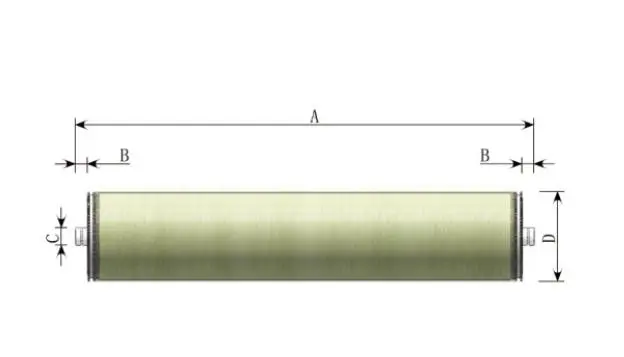
| NF90 Membrane Element Dimensions | ||||
|---|---|---|---|---|
| Model | A inch(mm) | B inch(mm) | C inch(mm) | D inch(mm) |
| NF-90-400 | 40(1016) | / | 1.125(29) | 7.9 (201) |
| NF-90-82 | 37.9(963) | 1.05(26.7) | 0.75(19) | 3.9 (99) |
| NF90 Membrane Performance Data | |||
|---|---|---|---|
| Model | Effective area ft (m2) | Stable desalination rate% | Water Production gpd(m3/d) |
| NF-90-400 | 400(37.2) | >98.5 | 8200(31) |
| NF-90-82 | 82(7.6) | >98.5 | 1580(6) |
Performance Note: The membrane area, salt rejection, and permeate flow values shown above are based on the supplier’s stated specifications. Actual performance depends on feed water composition, operating pressure, temperature, and recovery rate. Salt rejection and permeate flow should be evaluated under the applicable test conditions.
For detailed test conditions and membrane selection, please contact Clear Environment.
NF90 Nanofiltration Membrane Applications
1. Drinking Water Treatment and Organic Matter Reduction
The NF90 nanofiltration membrane can be evaluated for drinking water treatment applications requiring the reduction of certain dissolved organic compounds and selective removal of hardness-related ions.
Potential treatment targets include natural organic matter (NOM), total organic carbon (TOC), and certain trihalomethane (THM) precursors.
Actual removal performance depends on feed water quality, membrane rejection characteristics, and operating conditions. Additional treatment and disinfection may be required to meet drinking water standards.
2. Selective Salt Separation in Water Treatment
The NF90 series is intended for applications requiring selective separation of dissolved salts, including certain divalent and multivalent ions.
Depending on the feed water composition and required permeate quality, it may be considered for partial hardness reduction and selective desalination.
Membrane suitability should be confirmed using the supplier’s ion rejection data and relevant operating conditions.
3. Low-Pressure Water Treatment Applications
The NF90 series is positioned for water treatment systems where operating pressure and energy consumption are important design considerations.
Its suitability for relatively low-pressure operation should be assessed using the required permeate flow, feed water salinity, temperature, and recovery rate.
Potential energy savings should be evaluated at the system level rather than assumed from the membrane’s nominal specifications.
NF90 Nanofiltration Membrane – FAQ
1. Is the NF90 nanofiltration membrane suitable for drinking water treatment?
The NF90 nanofiltration membrane can be evaluated for drinking water treatment applications requiring organic matter reduction and selective salt separation.
Potential treatment targets include natural organic matter (NOM), certain dissolved organic contaminants, and hardness-related ions.
However, membrane performance alone does not establish drinking water compliance. Feed water quality, pretreatment, disinfection, and applicable drinking water regulations must be considered. Any required drinking water contact certifications should also be verified before selection.
2. Can the NF90 membrane remove pesticides and herbicides from water?
The NF90 series is described by the supplier as suitable for reducing certain pesticides and herbicides.
However, removal efficiency varies significantly between individual compounds because of differences in molecular size, charge, and chemical properties.
For projects involving specific pesticides or herbicides, relevant rejection data or application-specific testing should be obtained before confirming membrane suitability.
3. What operating pressure is required for the NF90 membrane, and can it reduce energy consumption?
The NF90 series is positioned for relatively low-pressure water treatment applications, but its actual operating pressure depends on feed water salinity, temperature, required permeate flow, and system recovery rate.
The supplier specifies a maximum operating pressure of 41 bar (600 psi). This is an operating limit, not the recommended pressure for normal operation.
Potential energy savings should be evaluated using verified membrane performance data and the complete system design.
4. Can the NF90 membrane tolerate chlorine in the feed water?
The supplier specifies an allowable free chlorine concentration below 0.1 ppm for the NF90 series.
However, this value should not be treated as a recommended continuous chlorine concentration. Prolonged exposure to oxidizing agents may damage the membrane.
Appropriate dechlorination and oxidant monitoring should be considered during pretreatment, and the supplier’s requirements should be confirmed before operation.
5. When should an NF90 nanofiltration membrane be selected instead of a reverse osmosis membrane?
The choice between NF90 nanofiltration and reverse osmosis depends on the required permeate quality and the specific substances that must be removed.
NF90 may be considered where selective ion separation and organic matter reduction are required without necessarily achieving the broad dissolved salt removal associated with RO membranes.
If very low permeate TDS or extensive monovalent salt removal is required, an RO membrane may be more appropriate.
The final selection should be based on verified salt rejection data, operating conditions, and the project’s water quality requirements.