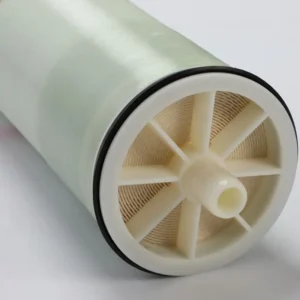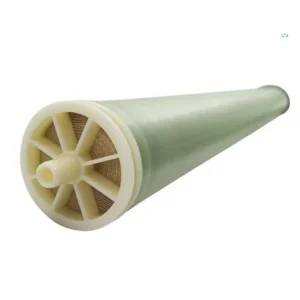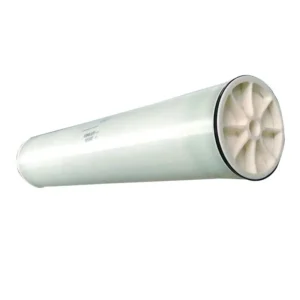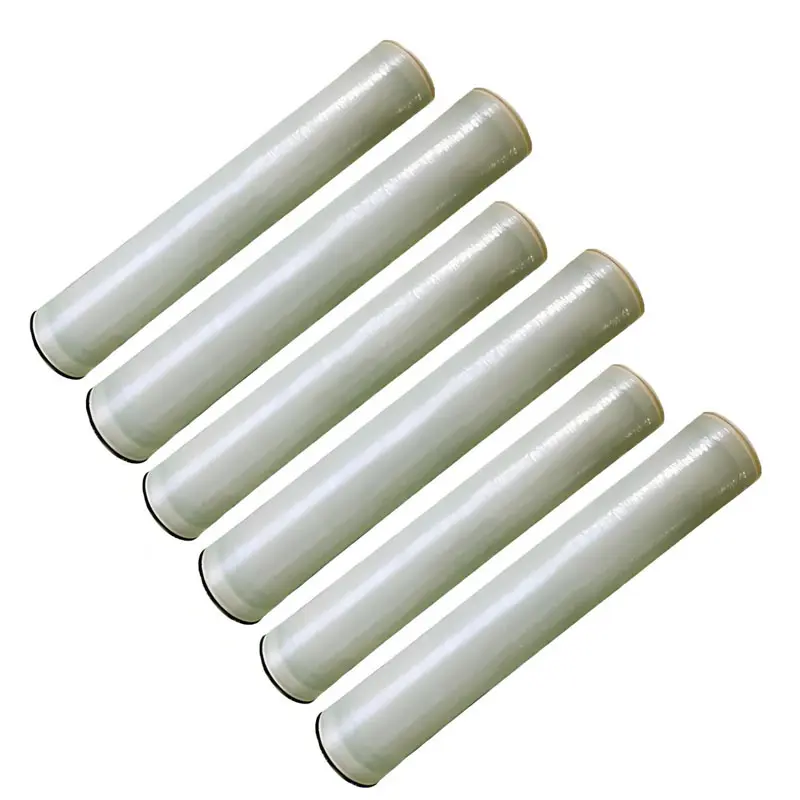
As an nf membrane, traditional nanofiltration membrane process, due to structural design and manufacturing limitations, tend to form filtration dead zones in areas such as the bonding interfaces between the membrane sheet and the support layer, as well as the element edges under nanofiltration membrane operating pressure. In these regions, water flow becomes slow or even stagnant, causing contaminants to accumulate. This not only reduces filtration efficiency but can also lead to bacterial growth, worsening membrane fouling and shortening NF membrane service life. Meanwhile, bypass issues are also common, where part of the feed water does not pass through the effective filtration area of the membrane sheet and instead flows directly through gaps in the element. As a result, the treated water quality fails to meet expected standards and may require additional polishing steps.
The 500 series NF membrane adopts a new-generation module manufacturing technology to fundamentally solve these issues. In terms of structural design, in order to meet nanofiltration membranes market requirement, the membrane sheet arrangement and supporting configuration have been precisely optimized to ensure that water flows evenly across every part of the membrane surface, eliminating the dead zones commonly found in traditional elements. In addition, an innovative sealing process is applied at the membrane-to-shell connection, preventing the formation of any micro-gaps that could lead to bypass flow. This ensures that all water must pass through the effective membrane filtration channels, completely eliminating bypass problems.
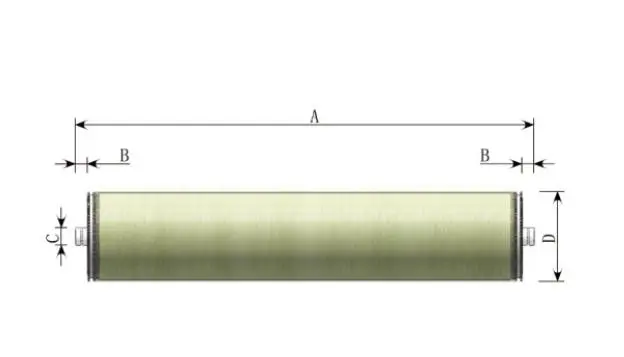
| Dimension | ||||
|---|---|---|---|---|
| Model | A inch(mm) | B inch(mm) | C inch(mm) | D inch(mm) |
| NF-500-400 | 40(1016) | / | 1.125(29) | 7.9 (201) |
| NF-500-82 | 37.9(963) | 1.05(26.7) | 0.75(19) | 3.9 (99) |
| Parameters | |||
|---|---|---|---|
| Model | Effective area ft (m2) | Stable desalination rate% | Water Production gpd(m3/d) |
| NF-500-400 | 400(37.2) | >90 | 13200(50) |
| NF-500-82 | 82(7.6) | >90 | 2900(11) |
APPLICATION
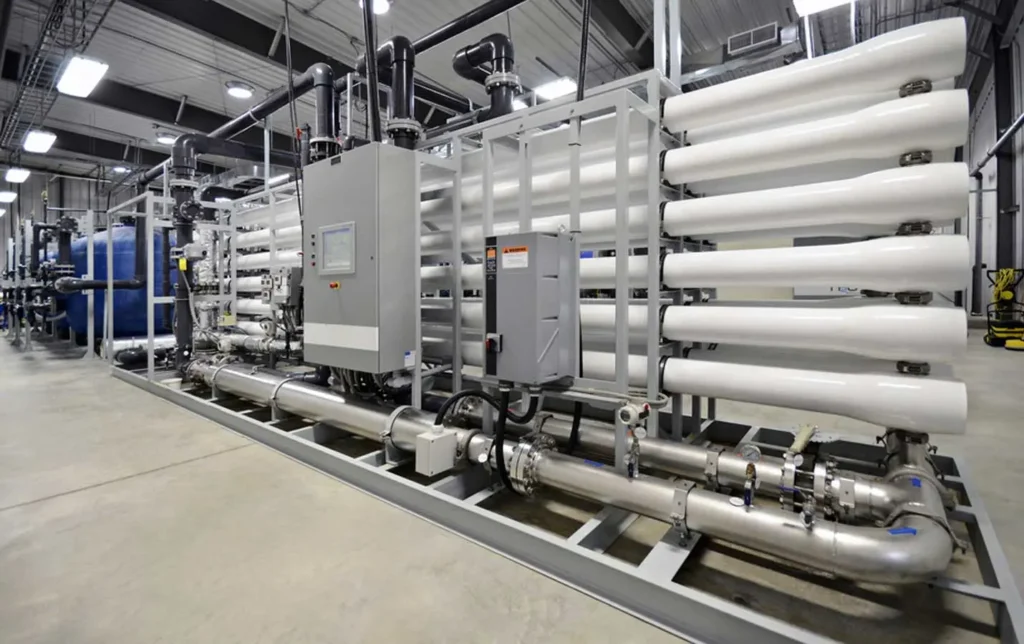
Nanofiltration membrane applications requiring decolorization, COD removal, or organic matter removal, but with moderate desalination needs
Examples:
- Dye-containing wastewater
- Food processing (e.g., polysaccharides, plant extracts)
- Pharmaceutical fermentation broth treatment
- Decoction of traditional Chinese medicine: decolorization, impurity removal, and concentration
- Recovery of residual fermentation liquids
Characteristics:
Most contaminants are macromolecules, pigments, or colloids rather than simple salts.
Processes requiring concentration without large evaporation loads, need pore size of nanofiltration membrane
Examples:
- Amino acid concentration
- Vitamin concentration
- Organic acid concentration
- Natural product extract concentration
Benefits:
High-flux nanofiltration enables rapid dehydration and concentration, significantly reducing the load on evaporators and saving energy.