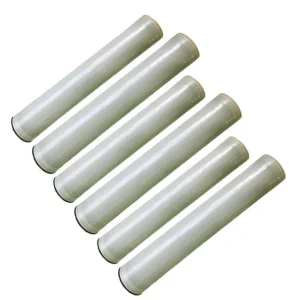
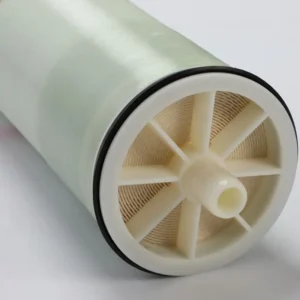
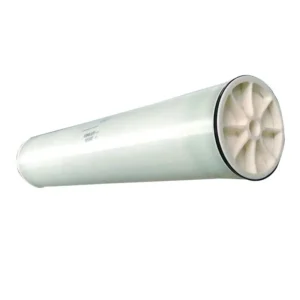
Nanofiltration membranes in the NF150 series are manufactured using a unique formulation and production process, specifically developed for applications requiring special solute concentration and separation. They feature stable and reliable performance with strong anti-fouling capability, and effectively fill the gap within the existing molecular weight cutoff range of nanofiltration membranes.
They are suitable for the separation of fine materials, as well as for the removal of TOC and THM precursors, mono- and multivalent ion fractionation, decolorization, and the separation and concentration of small organic molecules.
This nanofiltration membrane technology is not designed for large-scale desalination, but is a specialized tool specifically developed for fine material separation. Its core capabilities are precisely reflected in three aspects: the precise screening of small organic molecules, efficient decolorization of the system, and selective separation (fractionation) of mono- and multivalent ions. This demonstrates outstanding selectivity, efficiency, and mild operating characteristics.
Notes
- The permeate flow rate of individual membrane elements may vary, but the variation will not exceed ±15%.
- The variation in effective membrane area will not exceed ±4%.
- The stabilized salt rejection rate is typically obtained after 24–48 hours of continuous operation, depending on feed water quality and operating conditions.
If you are looking for nanofiltration membrane suppliers, send us inquiry.
MODEL
| Dimension | ||||
|---|---|---|---|---|
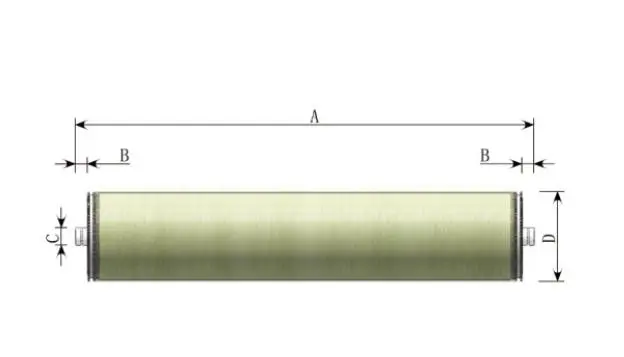
| Model | A inch(mm) | B inch(mm) | C inch(mm) | D inch(mm) |
| NF-150-400/34 | 40(1016) | / | 1.125(29) | 7.9 (201) |
| NF-150-82 | 37.9(963) | 1.05(26.7) | 0.75(19) | 3.9 (99) |
| Dimension | ||||
|---|---|---|---|---|
| Model | A inch(mm) | B inch(mm) | C inch(mm) | D inch(mm) |
| NF-150-400/34 | 40(1016) | / | 1.125(29) | 7.9 (201) |
| NF-150-82 | 37.9(963) | 1.05(26.7) | 0.75(19) | 3.9 (99) |
APPLICATION
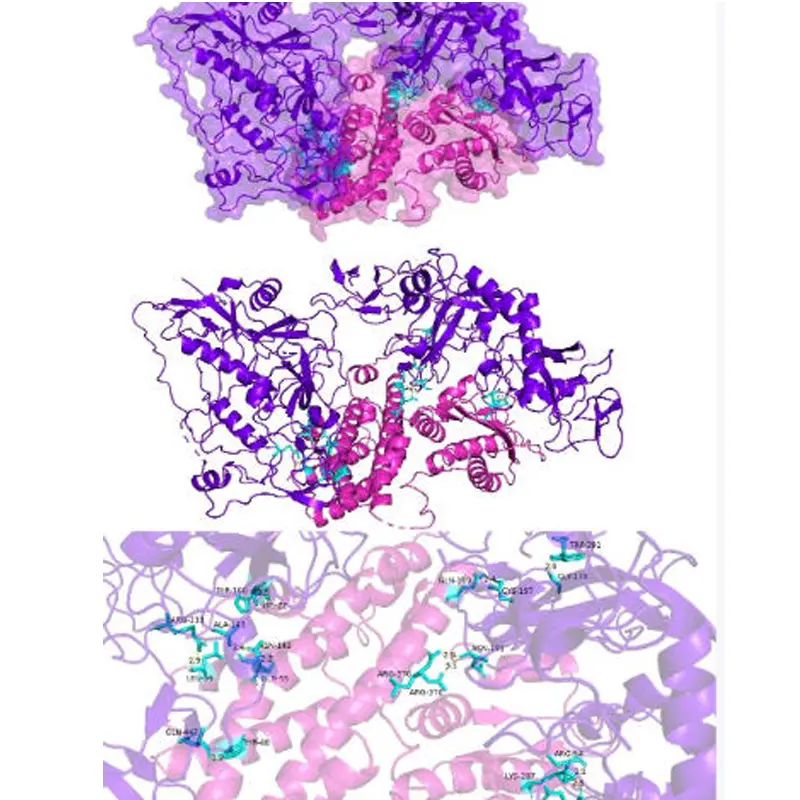
Separation of small organic molecules, such as specific amino acids, antibiotics, organic acids, or vitamins.
With their precisely controlled nanoscale pores, series 150 nanofiltration membranes act as highly precise molecular sieves, effectively separating components with subtle differences in molecular weight. They can gently separate and concentrate target products from reaction or fermentation liquids, avoiding product deactivation or structural changes that might result from high temperatures or harsh chemical conditions. At the same time, they efficiently remove smaller salts or solvents, significantly improving product purity and yield, while making the process greener and more environmentally friendly.
Decolorization in agricultural product deep processing, pharmaceutical, or dye industries.
In many agricultural product deep-processing, pharmaceutical, or dye industries, product streams are often accompanied by deeply colored impurities. These colorants are usually high-molecular-weight pigments, tannins, or degradation products., The Series 150 nanofiltration membranes pores can effectively retain these large molecular colorants while allowing target small molecules or salts to pass through smoothly. This size-exclusion-based physical decolorization method, compared with traditional techniques such as activated carbon adsorption, does not require the addition of external media, does not introduce new impurities, and avoids product loss due to adsorption. The process of nanofiltration membrane for water treatment is simple, efficient, and yields high product recovery, making it especially suitable for the refinement of high-value-added products.
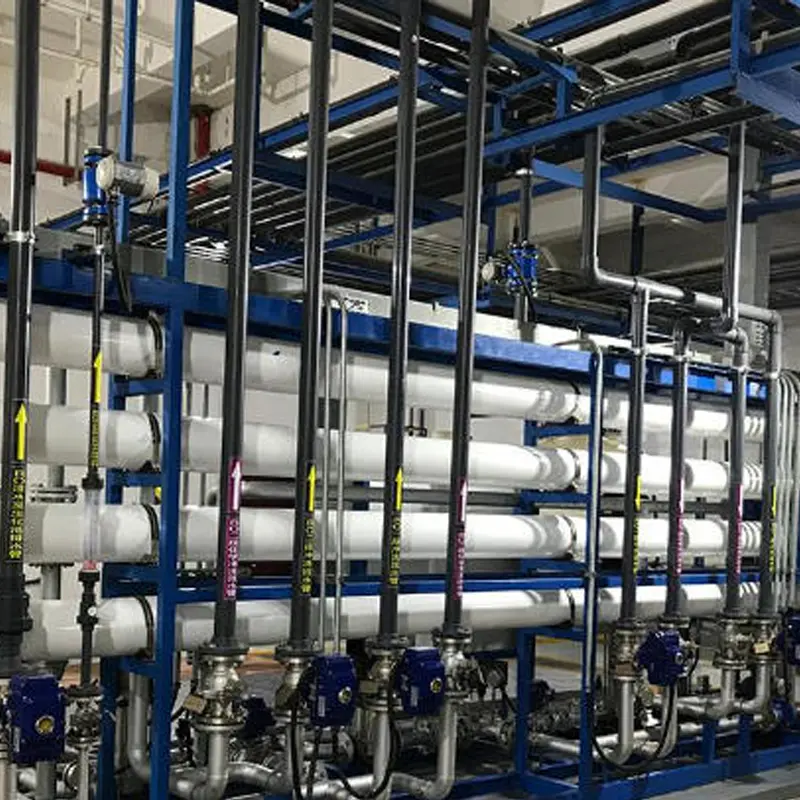
Salt recovery in zero-liquid discharge (ZLD) systems, salt purification in specific chemical processes, and mitigation of scaling tendencies in subsequent evaporators and crystallizers.
Multivalent ions (such as sulfate and calcium/magnesium ions), due to their high charge density and large hydrated radius, are strongly rejected by the membrane surface charge (typically negative) through the Donnan effect and sieved by the pore size, resulting in efficient retention. Monovalent ions (such as sodium and chloride), with lower charge and smaller hydrated radius, can pass through the membrane more readily. The nanofiltration membranes 150 series, by precisely controlling the surface charge properties and pore size of the membrane, can effectively separate monovalent salts from multivalent salts in solution.