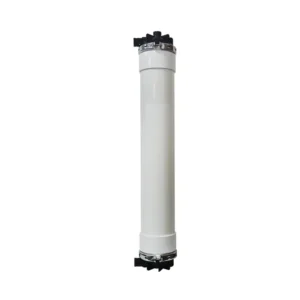
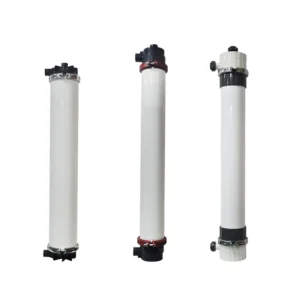
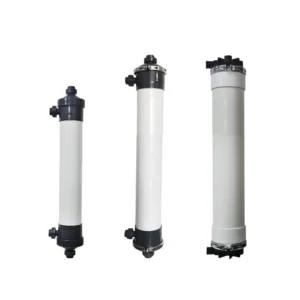
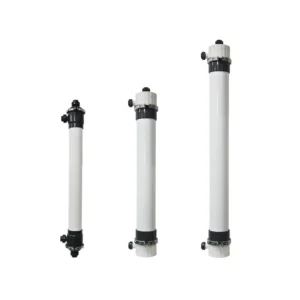
Submerged Hollow Fiber MBR Membrane Module
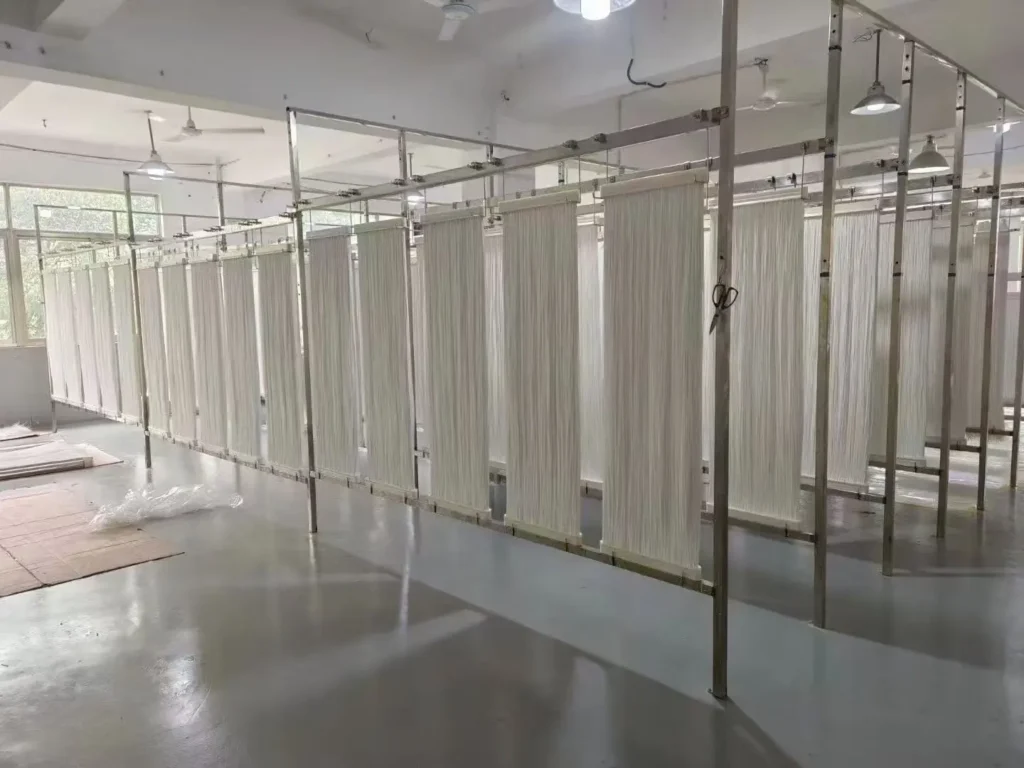
Submerged hollow fiber MBR membrane modules are designed for membrane bioreactor (MBR) systems used in municipal and industrial wastewater treatment. These modules use reinforced PVDF hollow fiber membranes to separate treated water from activated sludge, combining biological treatment with membrane filtration.
The PVDF membrane fibers feature an internal support structure and hydrophilic surface treatment to improve mechanical stability, water permeability and fouling resistance. The submerged configuration allows the membrane modules to operate within an MBR tank, typically with aeration to help control membrane fouling.
Typical Applications
Municipal and domestic sewage treatment
Industrial wastewater treatment and reuse
Landfill leachate treatment
Food and beverage processing wastewater
Aquaculture wastewater treatment
MBR Membrane Sourcing & Replacement
Clear Environment supports water treatment distributors, engineering companies and system integrators in sourcing submerged MBR membrane modules from China. We can assist with model selection, replacement compatibility assessment, OEM requirements and bulk supply based on project specifications.
For replacement inquiries, please provide the existing membrane model, module dimensions, connection details, required quantity and operating conditions.
MBR Membrane Module Models
Our submerged PVDF hollow fiber MBR membrane modules are available in three standard models: MBR-10, MBR-15 and MBR-20, with effective membrane areas of 10 m², 15 m² and 20 m² respectively.
These modules are designed for membrane bioreactor systems used in municipal and industrial wastewater treatment. Model selection should consider the required treatment capacity, design membrane flux, wastewater characteristics, module dimensions and connection requirements.
Clear Environment supports model selection, replacement compatibility assessment and bulk sourcing for water treatment engineering companies and system integrators.
| Model | MBR-10 | MBR-15 | MBR-20 |
|---|---|---|---|
| WidthW(mm) | 535/630(with union) | 535/630(with union) | 535/630(with union) |
| Outlet Diameter D(mm) | 32/25(with union) | 32/25(with union) | 32/25(with union) |
| Effective external pressure membrane area (㎡) | 10 | 15 | 20 |
| Designed Flux(T/D) | 2-4 | 3-6 | 4-8 |
| Membrane material | PVDF hollow fiber | ||
| Membrane rack material | ABS | ||
| Interception aperture(um) | 0.1 | ||
| Inner and outer diameters of membrane fibers | 1.0/2.1 | ||
| Filtration mode | Negative pressure suction | ||
| Suction pressure(MPa) | -0.01-0.05 | ||
| Flux (LMH) | 10-20 | ||
| Producing water period | working 8 min, pause 2 min | ||
| Working temperature(℃) | 5-40 | ||
| Produced water TSS(mg/L) | <5 | ||
| Turbidity | <1 | ||
| Aeration rate Nm3/(m3.h) | 90-150 | ||
| Air water ratio | 15-25:1 | ||
| pH | 2-10 | ||
| Oil content (mg/L) | oil&gease <5mg/L, mineral oil<1mg/L | ||
| Sludge concentration(mg/L) | 5000-10000 | ||
| On-line chemical cleaning period(month) | <3 | ||
| Bakwash pressure | <0.08 | ||
| Off-line chemical cleaning period(month) | 6-12 | ||
| Chemical | Hydrochloric acid/sodium hypochlorite+sodium hydroxide | ||
| Average life | More than 3 years | ||
MBR Membrane Flux Guidelines for Different Wastewater Types
Membrane flux is a key parameter in the design and operation of submerged MBR membrane systems. It represents the volume of permeate produced per unit of membrane area over a specified period, commonly expressed in LMH (L/m²·h) or m³/(m²·day).
The appropriate operating flux depends on wastewater characteristics, mixed liquor suspended solids (MLSS), temperature, membrane fouling potential and operating conditions. Different wastewater applications may require different design flux values.
Membrane fouling can cause a gradual decline in permeate flow or an increase in transmembrane pressure (TMP). Routine monitoring, aeration and membrane cleaning help maintain filtration performance. Cleaning should be performed according to the membrane manufacturer’s recommended TMP limits, operating conditions and maintenance procedures.
The following table provides reference membrane flux values for different wastewater applications. Actual design flux should be confirmed based on feed water characteristics and project requirements.
| No. | Wastewater Type | Recommended Membrane Flux | Unit |
|---|---|---|---|
| 1 | Polysilicon Wastewater | 0.2 | m³/(m²·d) |
| 2 | Landfill Leachate | 0.2 | m³/(m²·d) |
| 3 | Pharmaceutical Wastewater | 0.2–0.3 | m³/(m²·d) |
| 4 | Aquaculture Wastewater | 0.25–0.3 | m³/(m²·d) |
| 5 | Food Industry Wastewater | 0.25–0.3 | m³/(m²·d) |
| 6 | Petroleum & Chemical Wastewater | 0.2–0.3 | m³/(m²·d) |
| 7 | Municipal & Domestic Wastewater | 0.4 | m³/(m²·d) |
MBR Membrane Pretreatment & Feed Water Requirements
Proper pretreatment is essential for the stable operation of submerged MBR membrane modules. Wastewater may contain hair, fibers, grit, oil and other materials that can accumulate around membrane fibers, obstruct flow channels and increase membrane fouling.
Screening and other appropriate pretreatment processes help protect MBR membrane modules and reduce the risk of clogging or mechanical damage. The required pretreatment configuration depends on the wastewater source, suspended solids characteristics, oil content and overall treatment process.
The following table provides reference feed water conditions for membrane selection. Final operating limits and pretreatment requirements should be confirmed against the specifications of the selected MBR membrane module.
| Parameter | Allowable Range |
|---|---|
| Feed Water Source | Applicable to various water sources |
| pH Value | 1–10; special attention required for scaling-prone feed water |
| Maximum Particle Size in Feed | ≤2 mm |
| Oil Content in Feed | <2 mg/L; oil removal pretreatment is required if exceeded |
| Hardness (CaCO₃, mg/L) | <150; determined based on pH value, scaling tendency, and other factors |
MBR Membrane Module Cleaning
Membrane fouling is a common operating challenge in submerged MBR systems. It may be caused by suspended solids, organic matter, biological deposits and inorganic scaling. Proper pretreatment, aeration and regular membrane maintenance help control fouling and maintain stable filtration performance.
1. Pretreatment and Fouling Prevention
Effective pretreatment helps prevent hair, fibers and large particles from entering the membrane tank. Fine screening and appropriate upstream treatment should be selected according to wastewater characteristics and the membrane manufacturer’s requirements.
2. Physical Cleaning
Physical cleaning may include membrane aeration, relaxation, permeate flushing and backwashing, depending on the membrane module design. These methods help remove accumulated solids and reduce reversible fouling.
3. Chemical Cleaning
Chemical cleaning may be required when physical cleaning is insufficient to restore membrane permeability. Cleaning methods can include maintenance cleaning and recovery cleaning, depending on the membrane system design and fouling conditions.
The cleaning method, chemical compatibility, concentration and operating limits must follow the instructions for the specific MBR membrane module.
Chemical Cleaning Procedure
Chemical cleaning is used to remove membrane fouling that cannot be adequately controlled by routine physical cleaning. The appropriate cleaning method depends on the membrane material, module construction and type of foulants.
Common Cleaning Approaches
Oxidative cleaning: Sodium hypochlorite-based cleaning may be used for certain organic and biological deposits where permitted by the membrane manufacturer.
Acid cleaning: Compatible acidic cleaning agents may be used to address inorganic scaling and mineral deposits.
Maintenance cleaning: Periodic cleaning helps control fouling during normal MBR operation.
Recovery cleaning: More intensive cleaning may be required when membrane permeability cannot be restored through routine maintenance.
Important Operating Considerations
Cleaning chemical concentrations, temperature, pH, contact time and cleaning frequency must be determined according to the selected membrane module’s technical manual.
Acidic cleaning agents must never be mixed with sodium hypochlorite or other chlorine-based cleaning solutions. Separate cleaning stages require appropriate draining and rinsing procedures.
After cleaning, membrane performance should be evaluated using operating parameters such as permeate flux and transmembrane pressure (TMP).
For model-specific cleaning recommendations, please contact Clear Environment with your MBR membrane model and operating conditions.
MBR Membrane Module Packaging & Shipping
Watch our MBR membrane module packaging and loading video to see how submerged hollow fiber membrane modules are prepared for shipment. Packaging arrangements can be confirmed according to order quantity and transportation requirements.Lorem ipsum dolor sit amet, consectetur adipiscing elit. Ut elit tellus, luctus nec ullamcorper mattis, pulvinar dapibus leo.
Submerged MBR Membrane Applications & Project References
The following project references illustrate submerged MBR membrane applications across municipal sewage treatment, industrial wastewater treatment, aquaculture and river water remediation. The examples involve different membrane models and configurations, including third-party membrane products. Project references are provided for technical illustration and do not necessarily represent installations supplied by Clear Environment.
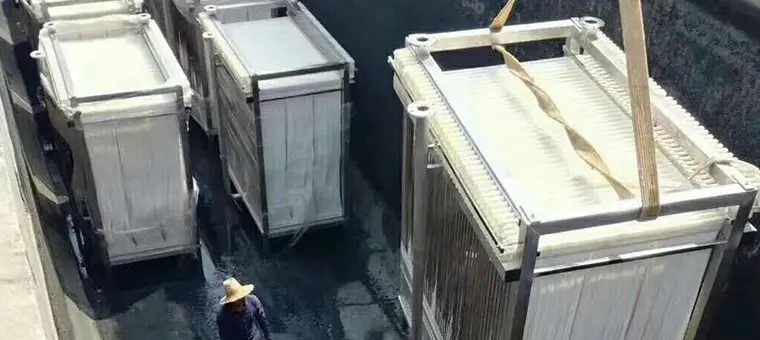
4000T/D membrane bioreactor mbr sewage treatment plant
Adopting Mitsubishi MBR membrane modules from Japan,
Model: MBR-25
Quantity 450 curtains (divided into 10 membrane frames, each with 45 curtains)
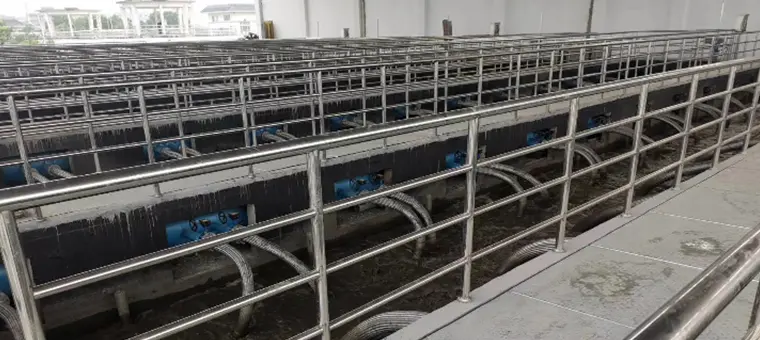
30000T/D aquaculture wastewater treatment MBR membrane system
Adopting reinforced curtain bio membrane reactor MBR membrane modules,
Model: MBR-20
Quantity 5000 curtains (divided into 50 membrane frames, each with 100 curtains)
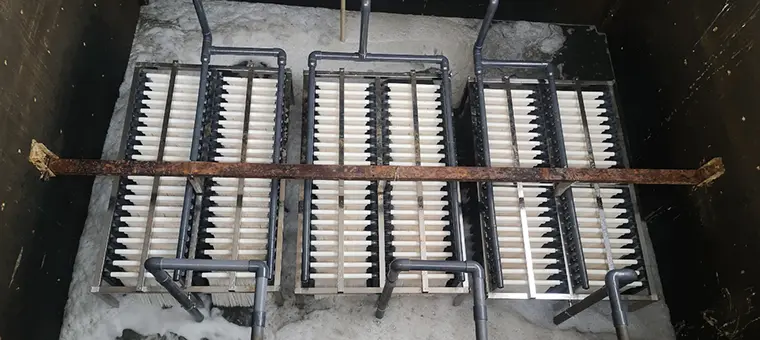
1500T/D MBR membrane system for industrial wastewater treatment in industrial park
Adopting reinforced curtain membrane bio reactors MBR membrane modules
Model: MBR-22
Quantity: 252 curtains (divided into 6 membrane frames, each with 42 curtains)
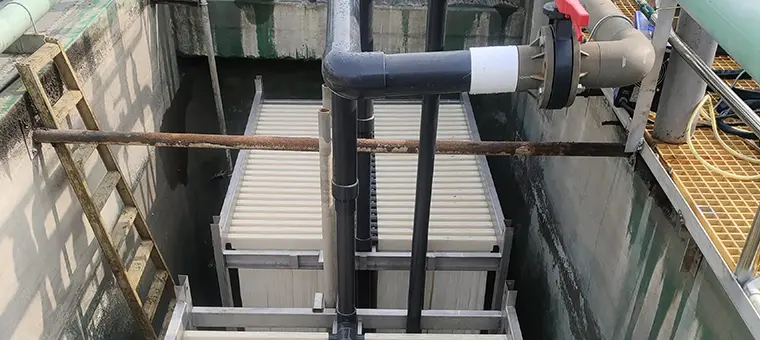
2000T/D membrane bioreactor mbr system wastewater treatment in Electronic Industrial Park
Adopting reinforced curtain MBR membrane modules
Model: MBR-30
Quantity 200 curtains (divided into 4 membrane frames, each with 50 curtains)
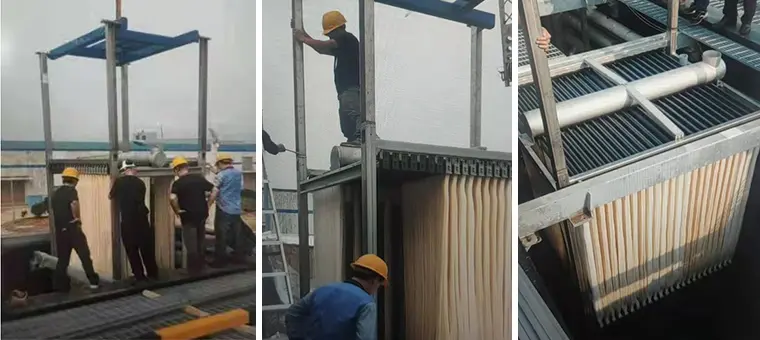
2000T/D printing and dyeing wastewater treatment membrane bioreactor mbr systems
Adopting reinforced curtain MBR membrane modules
Model: MBR-33
Quantity: 150 curtains (divided into 3 membrane frames, each with 50 curtains)
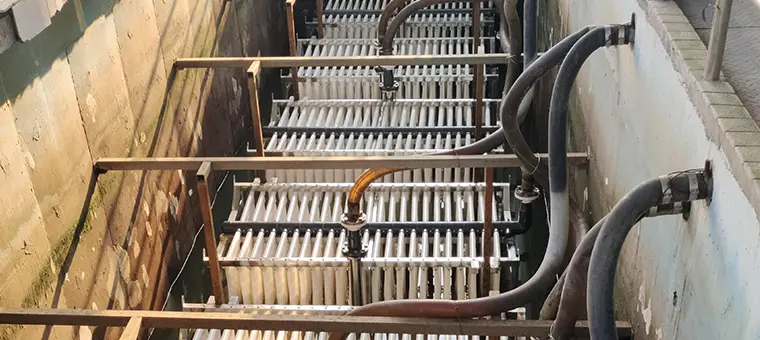
Industrial park 5000T/D Wastewater treatment MBR membrane system
Adopting reinforced curtain MBR membrane modules
Model: MBR-20
Quantity: 224 curtains (divided into 12 membrane frames, each with 56 curtains)
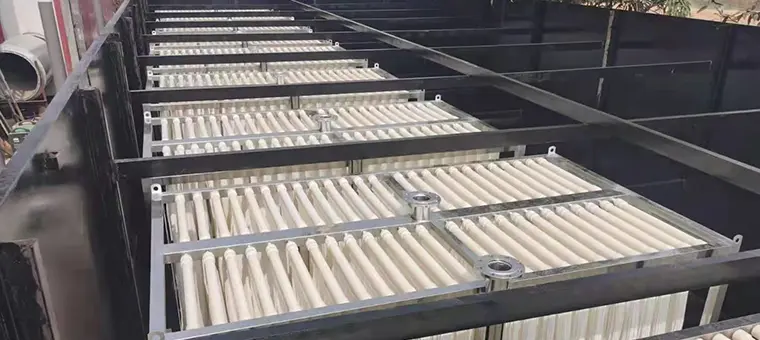
River black and odorous water treatment 7000T/D
Adopting curtain type MBR membrane modules,
Model: MBR-20
Quantity 900 curtains (divided into 18 membrane frames, each with 50 curtains)
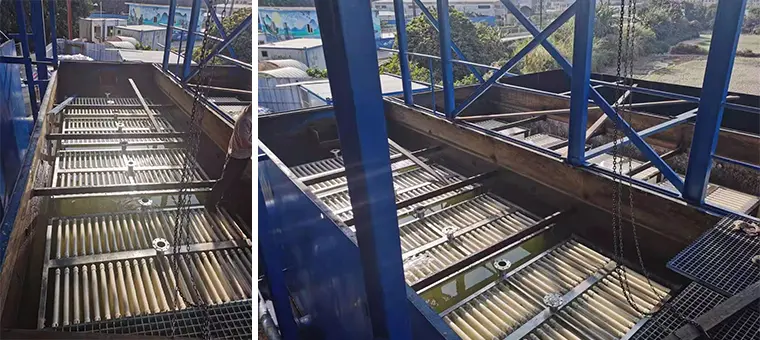
5500T/D treatment of black and odorous water bodies in rivers
Adopting curtain type MBR membrane modules
Model: MBR-20
Quantity 600 curtains (divided into 12 membrane frames, each with 50 curtains)
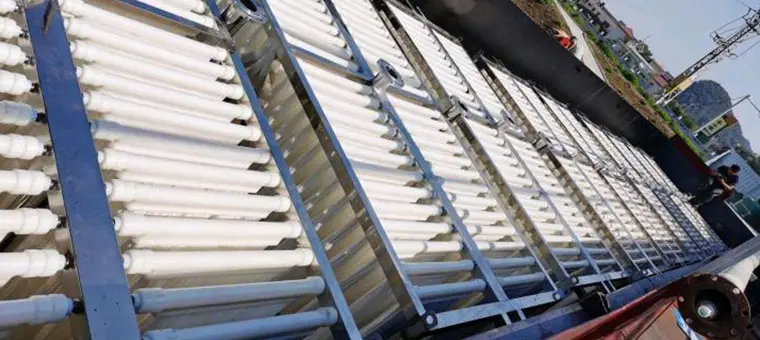
River black and odorous water treatment 3500T/D
Adopting curtain type MBR membrane modules
Model: MBR-20
Quantity: 450 curtains (divided into 9 membrane frames, each with 50 curtains)
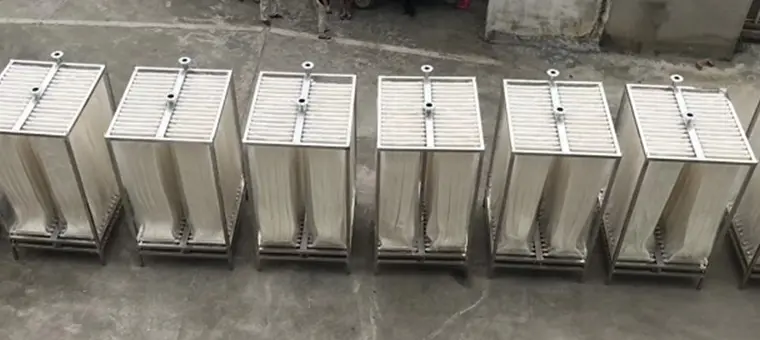
River black and odorous water treatment 2000T/D
Adopting curtain type MBR membrane modules
Model: MBR-20
Quantity: 240 curtains (divided into 8 membrane frames, each with 30 curtains)
MBR Membrane Module – Frequently Asked Questions
1. What is a submerged MBR membrane module?
A submerged MBR membrane module is a filtration component used in membrane bioreactor (MBR) wastewater treatment systems. It combines biological treatment with membrane filtration to separate treated water from activated sludge. Submerged hollow fiber MBR membranes are commonly used in municipal sewage treatment, industrial wastewater treatment and water reuse applications.
2. What MBR membrane module models are available?
Clear Environment offers submerged PVDF hollow fiber MBR membrane modules, including MBR-10, MBR-15 and MBR-20, with effective membrane areas of 10 m², 15 m² and 20 m² respectively. Model selection depends on the required treatment capacity, wastewater characteristics, operating flux and installation conditions.
3. Can you supply replacement MBR membrane modules for existing systems?
Yes. Clear Environment can assist with sourcing replacement MBR membrane modules for existing wastewater treatment systems. Compatibility must be evaluated based on the original membrane model, dimensions, membrane area, connection type, frame configuration and operating requirements. Replacement suitability is confirmed case by case.
4. How do I select the right MBR membrane module for my wastewater treatment project?
MBR membrane selection depends on the wastewater type, required treatment capacity, design membrane flux, mixed liquor suspended solids (MLSS), operating conditions and available installation space. Please provide your project specifications so we can help identify suitable membrane module options.
5. Do you support OEM and bulk supply of MBR membrane modules?
Yes. Clear Environment works with Chinese membrane suppliers to support OEM requirements and bulk sourcing for water treatment distributors, engineering companies and system integrators. Please share your required model, quantity, technical specifications and destination country for a quotation.