
Principle of Water UV Disinfection
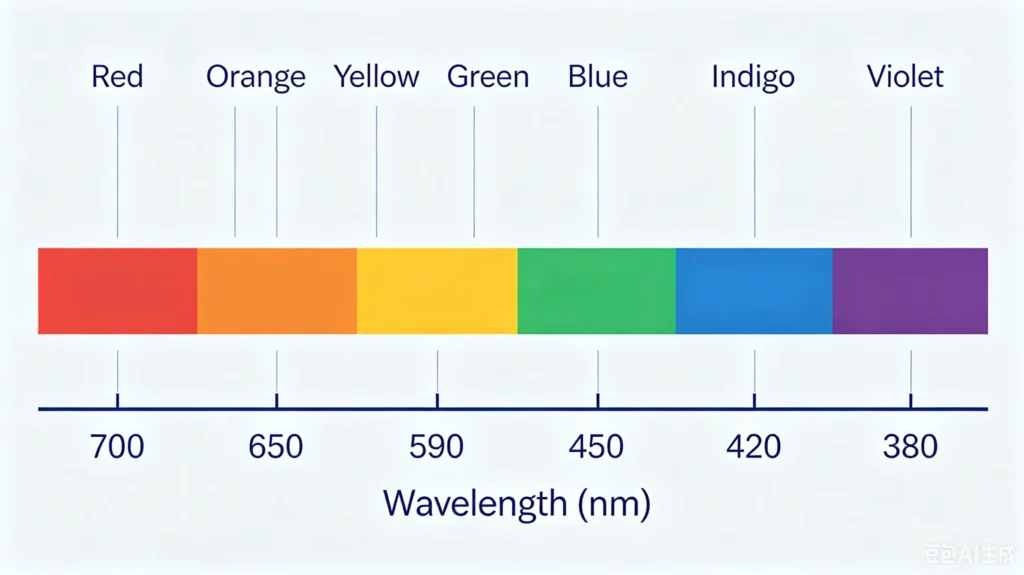
Ultraviolet light, or UV for short, sits on the electromagnetic spectrum with frequencies ranging from 750THz to 30PHz – that’s wavelengths from about 400nm down to 10nm in a vacuum. We can’t see it with the naked eye. It’s the invisible light right beyond the violet end of the rainbow, with an even higher frequency. The name “Ultraviolet” comes from Latin, where “ultra” means “beyond” – because it lives just beyond the violet light we can see.
Back in 1801, a German physicist named Ritter noticed something interesting: just past the violet end of the sunlight spectrum, there was a type of light that could expose photographic paper coated with silver bromide. That’s how he discovered ultraviolet.
Now, too much UV exposure can cause skin cancer – that’s the bad side. But on the flip side, it’s also great for disinfection.
Since we can’t see it and it sits outside the violet end of the spectrum, we call it ultraviolet.
UV disinfection units are widely used in water treatment. UV is one of the electromagnetic waves coming from the sun. Think of it as a stream of tiny, separate particles. Each photon of UV light at 253.7nm carries about 4.9eV of energy. When UV hits a microorganism, that energy gets transferred and builds up. Once enough energy accumulates, the microorganism gets inactivated – and that’s how UV does its disinfection job.
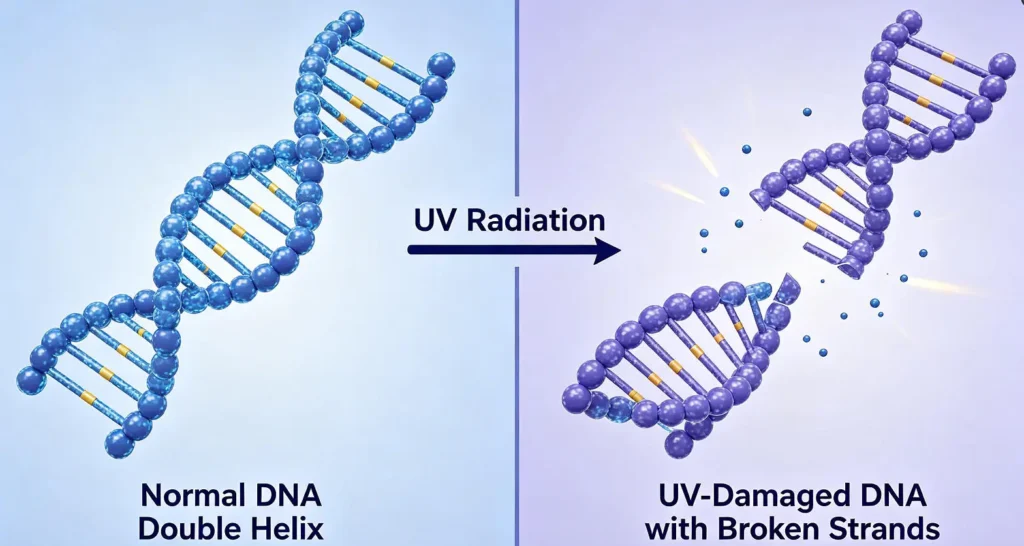
When bacteria or viruses absorb more than a certain dose of UV (somewhere between 3,600 and 65,000 µW/cm²), their DNA and RNA get seriously damaged. They lose the ability to survive and reproduce – basically, they’re done for. On one hand, UV mutates their nucleic acids, blocks replication and transcription, and shuts down protein synthesis. On the other hand, it creates free radicals that cause photoionization, which ultimately kills the cell.
The basic principle behind UV sterilization equipment is pretty straightforward: it all comes down to the intensity of the UV lamp. That intensity decreases the farther you move away from the lamp. So for a given intensity, the longer whatever you’re trying to disinfect stays under the light, and the closer it is to the lamp, the better the results. Move it farther away or shorten the exposure time, and the effect drops off.
UV is generally divided into three types based on wavelength: near-UV (UVA), far-UV (UVB), and extreme UV (UVC).
Short-wave UVC
UVC has wavelengths from 200 to 280nm. It gets absorbed by the ozone layer in the upper atmosphere, so none of it reaches the Earth’s surface naturally. But it does have significant effects on living things – so it’s something we need to take seriously.
Medium-wave UVB
UVB sits between 280 and 320nm. It affects our skin – not too deeply, though; most of it gets absorbed by the outer layer of skin and doesn’t go further inside. But because its energy level is pretty high, it can cause real damage. The blood vessels in the exposed area expand, and you get redness, swelling, even blisters.
Long-wave UVA
UVA covers 315–400nm. It penetrates much deeper than UVB – through clothes and down into the deeper layers of your skin. It also hits the melanin in your outer skin, causing pigmentation – basically, a tan. That tan is actually your skin’s way of defending itself against UV damage. That’s why UVA is sometimes called the “tanning ray.” It doesn’t cause immediate burns or inflammation, but its effects add up slowly over time. Long-term exposure is one of the main reasons skin ages and gets seriously damaged.
Where UV Sterilizers Are Used
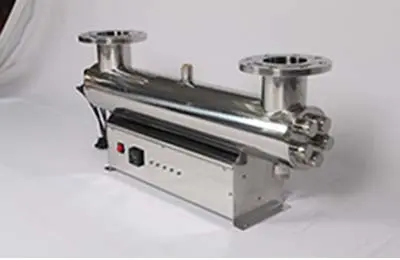
Food processing – disinfecting water for juices, milk, drinks, beer, cooking oils, canned goods, frozen treats, and so on.
Hospitals and labs – treating lab water and high-risk wastewater containing pathogens.
Drinking water – for residential complexes, office buildings, water treatment plants, hotels, restaurants.
Chemical, pharmaceutical, and cosmetics industries – for process water and recirculating cooling water.
Seafood processing – purifying the water used.
Swimming pools and water parks.
Aquaculture – hatchery and grow-out water for fish, eels, shrimp, shellfish, etc., both saltwater and freshwater.
Electronics industry – disinfecting ultrapure water or breaking down TOC.
Breaking down residual ozone in water.
HVAC systems – central air conditioning.
Key Applications in Water Treatment
Broad-spectrum disinfection
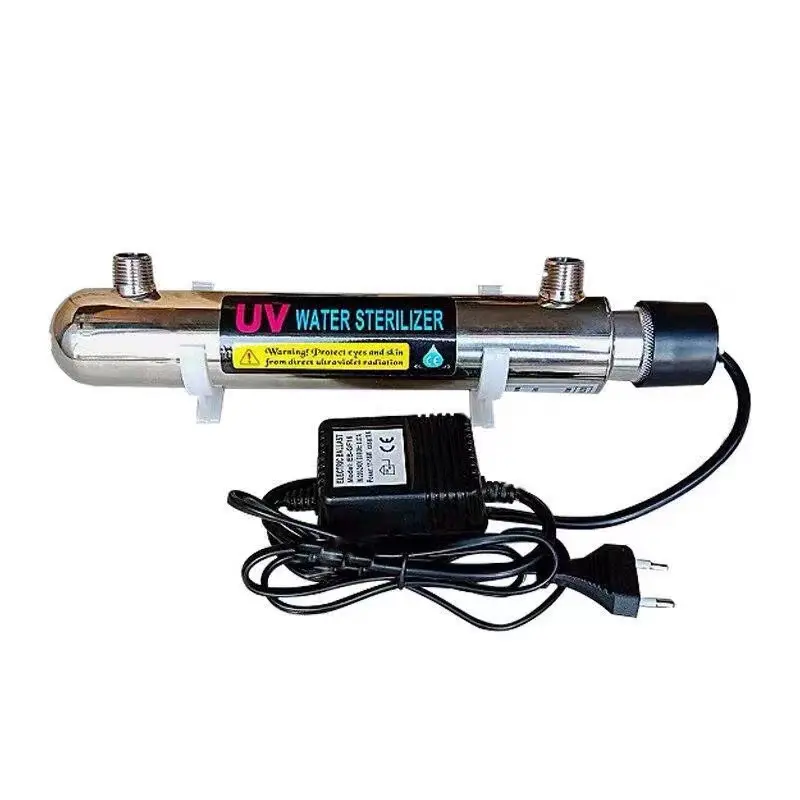
UV at 254nm can handle bacteria, viruses, and even chlorine-resistant protozoa. It penetrates the cell wall of microorganisms and disrupts their DNA, stopping them from reproducing – effectively “killing” them. And the beauty of it is, you don’t need to add any chemicals. No toxic byproducts, no worries about transporting, storing, or handling dangerous chemical additives.
Ozone removal
The same 254nm wavelength is also great for breaking down leftover ozone (O₃) in water. Once ozone absorbs that UV energy, it rapidly converts into dissolved oxygen (O₂). With the right UV dose, you can completely break down a given concentration of ozone.
TOC removal
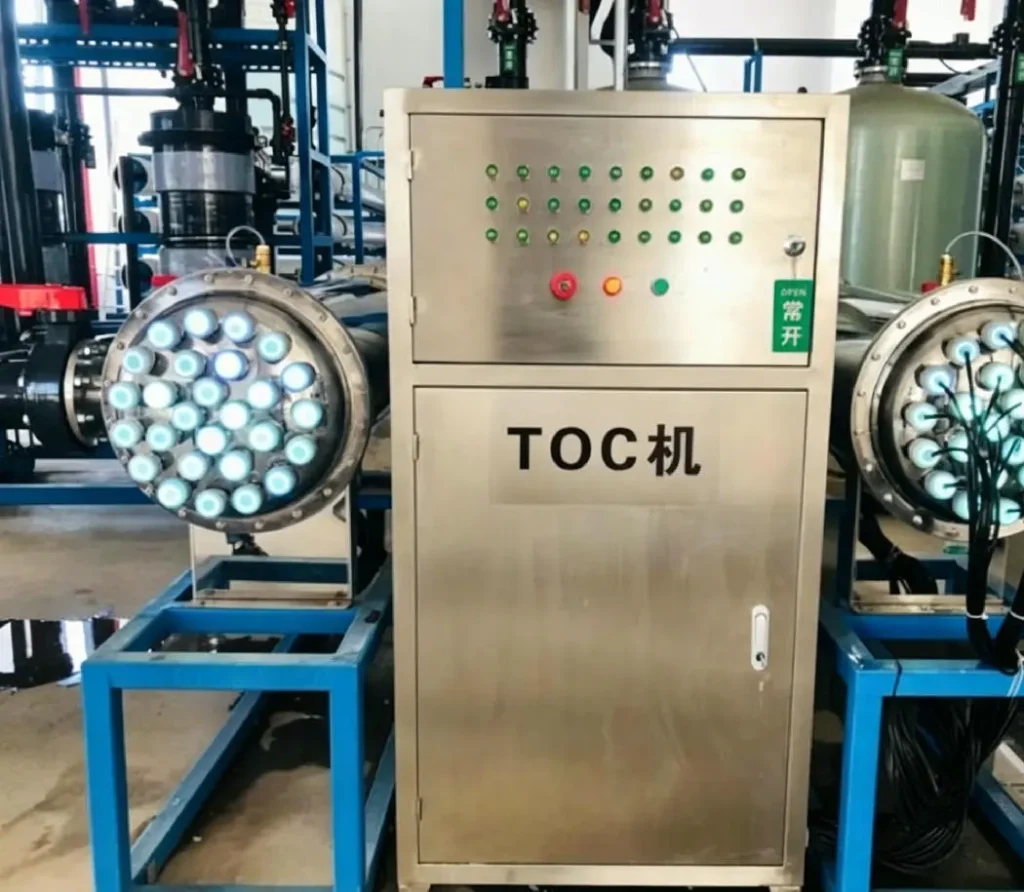
At 185nm, with a minimum dose of 90 mJ/cm², UV produces powerful hydroxyl radicals that oxidize total organic carbon (TOC). Plenty of experiments and real-world installations have shown that using UV alongside deionizers (DI) and reverse osmosis (RO) can drive TOC levels down to very low numbers at the outlet.
Chlorine and chloramine breakdown
Same idea again – 254nm UV goes after bacteria, viruses, and chlorine-resistant microbes, zaps their DNA, and keeps them from reproducing. No chemicals, no harmful byproducts, no chemical handling headaches.
Common Problems and How to Fix Them
Water leaking from the nut end
Quartz sleeve cracked at the end → replace the quartz sleeve.
Nut not tightened, or the O-ring is misplaced or damaged → tighten the nut, reseat or replace the seal ring.
Poor disinfection efficiency
Quartz sleeve cracked → replace it.
Loose nut or bad seal → tighten the nut and check/replace the seal ring.
Indicator light or UV lamp not working
Fuse blown → replace the fuse.
Internal contact in the socket broken → replace the lamp holder.
Ballast faulty → replace it immediately.
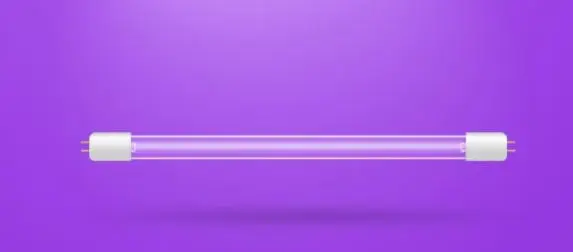
Lamp burned out → replace it.
Indicator light dead → replace it.
Important Things to Keep in Mind
It’s best to install the UV sterilizer at the point of use – the very end of the line.
Watch out for water hammer – it can shatter the quartz sleeve. So don’t install the unit right at the pump discharge. If you absolutely have to, put an electrically controlled slow-opening valve upstream. Also, avoid wiring it to cycle with the pump or level controls – frequent on/off cycles will damage the equipment.
Even if a lamp still lights up, if it’s been running longer than its rated life, replace it. Don’t wait for it to burn out completely.
UV radiation can hurt you. When the lamp is on, avoid direct exposure. Wear protective eyewear if needed, and never stare straight at the light – it can burn your cornea.
Temperature and humidity affect UV performance. Above 20°C, the intensity stays pretty steady. Between 5 and 20°C, intensity increases as temperature rises. At relative humidity below 60%, the germicidal effect is strong. At 70% humidity, microbes become less sensitive. At 90%, effectiveness drops by 30–40%.
Dust or oil on the lamp or quartz sleeve will block UV transmission. Clean them with alcohol, acetone, or ammonia before putting them back into service.
When the lamp first starts up, it takes a few minutes to warm up and stabilize – and the voltage at the ends is high. If you turn it off and immediately try to restart it, it often won’t light easily, and that kind of cycling shortens lamp life. Avoid frequent on/off switching.
The power supply voltage shouldn’t fluctuate more than 5%, or it will shorten the life of the equipment.